


Ifeanyichukwu Ifechidere: ‘Almost Normal’ CBC Results Can Be the Most Dangerous
Ifeanyichukwu Ifechidere, Specialist Biomedical Scientist at Sheffield Teaching Hospitals NHS Foundation Trust, shared a post on LinkedIn:
“‘The most dangerous CBC result is often the one that looks almost normal.’
As biomedical scientists, we’re trained to flag the bold, the red, the critical.
But it’s often the borderline Full Blood Count (FBC) that carries the real clinical weight.
- Not the haemoglobin of 6 g/dL.
- Not the platelets of 12 ×10⁹/L.
Those are obvious.
I’m talking about:
- A lymphocyte count just nudging above the upper reference limit
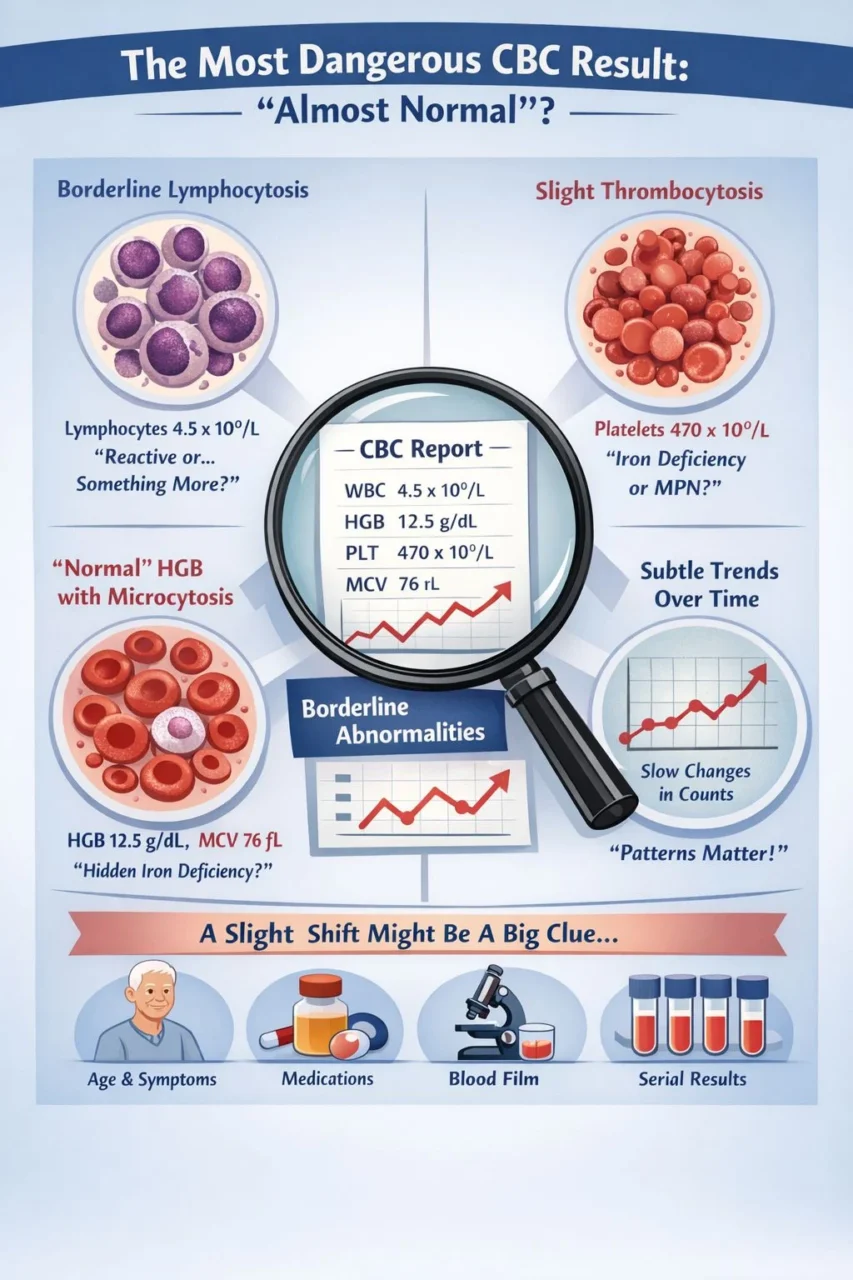
- A platelet count sitting at 470 ×10⁹/L
- A haemoglobin drifting downward but still technically “normal”
- An MCV creeping upward by 2–3 fL over serial tests
Individually? Easy to dismiss.
Together or trending? A story waiting to be told.
Borderline lymphocytosis
A lymphocyte count of 4.2–4.8 ×10⁹/L might be labelled ‘reactive.’
But persistent subtle elevation – especially in adults – should prompt a closer look at morphology and clinical context.
Early lymphoproliferative disorders don’t always shout. Sometimes they whisper.
Slight thrombocytosis
Platelets at 450–500 ×10⁹/L are frequently attributed to inflammation, iron deficiency, or recent infection.
But sustained mild thrombocytosis?
That’s when you consider:
- Iron studies
- Inflammatory markers
And yes – the possibility of early myeloproliferative disease
‘Normal’ haemoglobin with microcytosis
A haemoglobin of 12.5 g/dL might not trigger alarms.
But pair it with an MCV of 76 fL and rising RDW – and you may be catching iron deficiency before anaemia declares itself.
Prevention lives in the margins.
Subtle trends matter more than single values
The FBC is dynamic physiology captured in numbers.
One ‘almost normal’ result rarely means much.
But:
- A slow platelet climb over 18 months
- A steady lymphocyte increase
- A gradual MCV rise
These patterns separate technicians from scientists.
The real danger?
Normalising abnormalities because they don’t look dramatic.
In laboratory medicine, context is king:
- Age
- Symptoms
- Medications
- Serial results
- Blood film morphology
The FBC is not just a test.
It’s an early warning system – if we’re paying attention.
As biomedical professionals, our value isn’t in printing numbers.
It’s in interpreting patterns.
What’s the most easily missed abnormality you’ve seen?
Let’s share the cases that taught us to look twice.”
Stay updated with all scientific advances on Hemostasis Today.
-
Sep 30, 2026, 01:52Javed Anees: DADA2 – When a Young Stroke Is More Than a Stroke
-
Sep 30, 2026, 01:51How a Venous Thrombus Becomes Revascularized – ISTH
-
Sep 29, 2026, 22:45Victor Agunyego: Paracetamol – The Most Common Drug We Underestimate
-
Sep 29, 2026, 22:42Nova Sinclair: Advancing the Future of Hematology – Meet Our 2027 Organizing Committee
-
Sep 29, 2026, 22:41Lorenz Räber: Intracoronary Imaging in PCI – Why, When, How, and Which Modality?
-
Sep 29, 2026, 22:31Selma Turkovic: Pleased to Deliver the Opening Presentation at Kingston Hospital
-
Sep 29, 2026, 22:31Miguel Teran: Ultrasound and Simulation in Arterial Blood Sampling
-
Sep 29, 2026, 22:28Mohammad Refaei: Navigating Your Career in Hematology From Training to Practice
-
Sep 29, 2026, 22:27Matteo Foschi: 10 Clinical Pearls for Antithrombotic Therapy in Secondary Stroke Prevention