

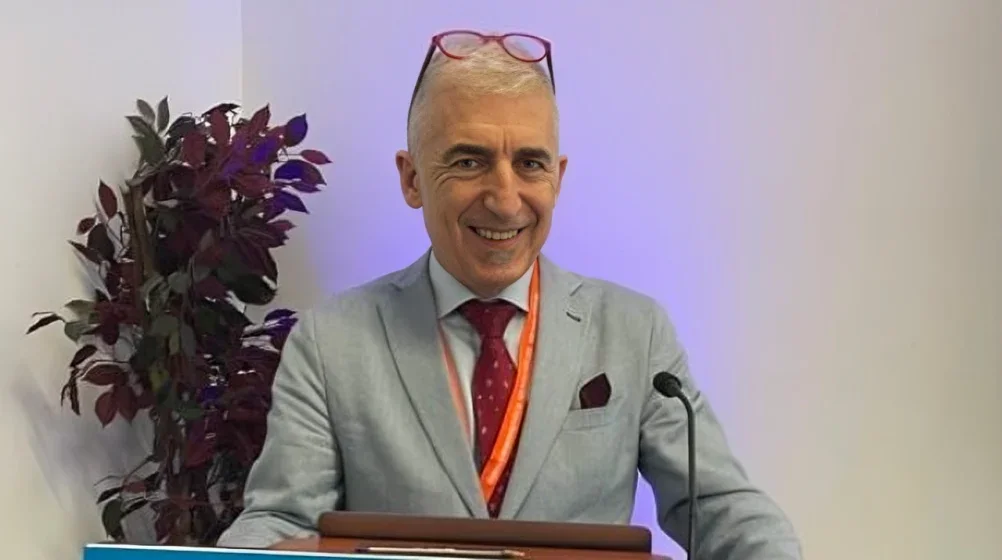
José Antonio García Erce: Hemochromatosis and Blood Donation
José Antonio García Erce, Director of the Donation Center, Navarre Health Service (Osasunbidea), shared Welsh Blood Service’s post on LinkedIn, adding:
“Hemochromatosis and Blood Donation
This week marks Hemochromatosis Awareness Week worldwide, and we will soon celebrate World Blood Donor Day.
It is time to promote meaningful change in our countries, supported by the growing body of scientific evidence and the example set by numerous international societies and health authorities.
From France to Australia, blood donation by individuals with hereditary hemochromatosis—or heterozygous carriers with iron overload but no evidence of organ damage—is increasingly accepted and, in some cases, actively encouraged.
I encourage the Spanish Group on Erythropathology of the Spanish Society of Hematology and Hemotherapy (SEHH), together with the Spanish Hemochromatosis Association, to consider promoting an open letter to the relevant health authorities and scientific committees advocating for a paradigm shift in line with the ethical principles of the International Society of Blood Transfusion (ISBT) and the World Health Organization (WHO): autonomy, dignity, beneficence, non-maleficence, and justice.
I also extend this invitation to the Ibero-American Cooperative Group for Transfusion Medicine (GCIAMT) and the Pan American Health Organization (PAHO).
I encourage great professionals of international prestige to do so.”
Welsh Blood Service shared a post on LinkedIn:
“Genetic haemochromatosis, or GH, is a condition where the body absorbs too much iron from your diet. One of the main treatments is regular blood removal, known as venesection.
If you have GH, you may now be able to donate your blood, instead of it being discarded.
‘Knowing my blood is being used productively to help save the lives of others gives me a huge sense of achievement and fulfilment.’
Haemochromatosis Awareness Week.”
Proceed to the video attached to the post.
Stay updated with Hemostasis Today.
-
Nov 8, 2026, 11:56Why Genetic Predisposition Does Not Always Lead to Thrombosis – Stork Genetics
-
Nov 8, 2026, 11:45Sher-Lu Pai: Investigating Intracardiac Thrombosis and Its Management in Liver Transplantation
-
Nov 8, 2026, 11:25Mehmet Cilingiroglu: Navigating Anticoagulation Choices in Acute Coronary Syndrome PCI
-
Nov 8, 2026, 07:16Gilberto de lima Lopes Junior: The Cardiovascular Consequences of Cancer in Younger Patients
-
Nov 8, 2026, 06:51Haney Mallemat: Key Principles and Pitfalls of LVAD Emergencies
-
Nov 8, 2026, 06:31Maria Omer: Clinical Recognition and Management of Cavernous Sinus Thrombosis
-
Nov 8, 2026, 06:16Natasha Jolakoski: University of New Mexico Hospital Promotes PGY-2 Thrombosis and Hemostasis Management Pharmacy Residency
-
Nov 8, 2026, 05:47Safaa Hilal: POCUS in the Evaluation of Perioperative Troponin Elevation
-
Nov 8, 2026, 05:34Eugene Bolotin: Thrombosis and Survival in Pancreatic Cancer