


Kalyan Roy: LTOWB as a Practical Approach to Rapid Transfusion in Major Bleeding
Kalyan Roy, Transfusion Medicine Specialist at Square Hospitals LTD, shared a post on LinkedIn:
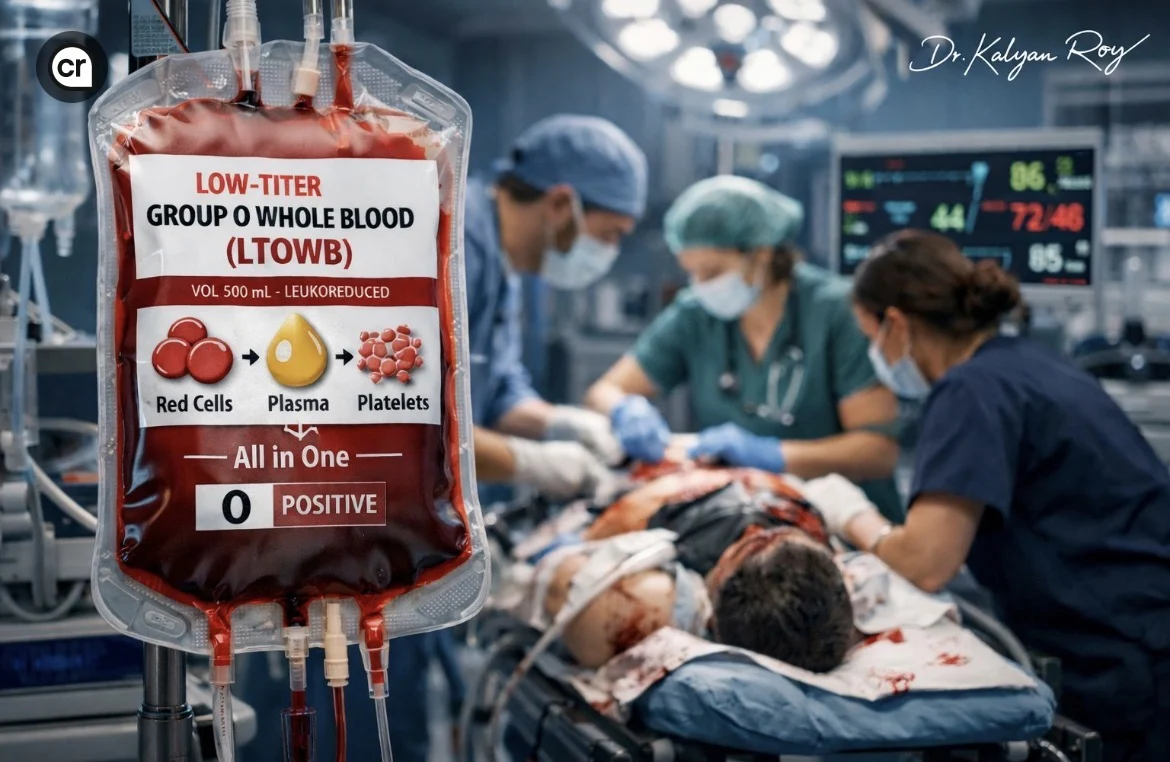
“When seconds decide survival, one unit can change everything : Low-Titer Group O Whole Blood (LTOWB)
LTOWB is gaining momentum as a practical approach to rapid transfusion in major bleeding. By delivering red cells, plasma, and platelets in a single unit, it helps clinicians act faster and streamline resuscitation during critical moments.
What it means:
Group O blood means Red blood cells have no A or B antigens, so they can be given to almost anyone (universal donor for RBCs).
Whole blood means it contains all components:
- Red blood cells (oxygen transport)
- Plasma (with clotting factors)
- Platelets (help stop bleeding)
Low titre means the donor’s plasma has low levels of anti-A and anti-B antibodies.
Why ‘low titre’ is important:
Normally, group O blood plasma contains anti-A and anti-B antibodies, which can attack a recipient’s red cells if they are not group O.
In LTOWB:
These antibodies are present in very low amounts
This reduces the risk of hemolytic reactions when transfused into non-O patients
Why it’s used:
LTOWB is commonly used in:
- Severe trauma (e.g., accidents, war injuries)
- Massive bleeding (hemorrhage)
- Emergency settings where blood typing isn’t immediately available
Advantages:
- Faster and simpler than giving separate components
- Provides balanced resuscitation (RBCs with plasma and platelets together)
- May improve survival in critical bleeding
Why it stands out:
- Faster response with fewer components to manage
- Supports early balanced resuscitation
- Increasing adoption in both hospital and prehospital settings
What matters for safe implementation:
- Clearly validated ‘low-titer’ testing and thresholds
- Strict adherence to production and storage standards
- A defined Rh strategy (who receives O-negative vs O-positive)
Getting started:
- Select appropriate donors and set eligibility criteria
- Establish clear clinical triggers for use
- Track outcomes through hemovigilance and regular audits
Simple summary:
LTOWB is Whole blood from group O donors with low antibody levels, safe for emergency transfusion across different blood types.”
Stay updated with Hemostasis Today.
-
Sep 30, 2026, 01:52Javed Anees: DADA2 – When a Young Stroke Is More Than a Stroke
-
Sep 30, 2026, 01:51How a Venous Thrombus Becomes Revascularized – ISTH
-
Sep 29, 2026, 22:45Victor Agunyego: Paracetamol – The Most Common Drug We Underestimate
-
Sep 29, 2026, 22:42Nova Sinclair: Advancing the Future of Hematology – Meet Our 2027 Organizing Committee
-
Sep 29, 2026, 22:41Lorenz Räber: Intracoronary Imaging in PCI – Why, When, How, and Which Modality?
-
Sep 29, 2026, 22:31Selma Turkovic: Pleased to Deliver the Opening Presentation at Kingston Hospital
-
Sep 29, 2026, 22:31Miguel Teran: Ultrasound and Simulation in Arterial Blood Sampling
-
Sep 29, 2026, 22:28Mohammad Refaei: Navigating Your Career in Hematology From Training to Practice
-
Sep 29, 2026, 22:27Matteo Foschi: 10 Clinical Pearls for Antithrombotic Therapy in Secondary Stroke Prevention