


Kalyan Roy: Immunomodulation after Blood Transfusion
Kalyan Roy, Transfusion Medicine Specialist at Square Hospitals LTD, shared a post on LinkedIn:
“Immunomodulation After Blood Transfusion
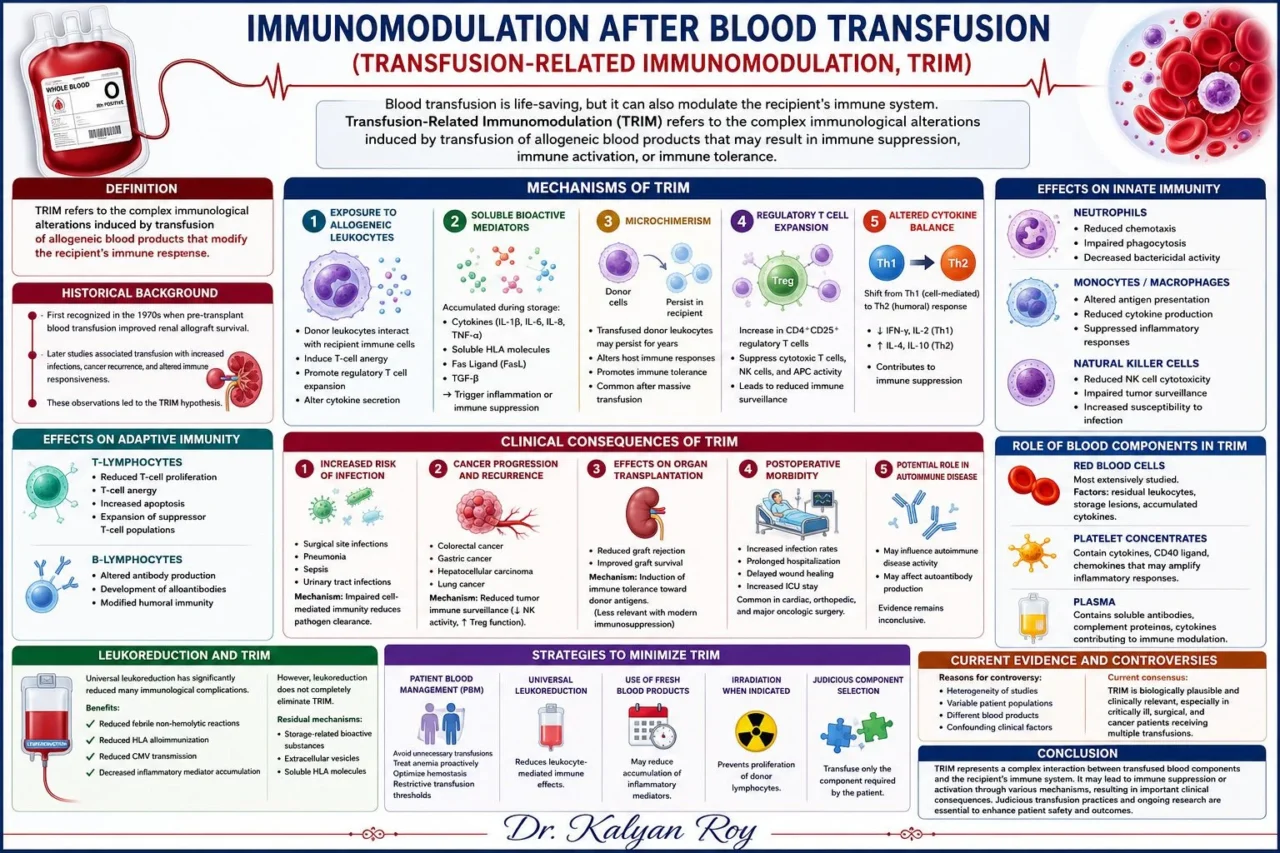
Understanding Transfusion-Related Immunomodulation (TRIM)
Blood transfusion is one of the most important life-saving interventions in modern medicine.
However, beyond replacing red cells, platelets, or plasma, transfusion can also influence the recipient’s immune system—a phenomenon known as
Transfusion-Related Immunomodulation (TRIM).
What is TRIM?
TRIM refers to the complex immunological changes that occur following transfusion of allogeneic blood products.
These changes may result in:
- Immune suppression
- Immune activation
- Immune tolerance
- Altered cytokine responses
- Modulation of T-cell and NK-cell function
- Key Mechanisms Behind TRIM
- Allogeneic Leukocyte Exposure
- Interaction with recipient immune cells
- T-cell anergy induction
- Regulatory T-cell (Treg) expansion
- Soluble Bioactive Mediators
- IL-1β, IL-6, IL-8, TNF-α
- Soluble HLA molecules
- Fas Ligand (FasL)
- TGF-β
- Microchimerism
- Persistence of donor leukocytes in recipients
- Promotion of immune tolerance
- Long-term immunological alterations
- Th1 → Th2 Immune Shift
- Reduced cell-mediated immunity
- Enhanced immunosuppressive pathways
- Effects on Innate Immunity
- Reduced neutrophil chemotaxis and phagocytosis
- Altered monocyte/macrophage function
- Decreased Natural Killer (NK) cell activity
- Reduced tumor immune surveillance
- Effects on Adaptive Immunity
- Reduced T-cell proliferation
- Increased T-cell apoptosis
- Expansion of regulatory T-cell populations
- Altered antibody production and humoral immunity
- Potential Clinical Consequences
- Increased susceptibility to infections
- Potential impact on cancer progression and recurrence
- Increased postoperative morbidity
- Longer hospital and ICU stays
- Delayed wound healing
- Possible influence on autoimmune responses
Can Leukoreduction Eliminate TRIM?
While universal leukoreduction significantly reduces:
- Febrile non-hemolytic transfusion reactions
- HLA alloimmunization
- CMV transmission
It does not completely eliminate TRIM, as storage-related bioactive substances and extracellular vesicles may still contribute to immune modulation.
- How Can We Minimize TRIM?
- Patient Blood Management (PBM)
- Restrictive transfusion strategies
- Appropriate component selection
- Universal leukoreduction
- Irradiation when indicated
- Avoidance of unnecessary transfusions
Take-Home Message
Although blood transfusion remains an indispensable therapeutic tool, understanding its immunological consequences is essential for optimizing patient outcomes and advancing transfusion safety.
Every unit transfused carries not only oxygen and hemostatic support—but also potential immunological effects that deserve careful consideration.”
Stay updated with Hemostasis Today.
-
Sep 20, 2026, 09:05World Stroke Academy: Can Adjunct IAT Improve Tissue Reperfusion?
-
Sep 20, 2026, 06:46Neeraj Songara: From Donated Blood to Engineered Therapeutics
-
Sep 20, 2026, 06:24Louise St. Germain Bannon: Improving Awareness and Care for Women Across the Lifespan
-
Sep 20, 2026, 05:17Maxime Dely: When ABO Compatibility Isn’t Enough for Safe Transfusion
-
Sep 20, 2026, 04:54William Aird: What Does a Complete History and Physical Really Mean?
-
Sep 20, 2026, 04:34Hons Saurabh Kaushik: Why Uncontrolled LDL Can Be Harmful
-
Sep 20, 2026, 03:58Salih Ehsan: The Complexities of HbF and HbA2
-
Sep 20, 2026, 03:22The Voices of People Living With Bleeding Disorders – EHC
-
Sep 20, 2026, 01:18Sebastian Mafeld: Has 2026 Changed How We Treat Pulmonary Embolism?