


Maxime Dely: When ABO Compatibility Isn’t Enough for Safe Transfusion
Maxime Dely, Therapeutic Solutions Sales Consultant at Terumo Blood and Cell Technologies, shared a post on LinkedIn:
“Why can some patients become incompatible with certain blood types?
We often think that blood transfusion compatibility relies mainly on the ABO and Rh systems.
Yet, red blood cell membranes carry hundreds of antigens belonging to numerous blood group systems: Rh, Kell, Duffy, Kidd, MNS…
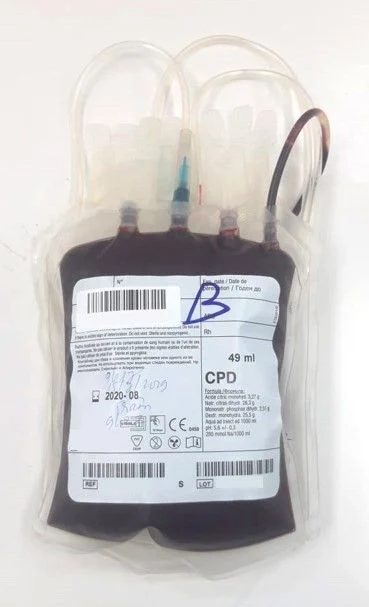
When a patient receives multiple transfusions, their immune system may encounter antigens that are absent from their own red blood cells.
They can then produce alloantibodies — a process known as alloimmunization.
During a subsequent transfusion, these antibodies may recognize transfused red blood cells as foreign and trigger their destruction, leading to hemolysis and, in some cases, a delayed hemolytic transfusion reaction.
Therefore, two units can be ABO-compatible while still being immunohematologically incompatible.
This is why antibody screening, red cell phenotyping, and sometimes molecular genotyping are essential for selecting appropriately matched red blood cell units in certain patients.
Transfusion medicine is becoming increasingly personalized.
How far could genetics take us in improving transfusion compatibility?”
Other posts featuring Maxime Dely on Hemostasis Today.
-
Nov 8, 2026, 19:31Anna Kajaste-Rudnitski: Presenting AAV-Induced p53 Signalling in Human CNS Cells at ESGCT 26
-
Nov 8, 2026, 19:29David McIntosh: Cybersecurity Matters, but Blood Availability Remains the Bigger Challenge
-
Nov 8, 2026, 19:26Wenxue Ma: An Integrative Framework for Macrophage-Mediated Therapeutic Resistance in Cancer
-
Nov 8, 2026, 19:25Yildiz Yigit: Presenting a Polycythemia Vera Case at the MPN Subcommittee Session
-
Nov 8, 2026, 18:56Denis Oduor: Strengthening the Regulation and Delivery of Blood Transfusion and Transplantation Services
-
Nov 8, 2026, 18:28Raghavendra Rao: A Narrative Review on Chronic Venous Disease during Pregnancy
-
Nov 8, 2026, 17:57Dhiren Patel: PLD1-Derived Phospholipids Regulate NAD Kinase and ROS Production in Neutrophils
-
Nov 8, 2026, 17:48Andra T.: What Causes Antiphospholipid Syndrome? – Four Steps, not One Cause
-
Nov 8, 2026, 17:38Nasrin Samadi: Can a Normal Clotting Test Be Misleading?