


Michiel Voet: A Brief History of Blood Transfusion – From Discovery to Modern Medicine
Michiel Voet, Military Medical Logistics Advisor at LS Innoventa bv, shared a post on LinkedIn:
“A Brief History of Blood Transfusion: From Discovery to Modern Medicine
Below a journey through the 20th and early 21st century, highlighting the people, wars, and scientific breakthroughs that made safe transfusion possible.
1900–1910:
The breakthroughThe modern era of transfusion begins in 1901, when Karl Landsteiner discovered the ABO blood group system.
Before 1900, transfusions were unpredictable, and often fatal. Landsteiner showed that incompatibility between donor and recipient blood caused hemolysis. This single discovery transformed transfusion from a gamble into a science.
1910–1919:
War as an Accelerator (World War I)
WWI forced medicine to confront mass hemorrhage at scale.
Key advances during this period:
- Introduction of sodium citrate as an anticoagulant (allowing blood to be stored outside the body)
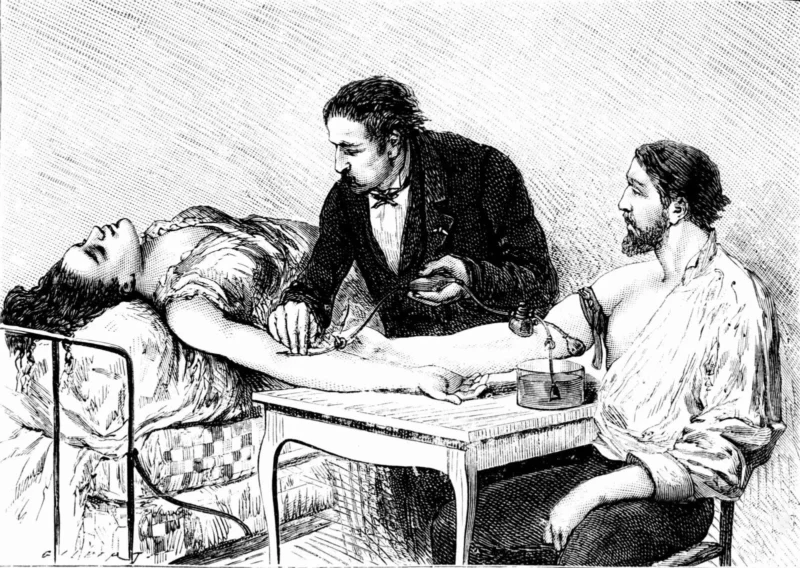
- Shift from direct donor to recepient transfusion to stored blood
First organized transfusion services near the front lines Oswald Hope Robertson, serving with the U.S. Army Medical Corps, is often credited with establishing the first blood depots on the Western Front in 1917.
1920–1939:
- From Experiment to System
Between the wars, transfusion medicine matured:
- Improved blood typing and crossmatching
- Better anticoagulant preservative solutions
- Recognition of transfusion as a medical specialty
In 1932, the world’s first hospital blood bank was established in Leningrad.
Soon after, Bernard Fantus coined the term “blood bank” at Cook County Hospital (Chicago) in 1937.
1940–1949:
World War II and Industrial scale transfusion
World War II marked the industrialization of blood:
- Plasma fractionation
- National donor programs
- Cold chain logistics
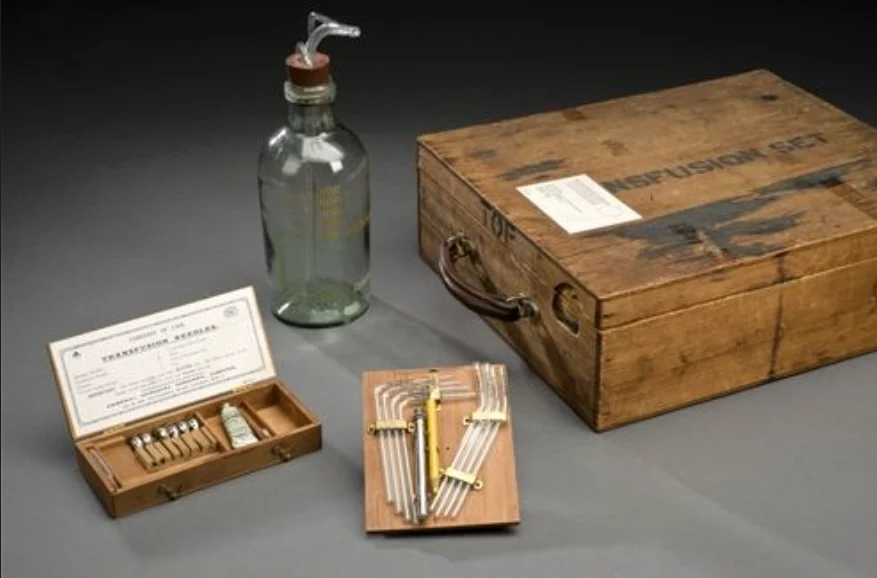
- Standardized blood collection kits
Charles Drew played a pivotal role in largescale blood and plasma programs, including the “Blood for Britain” initiative.
This era also saw the discovery of the Rh factor by Karl Landsteiner and Alexander Wiener, further reducing transfusion reactions.
1950–1969:
Safety, Components, and Specialization
Post war medicine shifted from whole blood to component therapy:
- Packed red blood cells
- Platelets
- Fresh frozen plasma
This allowed clinicians to give the right product to the right patient, improving outcomes and conserving resources.
Plastic blood bags replaced glass bottles, reducing contamination and enabling closed systems.
1970–1989:
The Safety Crisis and Its Consequences
The emergence of hepatitis B, hepatitis C, and later HIV/AIDS reshaped transfusion medicine.
Key responses:
- Mandatory donor screening
- Serological and later nucleic acid testing (NAT)
This painful chapter ultimately led to the safest blood supply in history.
1990–2009:
Evidence-Based Transfusion
Clinical practice moved from “more blood is better” to restrictive transfusion strategies.
Blood became recognized as a strategic, limited, and regulated therapeutic resource.
Stay critical.”
Stay updated on all scientific advances with Hemostasis Today.
-
Oct 5, 2026, 12:41Syed Huzaifa Khan: Rethinking CTRP12 as a Biomarker for In Stent Restenosis
-
Oct 5, 2026, 12:29Mirvat Alasnag: Creating a Space for Women in Cardiovascular Medicine
-
Oct 5, 2026, 11:59Khaoula Mazouzi: The Potential of Haemoglobin Vesicles as an Oxygen Carrier
-
Oct 5, 2026, 11:56Muhammet Özbilen: What Does New Evidence Tell Us About IV Iron in Pregnancy?
-
Oct 5, 2026, 11:42Fonkou Steve: A Moment to Celebrate the Journey Ahead
-
Oct 5, 2026, 11:33Abeeha Faisal: Beyond the Textbooks – A Day With Children Living With Thalassemia
-
Oct 5, 2026, 11:26Jan Zlamal: Honoured with the Fritz Schiff Young Investigator Award by the DGTI
-
Oct 5, 2026, 11:21Umar Mansuri: Can Micronutrient Powders Help Reduce Childhood Anemia?
-
Oct 5, 2026, 11:03Vitalina Dzutseva: Could mRNA Encoded TCEs Transform B Cell Depletion?