

Nathan Connell: A Regional Approach to Advancing Contemporary Hemophilia A Care
Nathan Connell, Clinical Chief of Hematology at Brigham and Women’s Faulkner Hospital, shared a post on LinkedIn:
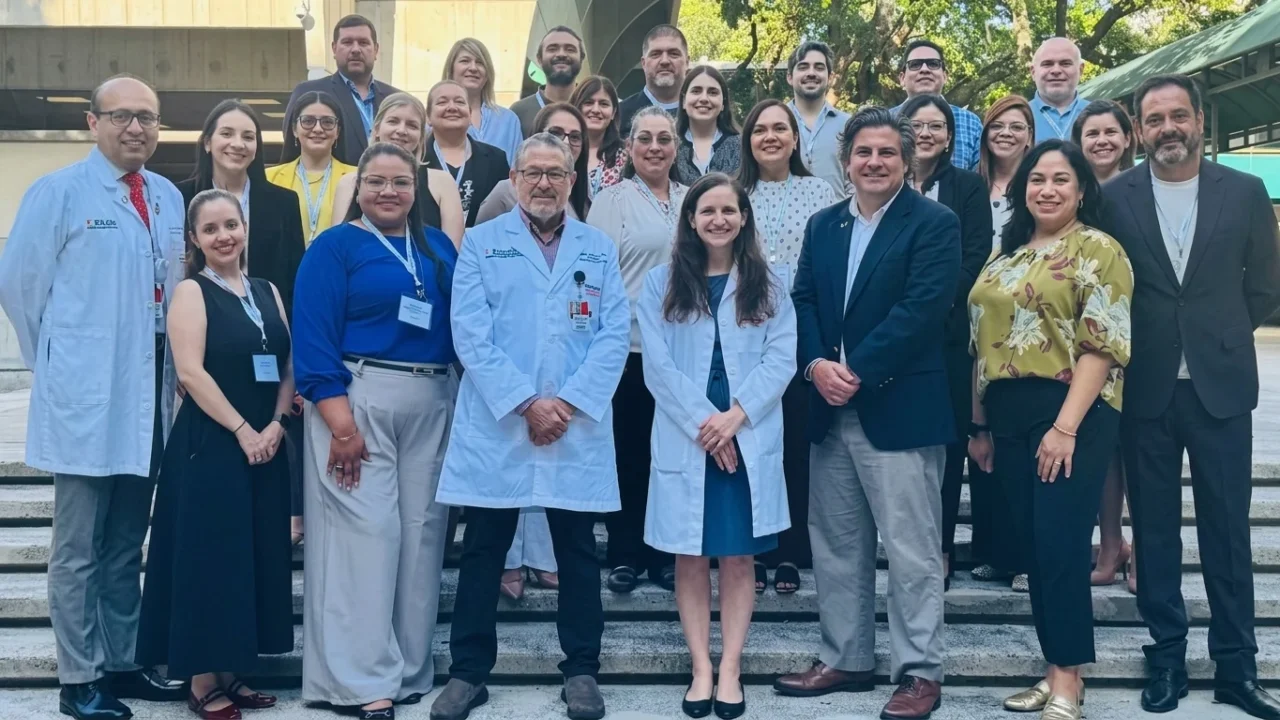
“This week, we held the first Latin America Hemophilia A Preceptorship at the University of Miami, bringing together an extraordinary group of physicians from across Latin America, representing Argentina, Chile, Colombia, Ecuador, Honduras, Mexico, Panama, Paraguay, Peru, and Uruguay.
Over two intensive days, we covered the spectrum of contemporary hemophilia care, including evolving treatment options, laboratory challenges with novel therapies, breakthrough bleeding, gene therapy, inhibitors and immune tolerance, joint health, intracranial hemorrhage, adult comorbidities, pediatric care, obstetric and gynecologic bleeding, surgery, psychosocial care, and the role of the multidisciplinary hemophilia treatment center.
Just as importantly, participants brought their own cases, experiences, and challenges into the discussion.
A very special thank you to Dr. Rachel Kronenfeld and the University of Miami Hemophilia Treatment Center for directing the Preceptorship and creating such a thoughtful and engaging program.
It was a privilege to teach alongside an outstanding multidisciplinary faculty: Dr. Fernando Corrales-Medina and Dr. Michael Paidas from the University of Miami Miller School of Medicine; Dr. Jennifer Davila from the Montefiore Children’s Hospital at Montefiore/Albert Einstein College of Medicine; Dr. Frederico Xavier from the The Hemophilia Center of Western Pennsylvania and UPMC Children’s Hospital of Pittsburgh/University of Pittsburgh; and the University of Miami HTC team, including Kelli Fraga, Sasha Inclan and Silvia Nicolini.
Special thanks as well to Michael Dunn at Genentech and Jose Restrepo at Roche for their support in making this program possible.
I am particularly grateful to Anthony Capalbo at Genentech, who helped take an idea first discussed several years ago and turned it into a reality.
This Preceptorship would not have been possible without Anthony’s persistence and steadfast advocacy on behalf of the global bleeding disorders community.
What struck me most was seeing the connections forming among the physicians who participated.
They are working in very different health systems, but many are confronting remarkably similar challenges as they work to improve care for people with inherited bleeding disorders.
By the end of the Preceptorship, I could already see the impact of bringing this community together: the realization that they are not doing this work alone, that there is enormous expertise across the region, and that building connections among these clinicians may be just as important as any individual lecture.
The opportunity to learn from one another, share solutions, and build a stronger regional community has the potential to improve care across Latin America.
I hope this is only the beginning.”
Other posts featuring Nathan Connel on Hemostasis Today.
-
Sep 16, 2026, 09:20Mengistu Abate Belay: Bridging the Gap in Anemia Prevention During Pregnancy
-
Sep 16, 2026, 09:09Younes Kalakhy: When Normal Coagulation Tests Miss von Willebrand Disease
-
Sep 16, 2026, 09:00Test Your Knowledge of Warm Autoimmune Hemolytic Anemia – ASH Education
-
Sep 16, 2026, 08:28Jean Nakhle: Uncovering How Excess Cysteine Drives Cell Death
-
Sep 16, 2026, 08:20Heghine Khachatryan: Arterial and Venous Thrombosis May Require Different Approaches in Neonates
-
Sep 16, 2026, 07:57Tammuella Chrisentery-Singleton: Standing on the Shoulders of Giants in Hemophilia Care
-
Sep 16, 2026, 07:33Jakob Werner Hansen: Nordic VEX AZA Trial Reaches an Important Milestone
-
Sep 16, 2026, 06:54Jonathan Furniss: The Platelet Response That Helps Drive Tissue Repair
-
Sep 16, 2026, 05:25Paul Armstrong: Honoured to Take the Lead at The Platelet Society