

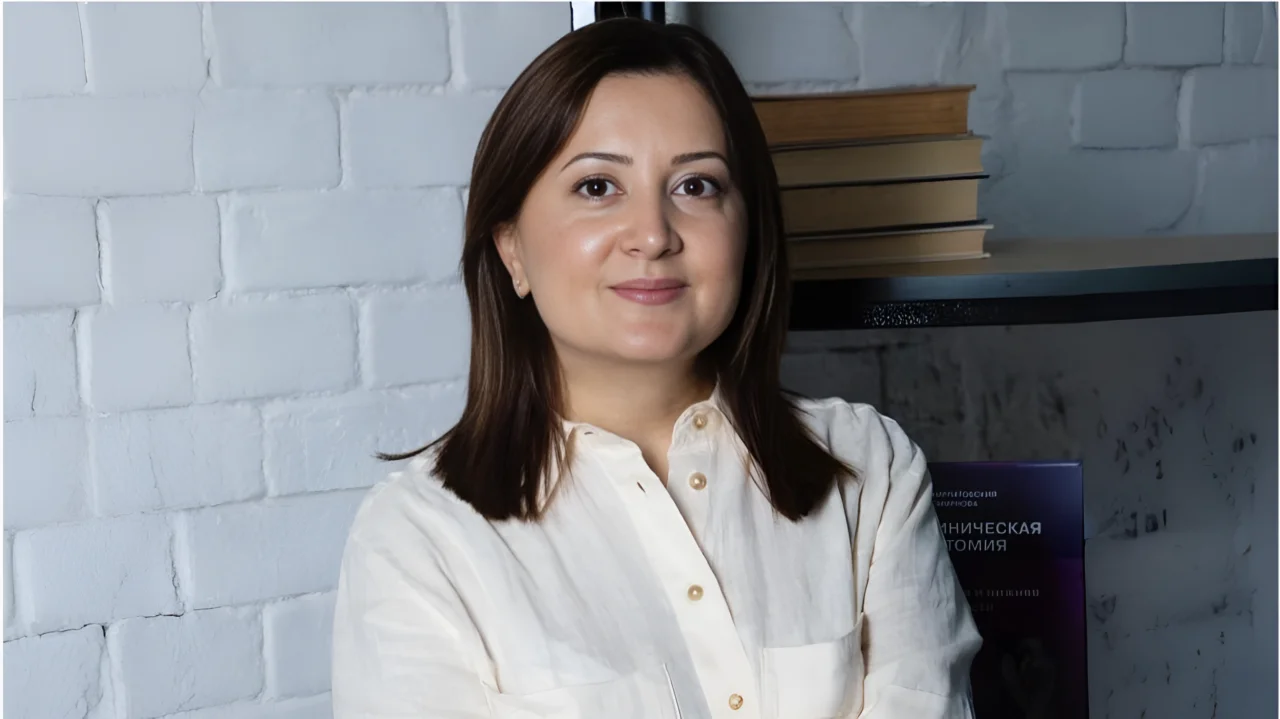
Heghine Khachatryan: When to Consider Ehlers–Danlos Syndromes in Patients with Bleeding Symptoms?
Heghine Khachatryan, Editor-in-Chief of Hemostasis Today, Head of Hemophilia and Thrombosis Center at Yeolyan Hematology and Oncology Center, shared European Association for Haemophilia and Allied Disorders (EAHAD)’s post on LinkedIn, adding:
”When Should We Consider Ehlers–Danlos Syndromes in Patients with Bleeding Symptoms?
Connective tissue disorders, particularly Ehlers–Danlos Syndromes (EDS), remain under-recognized in daily hematology practice — yet they frequently present with hemorrhagic manifestations that may mimic primary hemostatic disorders.
The newly released EAHAD e-learning module (Module 21) provides valuable clinical insight into:
- Recognizing red flags in patients with unexplained bleeding
- Understanding the overlap between connective tissue fragility and hemostatic abnormalities
- Improving multidisciplinary diagnostic pathways
- Avoiding misdiagnosis of inherited bleeding disorders
As clinicians working in benign hematology and hemostasis, it is essential that we broaden our differential diagnosis when laboratory results do not fully explain the clinical phenotype.
Timely identification of EDS can significantly impact patient management, perioperative planning, and long-term follow-up.
I strongly encourage colleagues involved in bleeding disorders, women’s health, and rare disease diagnostics to explore this educational resource.”
Quoting European Association for Haemophilia and Allied Disorders (EAHAD)’s post:
”Don’t miss our e-learning module on the Ehlers-Danlos Syndromes (EDS), rare, inherited multisystemic connective tissue disorders frequently associated with bleeding symptoms and haematological challenges.”
Proceed to the video attached to the post.
Find more posts featuring Heghine Khachatryan on Hemostasis Today.
-
Oct 9, 2026, 11:06Nobles Green: How siRNA Therapy Helps the Body Form Stronger Clots
-
Oct 9, 2026, 10:53Switching From Emicizumab to Denecimig in Hemophilia A – Rare Disease Advisor
-
Oct 9, 2026, 10:40What New U.S. Data Reveal About GT – Glanzmann’s Research Foundation
-
Oct 9, 2026, 10:32Anjali Pandey: The Morphologic Clues to MDS With del(5q)
-
Oct 9, 2026, 10:13Reza Shojaei: 5 Leadership Responsibilities for a Sustainable Plasma Ecosystem
-
Oct 9, 2026, 08:38Johannes Gratz: Perioperative Care in Factor VII Deficiency – Treating the Patient, Not the Number
-
Oct 9, 2026, 08:28Ghanim Fajish: Vascular Cells May Retain a Prothrombotic Memory of Oxidative Stress
-
Oct 9, 2026, 07:43Mehmet Cilingiroglu: The First Diagnosis of Coronary Thrombosis in a Living Patient
-
Oct 9, 2026, 07:21Federico Ravaioli: 40 kPa Spleen Stiffness May Help Avoid Endoscopy in Chronic PVT