

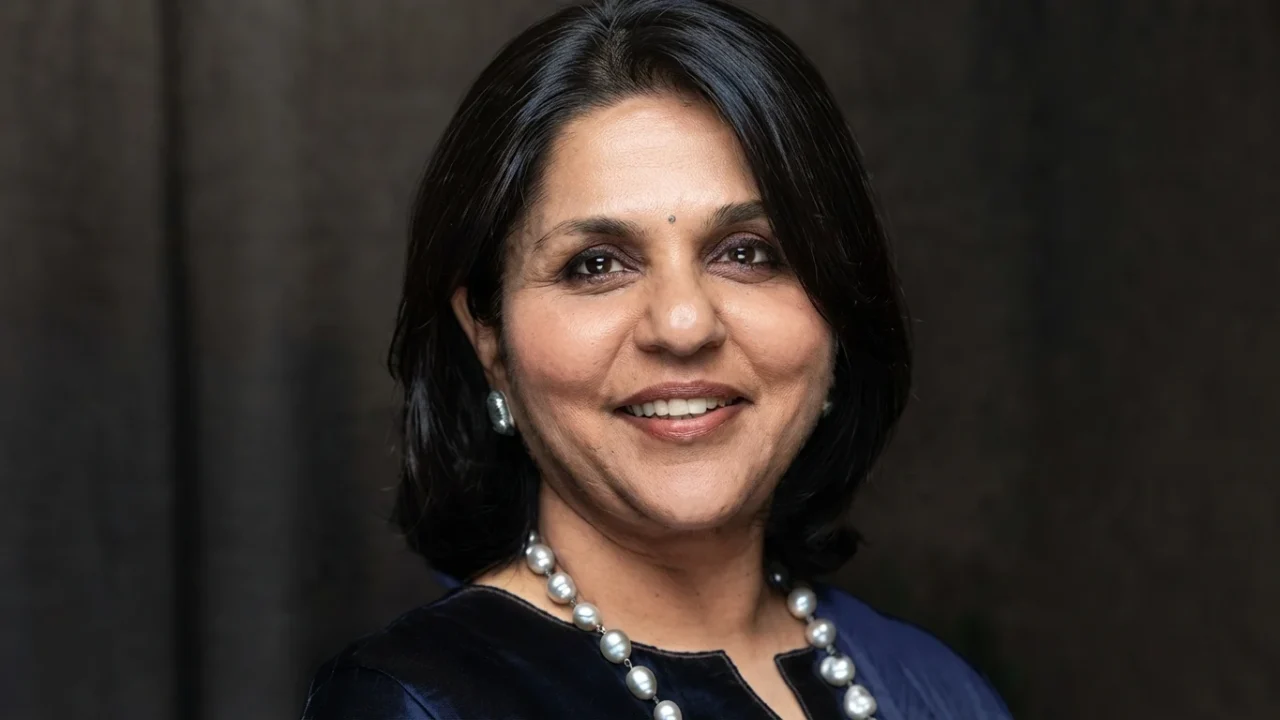
Sangita Reddy: How Does Our Own Healthcare Journey in India Look Through the Same Lens?
Sangita Reddy, Joint Managing Director at Apollo Hospitals Group, shared a post on LinkedIn:
“Listening to Dr. Ezekiel Emanuel in conversation with Dr. Tom Frieden, I found myself asking:
How does our own healthcare journey in India look through the same lens?
The conversation focused on the challenges facing the U.S. healthcare system.
What struck me was not which country has the ‘better’ system, but how differently two very different nations are addressing many of the same fundamental questions.
The U.S. has extraordinary medical and scientific capabilities, yet continues to grapple with affordability, access, prevention and equity.
Our challenge is different: more than 1.4 billion people, extraordinary diversity, vast geographic and economic differences, finite resources, and the simultaneous burden of communicable and chronic disease.
And necessity has driven us to innovate differently.
We are bringing together financial protection through Ayushman Bharat, primary care through Ayushman Arogya Mandirs, and digital health through ABDM and ABHA, alongside world-class clinical care and a pharmaceutical and vaccine ecosystem capable of delivering quality at extraordinary scale and affordability.
These are not isolated achievements.
They reflect a different way of designing healthcare.
Using scale to create efficiency.
Technology to extend access. Frugal innovation to deliver more with less. Public-private partnership to expand capacity. And inclusion by design.
We still have unfinished business. Out-of-pocket expenditure remains too high. Access and quality are uneven. Workforce and infrastructure require sustained investment.
But acknowledging these challenges should not diminish the magnitude of the transformation.
We have been solving healthcare in one of the world’s most complex real-world environments. And that experience increasingly matters beyond our borders.
As countries everywhere confront ageing, chronic disease, rising costs, workforce shortages and unequal access, perhaps the answer is not simply to spend more. It is to design better.
Our next opportunity is even greater: to move from treating illness to anticipating it; from reactive care to prevention; from healthcare delivery to health preservation. AI, digital health, genomics and connected care can help make that transition possible.
For much of the past century, healthcare innovation largely flowed from the developed world to India.
I believe that direction is changing.We are increasingly developing solutions shaped by our realities designed for affordability, diversity, inclusion and reach.
And those lessons can travel.
Our greatest contribution to global health will not be claiming that we have solved every problem. It will be demonstrating what is possible and sharing what we learn as we continue the journey.”
Proceed to the video attached to the post.
Stay updated with Hemostasis Today.
-
Sep 21, 2026, 12:53Conan McIlwrath: Strengthening Haemophilia Care Through International Collaboration
-
Sep 21, 2026, 12:41Tinatin Muradashvili: Advancing Hemophilia Care Through Education and Collaboration
-
Sep 21, 2026, 12:15Kholoud Al Busaidi: Cold Agglutination and Its Impact on CBC and Blood Grouping Results
-
Sep 21, 2026, 11:03Shaurav Bhattacharyya: Honoring the 2026 Lasker Award Winners
-
Sep 21, 2026, 10:41Jamshid Ullah: Recognizing Blood Disorders Through Laboratory Findings
-
Sep 21, 2026, 10:18Mana Alshehri: A New Step Toward Hemophilia B Gene Therapy in Adolescents
-
Sep 21, 2026, 09:52Afreenish Tasadaq: Contributing to Awareness about Bleeding Disorders
-
Sep 21, 2026, 08:49Andrea Bridges: When Support Becomes a Commitment to Give Back
-
Sep 21, 2026, 08:21Managing Thrombotic Risk in Pregnancy