


Seema Dawood: Acquired Platelet Dysfunction with Eosinophilia – Bleeding Despite Normal Platelet Count
Seema Dawood, Medical Laboratory Technologist at The Aga Khan University Hospital, shared a post on LinkedIn:
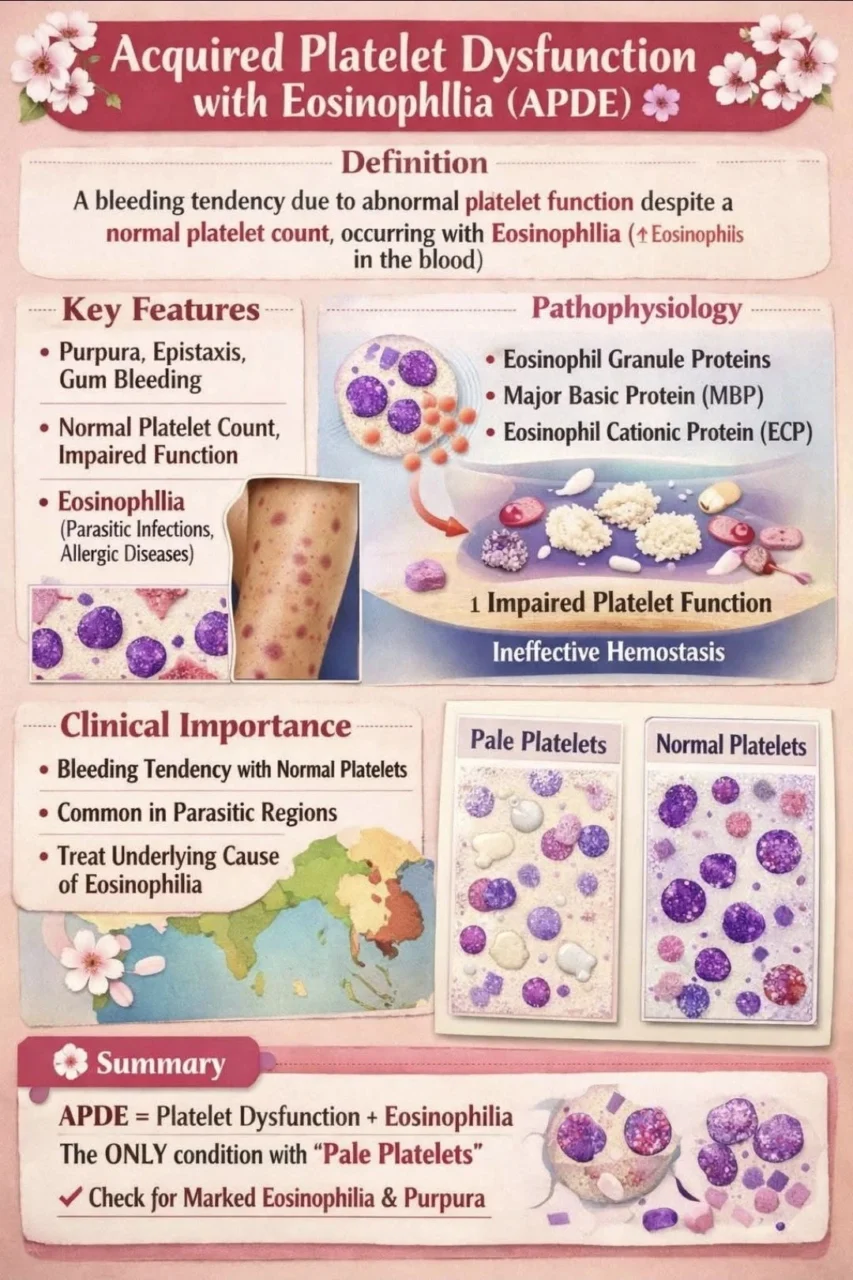
“Acquired Platelet Dysfunction with Eosinophilia (APDE)
Condition characterized by bleeding tendency due to abnormal Platelet function, despite having a normal or near-normal platelet count, occurring together with Eosinophilia (increased Eosinophils in the blood).
Key Features
Patients present with abnormal bleeding: purpura, epistaxis, gum bleeding, etc.
Platelet count is usually normal, but platelet function is impaired.
Eosinophilia is present, commonly associated with:
- Parasitic infections
- Allergic diseases
- Certain immune-mediated conditions
Pathophysiology
Eosinophils release toxic granule proteins (e.g., Major Basic Protein, Eosinophil Cationic Protein).
These substances interfere with platelet function (aggregation and adhesion).
Result: ineffective hemostasis despite normal platelet count.
Clinical Importance
- Patients may have bleeding tendency even though platelet count is normal.
- Reported frequently in regions with high prevalence of parasitic infections (e.g., Southeast Asia).
- Treatment focuses on managing the underlying cause of Eosinophilia (e.g., treating parasitic infections).
- Once eosinophil count decreases, platelet function usually improves.
Summary:
APDE is an acquired condition where platelet dysfunction occurs in association with Eosinophilia, leading to bleeding tendency despite normal platelet count.
It is often linked to parasitic infections or allergies and improves when Eosinophilia is treated.
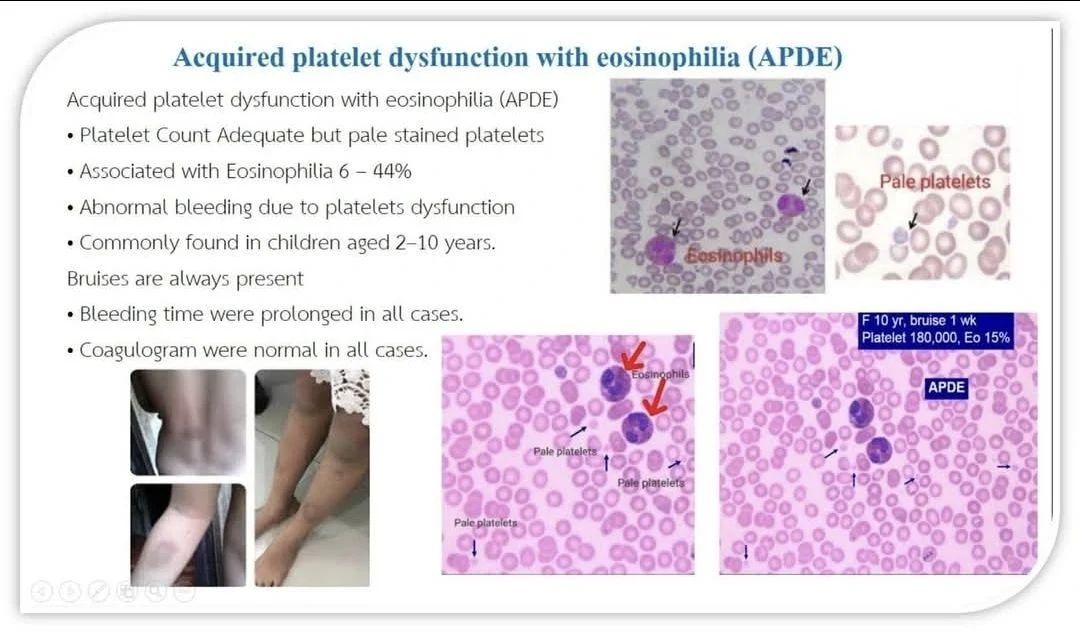
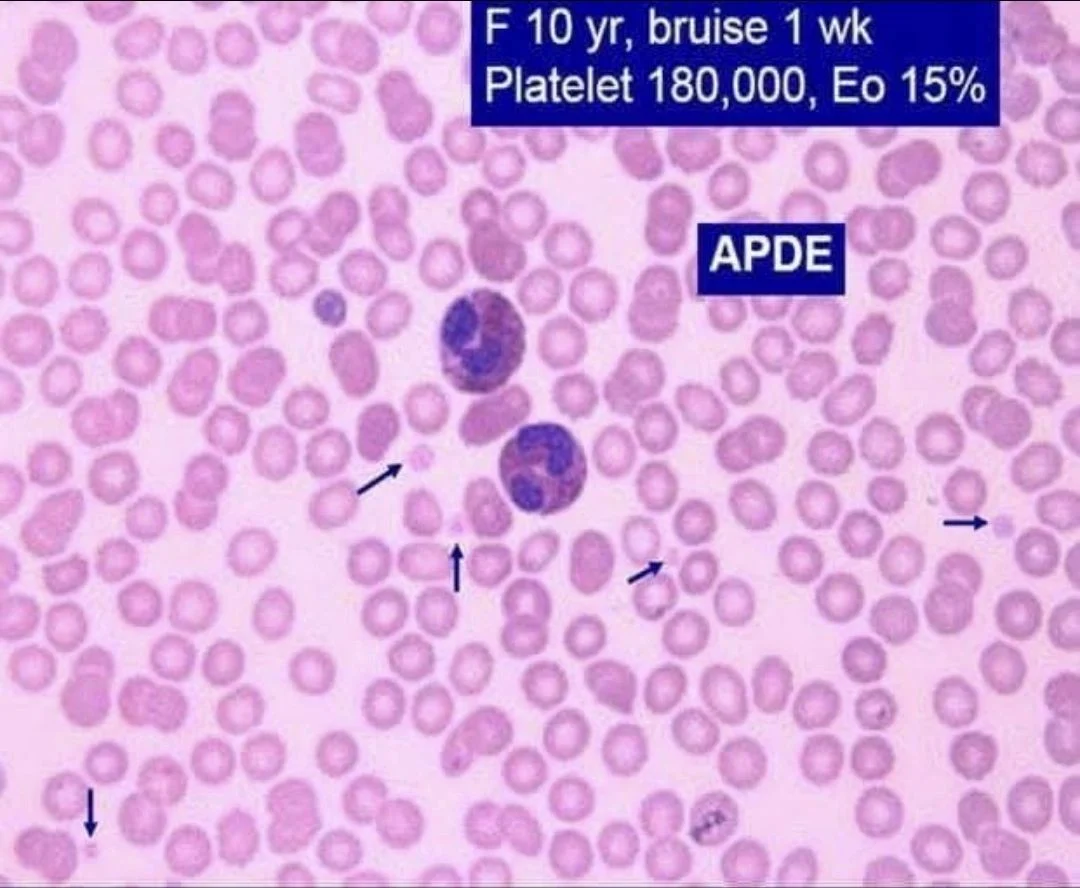
APDE is the only disease in which Pale Platelets are found.
Therefore, before reporting Pale Platelets, it is important to consider other consistent findings such as marked eosinophilia and the presence of purpura in the patient.”
See more in the gallery.
Stay updated with Hemostasis Today.

-
Sep 21, 2026, 13:21In His Last UNGA, António Guterres Delivers a Urgent Call for Global Unity
-
Sep 21, 2026, 13:14Fatih Mehmet Gul: Are We Moving Faster Than Our Ability to Ask ‘Should We?’
-
Sep 21, 2026, 13:08Sangita Reddy: How Does Our Own Healthcare Journey in India Look Through the Same Lens?
-
Sep 21, 2026, 12:53Conan McIlwrath: Strengthening Haemophilia Care Through International Collaboration
-
Sep 21, 2026, 12:41Tinatin Muradashvili: Advancing Hemophilia Care Through Education and Collaboration
-
Sep 21, 2026, 12:15Kholoud Al Busaidi: Cold Agglutination and Its Impact on CBC and Blood Grouping Results
-
Sep 21, 2026, 11:03Shaurav Bhattacharyya: Honoring the 2026 Lasker Award Winners
-
Sep 21, 2026, 10:41Jamshid Ullah: Recognizing Blood Disorders Through Laboratory Findings
-
Sep 21, 2026, 10:18Mana Alshehri: A New Step Toward Hemophilia B Gene Therapy in Adolescents