


Shalini R: Not All Blood Thinners Are the Same
Shalini R, Registered Nurse at Saudi German Health, shared a post on LinkedIn:
”Notes:10
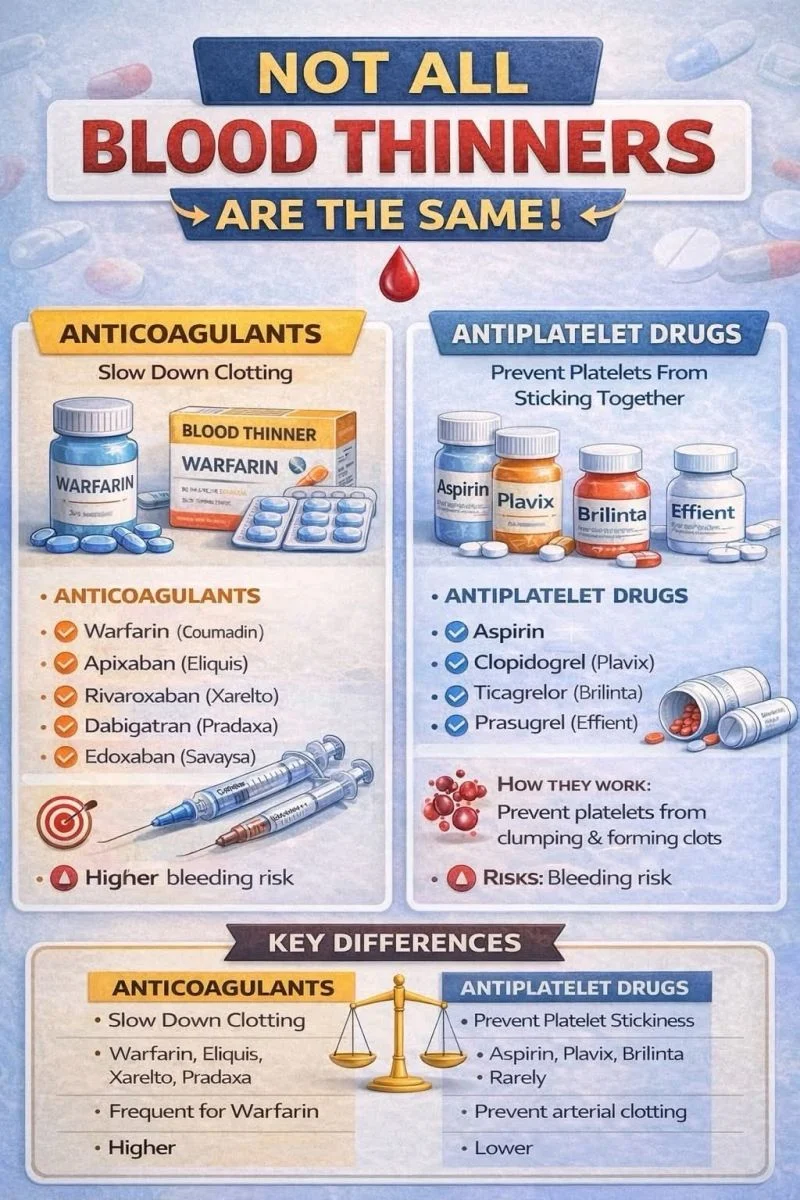
Not all ‘blood thinners’ are the same – and understanding the difference is key to safer prescribing and better patient outcomes.
This visual highlights the distinction between anticoagulants and antiplatelet agents, two major classes that reduce clot formation through different mechanisms:
Anticoagulants (e.g., warfarin, apixaban, rivaroxaban, dabigatran)
- Work on the coagulation cascade to slow down clot formation
- Commonly used in conditions like atrial fibrillation, DVT, and PE
- Require careful monitoring (especially warfarin)
- Associated with a higher bleeding risk
Antiplatlet drugs (e.g., aspirin, clopidogrel, ticagrelor, prasugrel)
- Prevent platelets from aggregating and forming clots
- Primarily used in arterial disease (e.g., coronary artery disease, stroke prevention)
- Typically lower bleeding risk compared to anticoagulants
Key takeaway:
Anticoagulants target the clotting cascade, while antiplatelets target platelet function-choosing the right class depends on the underlying pathology.
A simple concept, but one that makes a critical difference in clinical decision-making.”
Stay updated with Hemostasis Today.
-
Oct 19, 2026, 08:20Cory Dugan: The IRONWOMAN Trial Individual Responses to IV Iron Therapy in Active Women
-
Oct 19, 2026, 07:36Johannes Kaesmacher: Cerebral No-Reflow After Thrombectomy Toward a Standardized Definition
-
Oct 19, 2026, 07:33Beth Psaila: Highlights from IACH Annual Meeting and MPN Horizons
-
Oct 19, 2026, 07:29Wolfgang Miesbach: Can Losartan Activate Brown Fat? – Nature Study Explores New Therapeutic Link
-
Oct 19, 2026, 07:22Ruben Mesa: Honored to Speak at the Tandem MPN Meetings of IACH
-
Oct 19, 2026, 07:19Saneha Anjum Shaikh: Parul University Partners with Raktasevak Bike Ride 2026 for Blood Donation Drive
-
Oct 19, 2026, 07:09Alejandro González Veliz: No ST Elevation Does Not Guarantee an Open Coronary Artery
-
Oct 19, 2026, 06:02Thomas Dayspring: Vascular Resilience – What Is It and How Can We Measure It?
-
Oct 19, 2026, 05:53Kevon Dindial: Collaboration for Better Childhood Cancer Outcomes