

Sthanu Subramanian: Dabigatran and Mechanical Heart Valves
Sthanu Subramanian, Pediatrician, shared a post on X about a recent article by Noel C. Chan et al. published in Arteriosclerosis, Thrombosis, and Vascular Biology, adding:
“Dabigatran and Mechanical heart valves.
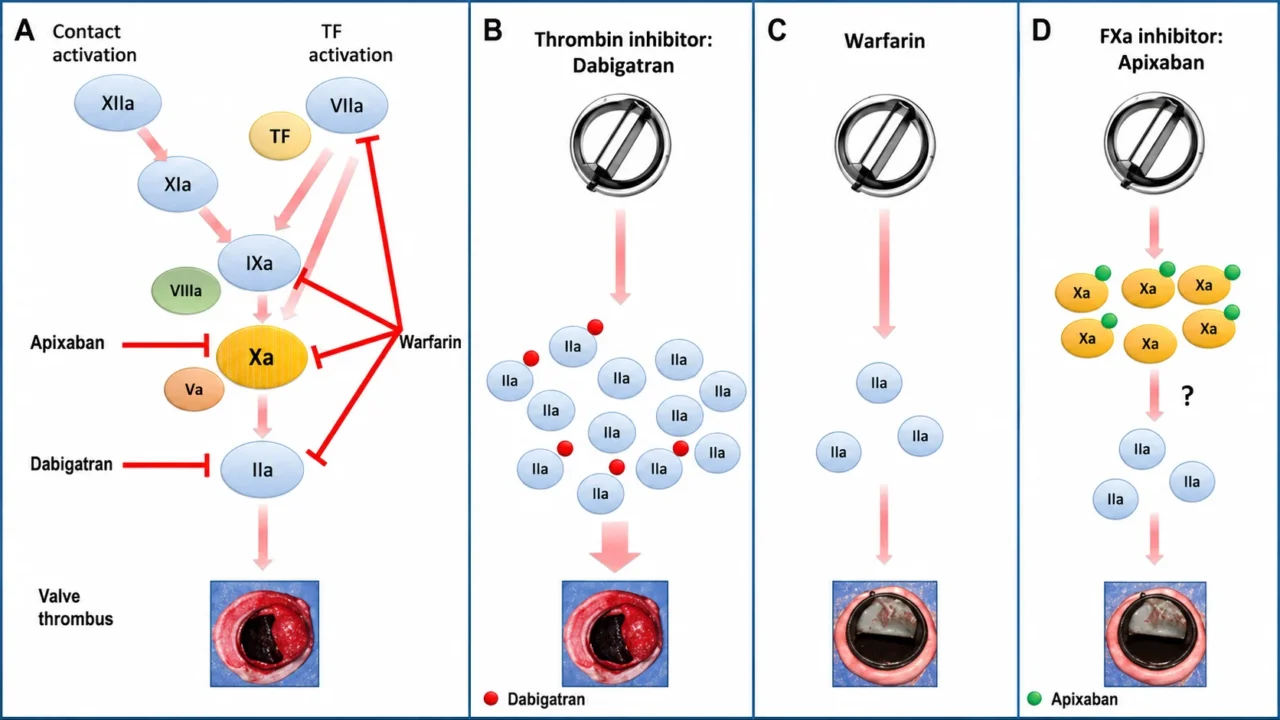
Dabigatran (Pradaxa) is contraindicated for mechanical heart valves because it is significantly less effective at preventing blood clots on artificial valves and carries a higher risk of major bleeding compared to traditional treatments like Warfarin.
The danger of using dabigatran in these patients was proven by the RE-ALIGN Trial, which was stopped early due to severe safety risks.
The specific reasons for this include:
1. Higher Rates of Valve Thrombosis:
Dabigatran only targets one specific clotting factor (thrombin).
Mechanical valves are highly prone to clot formation, and warfarin’s broader mechanism of action is much more effective at preventing clots from building up on the artificial material.
2. Increased Risk of Strokes:
Because dabigatran fails to adequately prevent clots from forming on the valves, users experienced more strokes and systemic embolisms.
3. Excessive Bleeding:
The drug also led to a significantly higher rate of major bleeding events, including dangerous bleeding in the pericardial space surrounding the heart.
4. Absorption Issues:
Dabigatran has very low oral bioavailability and can cause topical anticoagulant effects in the gastrointestinal tract, contributing to higher bleeding risks.
Mechanisms of mechanical heart valve thrombosis and the differential effects of anticoagulants on thrombin generation.”
Title: Anticoagulation for Mechanical Heart Valves: Will Oral Factor Xa Inhibitors Be Effective?
Authors: Noel C. Chan, Jeffrey I. Weitz, John W. Eikelboom
Other posts featuring Sthanu Subramanian on Hemostasis Today.
-
Sep 23, 2026, 00:08Janar Sathananthan: The Importance of Durable Drug Delivery in DCB Therapy
-
Sep 23, 2026, 00:07Arun V J: How Does a Good Conference Destroy My Ego?
-
Sep 23, 2026, 00:06Akshat Jain: Sickle Cell Disease Is Not One Size Fits All
-
Sep 23, 2026, 00:05Sherri Ozawa: Nicole De Vita’s Iron Deficiency Infographic Recognized at SABM
-
Sep 23, 2026, 00:04Zafar Ali: How Does Hemoglobin Know When to Hold Oxygen and When to Let It Go?
-
Sep 23, 2026, 00:02Ahmed Elsharkawy: Drug-Drug and Drug-Diluent Incompatibilities in ICUs and Hematology Units
-
Sep 22, 2026, 23:58Nishant Rajendra Tiwari: Hereditary TTP With the Same ADAMTS13 Variants but Strikingly Different Disease Courses
-
Sep 22, 2026, 23:57Akhil Santhosh: Pacritinib Versus Ruxolitinib in Myelofibrosis With Thrombocytopenia
-
Sep 22, 2026, 23:56Nathan Punwani: EASIX and sC5b-9 Predict TMA After Allogeneic Stem Cell Transplantation