

Tasbeeh Ahmed: Exploring Anticoagulation in Antiphospholipid Syndrome
Tasbeeh Ahmed, Medical Doctor, shared a post on LinkedIn:
“A clot may be the event. APS may be the reason.
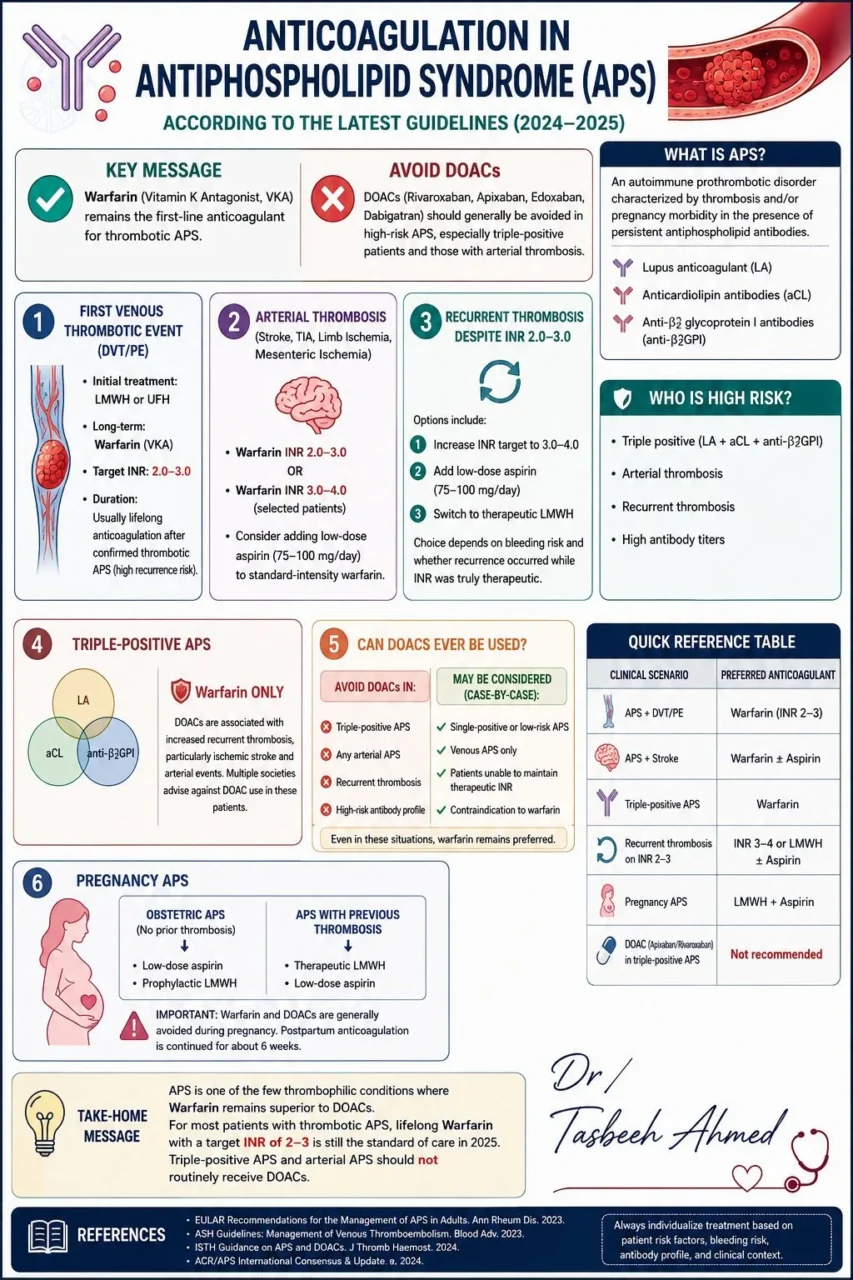
Despite the widespread adoption of DOACs, Antiphospholipid Syndrome (APS) remains one of the most important exceptions in modern anticoagulation.
For many patients with thrombotic APS, the choice of anticoagulant is not just a prescription – it can determine the risk of recurrent DVT, stroke, limb ischemia, or pregnancy complications.
- When is Warfarin still the gold standard?
- Why are DOACs discouraged in triple-positive APS?
- What should we do when thrombosis recurs despite therapeutic INR?
- How does management change during pregnancy?
I created this infographic to provide a concise, evidence-based overview of the latest APS anticoagulation recommendations and help clinicians navigate these critical decisions with confidence.
Because in APS, choosing the right anticoagulant can be the difference between preventing the next thrombosis – or missing the opportunity.
What has been your experience managing APS patients in clinical practice?”
Stay updated with Hemostasis Today.
-
Sep 24, 2026, 15:09Caroline Voltz-Girolt: Accelerating the Development of Innovative Therapies for Rare Blood Disorders
-
Sep 24, 2026, 15:00Gambo Ramatu: Anemia as a Preventable Pregnancy Challenge
-
Sep 24, 2026, 14:56Holly John: Sickle Cell Disease Beyond Pain and Clinical Outcomes
-
Sep 24, 2026, 14:45Bruce Holland: Ex Vivo Assessment of ActiGraft Clot Formation Under Anticoagulation
-
Sep 24, 2026, 14:33Mohamed El Belghiti Alaoui: Thrombin as a Therapeutic Target in Coagulation
-
Sep 24, 2026, 14:22Integrating Thrombosis Risk Into Menopause Care – World Thrombosis Day
-
Sep 24, 2026, 13:41Mahmoud Samir Bayomi: Raise ITP Awareness and Improve Patient Care
-
Sep 24, 2026, 12:56Maria Helena Parrinello: A New Score for Chronic GvHD Risk Assessment at the SIE Congress
-
Sep 24, 2026, 12:44Shehab Mohamed: TP53 Mutations and Outcomes in Myeloproliferative Neoplasms