


Tom Tang: Why is Asymptomatic DVT More Dangerous?
Tom Tang, Sale Director at Xiamen Senyang Co.,Ltd., shared a post on LinkedIn:
“According to Internal Medicine, the detachment of a deep vein thrombosis (DVT) can cause a pulmonary embolism.
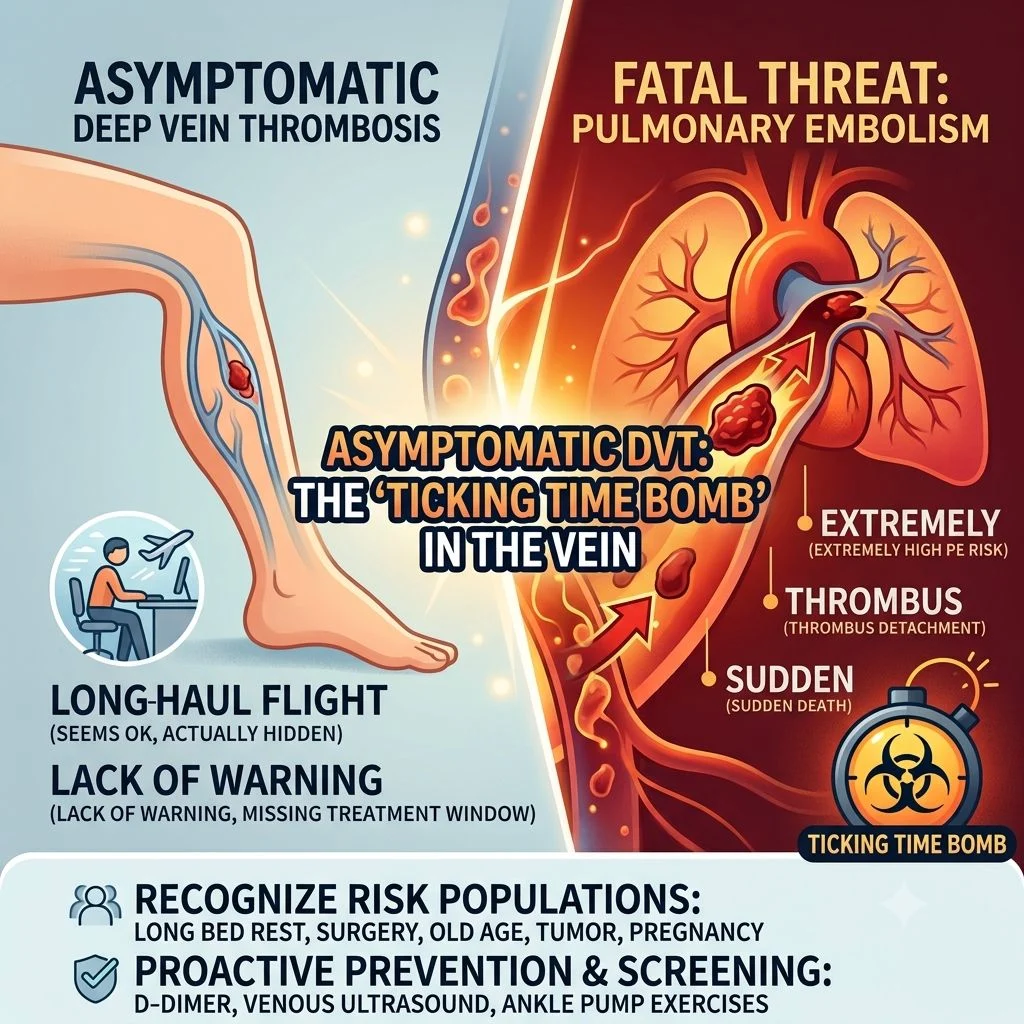
Asymptomatic DVT is considered more dangerous because its insidious progression and lack of warning signs make it highly susceptible to causing sudden, fatal complications.
Why is asymptomatic DVT more dangerous?
Delayed intervention due to lack of warning: Symptomatic DVT typically presents with sudden swelling, pain, or elevated skin temperature in the affected limb, prompting patients to seek timely medical attention and receive anticoagulant therapy.
In contrast, because asymptomatic DVT does not cause significant venous return obstruction, patients are often completely unaware of it, missing the optimal window for early intervention.
Extremely high risk of pulmonary embolism: The most fatal complication of DVT is pulmonary embolism (PE). According to Internal Medicine, deep vein thrombi have weak adhesion to the vessel wall in the early stages of the disease and are highly prone to detachment.
The asymptomatic state can easily create a false sense of being ‘disease-free.’
During this period, engaging in long-distance travel, undergoing surgery, or performing daily activities can easily trigger the thrombus to detach, travel with the bloodstream, and embolize the pulmonary artery, leading to life-threatening danger.
Insidious progression: Asymptomatic thrombi can quietly enlarge within the deep venous system, extending from the distal veins to the proximal deep veins (such as the iliac or femoral veins), which further increases the risk of a massive thrombus detaching.
High-Risk Populations and Management Strategies
Populations requiring close vigilance: Individuals who are bedridden for long periods, have recently undergone surgery, have malignant tumors, are of advanced age, or are pregnant have a significantly increased risk of developing DVT.
Proactive screening and prevention: For the aforementioned high-risk populations, safety cannot be determined solely by the presence or absence of symptoms.
Clinically, early screening is often conducted through D-dimer testing or lower extremity venous compression ultrasound.
Meanwhile, active prevention is crucial; for example, bedridden patients must persist with ankle pump exercises, those on long trips should avoid prolonged sitting and move their lower limbs appropriately, and anticoagulant medications should be used as prescribed when necessary.
Summary: Asymptomatic DVT is like a ‘ticking time bomb’ in the blood vessels. Its danger lies not in the severity of local symptoms, but in the potential for detachment at any moment, which can trigger a fatal pulmonary embolism.
Raising awareness of high-risk factors and proactively pursuing early screening and prevention are the core strategies for managing asymptomatic DVT.”
Stay updated with Hemostasis Today.
-
Sep 20, 2026, 16:42Kate Grushetzkaya: The Essential Flow Cytometry Checklist – 6 Steps to Better Data
-
Sep 20, 2026, 16:32New Episode of The Hematologist Podcast – ASH
-
Sep 20, 2026, 16:26Thomas Schinecker: A New Era for Health Innovation – Inside the Roche Genentech Innovation Center
-
Sep 20, 2026, 16:19Astha Srivastava: The Missing Megakaryocytes in Amegakaryocytic Thrombocytopenia
-
Sep 20, 2026, 16:19Heghine Khachatryan: An Elegant Example of Precision Thrombolysis – Targeting the Scaffold of Microvascular Thrombosis
-
Sep 20, 2026, 16:01Mohamed Ismail: Managing Extensive Iliofemoral and Inferior Vena Cava DVT
-
Sep 20, 2026, 15:58Can αIIbβ3 Receptor Play a Role in Platelet Production – Glanzmann’s Research Foundation
-
Sep 20, 2026, 15:46Alexsander Santiago: Evaluating Clinical Harm from Missing versus Overdiagnosing HIT
-
Sep 20, 2026, 15:28Nico Gagelmann: iMTSS to Dissect the Drivers of Post-Transplant Outcomes