


Tsigereda Bekele: Ischemic Stroke vs. Hemorrhagic Stroke
Tsigereda Bekele, Professional Nurse at MCM Comprehensive Specialized Hospital, shared a post on LinkedIn:
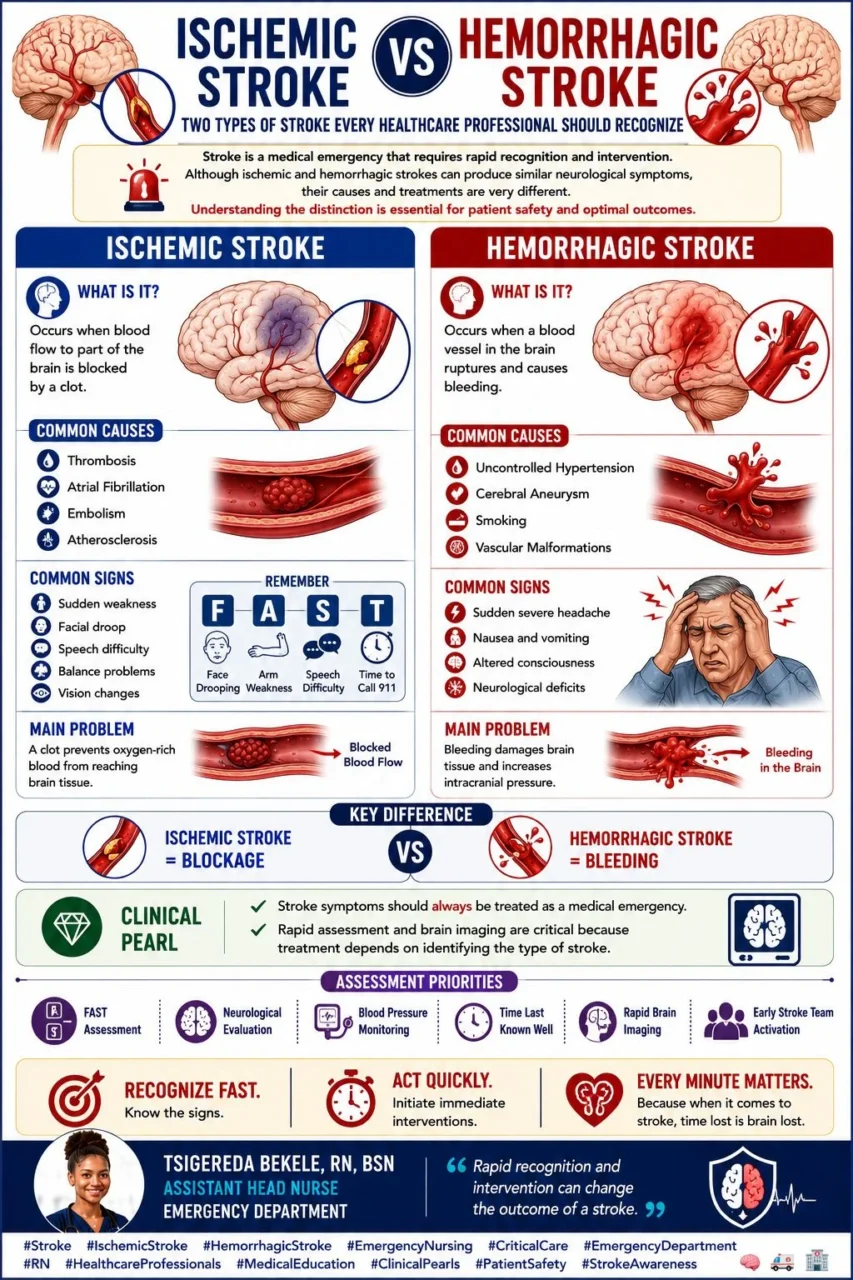
“Ischemic vs Hemorrhagic Stroke:
Two Types of Stroke Every Healthcare Professional Should Recognize
Stroke is a medical emergency that requires rapid recognition and intervention.
Although ischemic and hemorrhagic strokes can produce similar neurological symptoms, their causes and treatments are very different.
Understanding the distinction is essential for patient safety and optimal outcomes.
Ischemic Stroke
What Is It?
Occurs when blood flow to part of the brain is blocked by a clot.
Common Causes
- Thrombosis
- Atrial Fibrillation
- Embolism
- Atherosclerosis
Common Signs
- Sudden weakness
- Facial droop
- Speech difficulty
- Balance problems
- Vision changes
Main Problem
A clot prevents oxygen-rich blood from reaching brain tissue.
Hemorrhagic Stroke
What Is It?
Occurs when a blood vessel in the brain ruptures and causes bleeding.
Common Causes
- Uncontrolled Hypertension
- Cerebral Aneurysm
- Smoking
- Vascular Malformations
Common Signs
- Sudden severe headache
- Nausea and vomiting
- Altered consciousness
- Neurological deficits
Main Problem
Bleeding damages brain tissue and increases intracranial pressure.
Key Difference
- Ischemic Stroke: Blockage
- Hemorrhagic Stroke: Bleeding
Although symptoms may appear similar, treatment approaches are very different.
Clinical Pearl
Stroke symptoms should always be treated as a medical emergency.
Rapid neurological assessment and brain imaging are critical because treatment depends on identifying the type of stroke.
Early recognition and intervention can significantly improve outcomes.
Assessment Priorities
- FAST Assessment
- Neurological Evaluation
- Blood Pressure Monitoring
- Time Last Known Well
- Rapid Brain Imaging
- Early Stroke Team Activation
- Recognize Fast.
- Act Quickly.
- Every Minute Matters.
Because when it comes to stroke, time lost is brain lost.
‘Rapid recognition and intervention can change the outcome of a stroke.’ ”
Stay updated with Hemostasis Today.
-
Sep 20, 2026, 05:17Maxime Dely: When ABO Compatibility Isn’t Enough for Safe Transfusion
-
Sep 20, 2026, 04:54William Aird: What Does a Complete History and Physical Really Mean?
-
Sep 20, 2026, 04:34Hons Saurabh Kaushik: Why Uncontrolled LDL Can Be Harmful
-
Sep 20, 2026, 03:58Salih Ehsan: The Complexities of HbF and HbA2
-
Sep 20, 2026, 03:22The Voices of People Living With Bleeding Disorders – EHC
-
Sep 20, 2026, 01:18Sebastian Mafeld: Has 2026 Changed How We Treat Pulmonary Embolism?
-
Sep 20, 2026, 01:16Pall T. Onundarson: DOACs – Monitoring, Tailoring Dose and Identifying Problems
-
Sep 20, 2026, 01:15Thierry Fumeaux: From Efficacy to Effectiveness – The Value of Real-World Evidence
-
Sep 20, 2026, 01:14Said El Shamieh: VEGFA Genetic Variants and Bleeding Risk During Warfarin Therapy