


Zeeshan Ahmed Khattak: Certification Pathways in Anticoagulation for Pharmacists
Zeeshan Ahmed Khattak, Pharmacist (IP/Oncology) at Abu Dhabi Stem Cells Center, shared on LinkedIn:
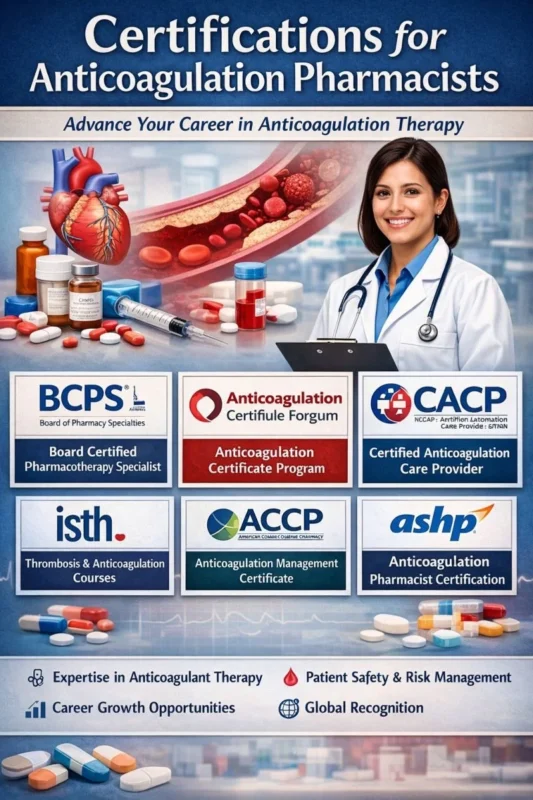
”Certifications for Pharmacists Interested in Anticoagulation Management
Anticoagulation therapy plays a critical role in preventing and treating thromboembolic disorders such as deep vein thrombosis (DVT), pulmonary embolism (PE), atrial fibrillation–related stroke prevention, and mechanical heart valve management.
With the increasing use of DOACs, LMWH, and complex warfarin management, specialized training has become essential for pharmacists who want to excel in this field.
Here are some valuable certifications and training programs for pharmacists aiming to specialize in anticoagulation management:
1. Board Certified Pharmacotherapy Specialist (BCPS) – Offered by the Board of Pharmacy Specialties
A globally recognized certification that strengthens clinical knowledge in pharmacotherapy, including anticoagulation management in various disease states.
2. Anticoagulation Certificate Program – Offered by the Anticoagulation Forum
One of the most focused programs on anticoagulation therapy covering:
- Warfarin management
- DOAC dosing and monitoring
- Drug–drug and drug–food interactions
- Managing bleeding and reversal agents
3. Certified Anticoagulation Care Provider (CACP) – Offered by the National Certification Board for Anticoagulation Providers
A specialized credential for healthcare professionals involved in anticoagulation clinics and thrombosis management services.
4. Thrombosis and Anticoagulation Certificate Courses – Available through the International Society on Thrombosis and Haemostasis
These programs provide deeper insights into:
- Thrombosis pathophysiology
- Advanced anticoagulation strategies
- Latest clinical guidelines and evidence
5. Anticoagulation Management Certificate – Offered by American College of Clinical Pharmacy
Focused training for pharmacists involved in anticoagulation clinics and multidisciplinary patient care teams.
Why these certifications matter?
- Enhance clinical expertise in anticoagulant therapy
- Improve patient safety and bleeding risk management
- Increase opportunities in anticoagulation clinics and cardiology services
- Strengthen your professional profile globally
As anticoagulant therapies continue to evolve, pharmacists with specialized training play a key role in optimizing therapy, preventing complications, and improving patient outcomes.
If you work in anticoagulation services or anticoagulation clinics, which certification or training helped you the most?”
Stay updated with Hemostasis Today.
-
Sep 19, 2026, 08:51Zia Ullah Shah: Advancing Early Diagnosis of Wilson Disease With AI and Biomarkers
-
Sep 19, 2026, 03:15Paulus Kirchhof: Europe’s Safe Hearts Plan to Reduce Cardiovascular Mortality
-
Sep 19, 2026, 03:10James Smith: Brain Training and Exercise for Cognitive Recovery After Stroke
-
Sep 19, 2026, 03:03Lesley Van Wyk: ASH Releases New Iron Deficiency Diagnosis Guidelines
-
Sep 19, 2026, 02:53Francisco Chacón-Lozsán: Acute Ischemic Stroke in 2026 – Expanding the Treatment Window
-
Sep 19, 2026, 01:53Thomas Dayspring: Understanding Genome and Lipid Interactions in Lipidology
-
Sep 19, 2026, 01:47Abdurrahman Tufan: Combination Targeted Therapy in Refractory Systemic Autoinflammatory Diseases
-
Sep 19, 2026, 01:44Patrick James Lynch: Mother of a Thousand Sons Premieres at BDC 2026
-
Sep 19, 2026, 01:41Genetic Fate Mapping Reveals Endothelial Cells During Venous Thrombus Resolution – RPTH Journal