


Bartosz Hudzik on Hemocompatibility in HeartMate 3 LVAD: Progress and Persistent Challenges
Bartosz Hudzik, Editorial Consultant at JACC Case Reports, shared on LinkedIn:
”Hemocompatibility in HeartMate 3 LVAD: Progress and Persistent Challenges
The fully magnetically levitated HeartMate 3 (HM3) left ventricular assist device has significantly reduced pump thrombosis and stroke, redefining mechanical circulatory support benchmarks.
However, one important challenge remains:
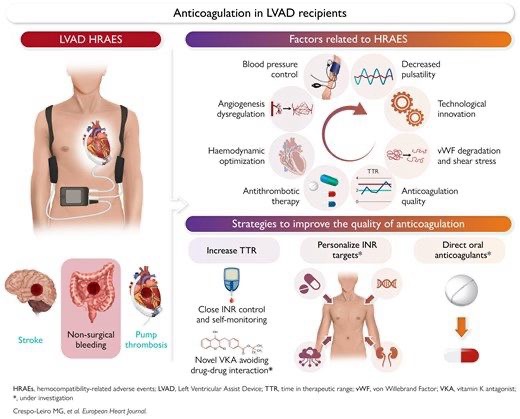
Non-surgical bleeding continues to be a meaningful source of morbidity, underscoring that even with improved device design, hemocompatibility-related adverse events (HRAEs) are now largely driven by patient factors and anticoagulation quality rather than device malfunction.
Optimizing Anticoagulation Quality to Improve Outcomes in HM3 LVADs — European Heart Journal
Key Insights
- Hemocompatibility progress with HM3
Device innovation has led to a dramatic reduction in pump thrombosis and ischemic stroke, shifting the residual risk profile toward bleeding. - Non-surgical bleeding persists
Despite improved hemocompatibility, bleeding—particularly gastrointestinal and mucosal—remains one of the most common and clinically relevant complications. - Anticoagulation quality is central
Higher time in therapeutic range (TTR) is associated with a lower risk of residual bleeding, reinforcing that how anticoagulation is managed matters just as much as how much is given.
Strategies to Improve the Quality of Anticoagulation
- Maximize Time in Therapeutic Range (TTR)
Stable INR control reduces bleeding without increasing thrombotic risk. - Structured anticoagulation programs
Dedicated LVAD teams and standardized protocols improve consistency. - Frequent INR monitoring and proactive dose adjustment
Prevents large INR swings that drive HRAEs. - Home INR testing and digital health tools
Enable tighter, real-time anticoagulation control. - Patient education and engagement
Diet, adherence, and early symptom reporting all matter.
Take-home message
In the HeartMate 3 era, technology has largely solved pump thrombosis — but bleeding risk now depends on anticoagulation quality.
Increasing TTR is one of the most powerful, modifiable ways to improve outcomes.”
Stay updated with Hemostasis Today.
-
Sep 30, 2026, 15:58Bernhard Merget: New Frontiers in Thrombosis and Stroke Research
-
Sep 30, 2026, 15:39Ifeanyichukwu Ifechidere: The Molecular Orchestra of Primary Hemostasis
-
Sep 30, 2026, 15:28Reassessing the Benefit–Risk Balance of Extended Anticoagulation in Cancer Patients – ESC Working Group on Cardiovascular Pharmacotherapy
-
Sep 30, 2026, 15:07Chiranjeev Sharma: Targeting Factor XIa with the Synthetic Inhibitor SB-01
-
Sep 30, 2026, 14:41Bruna Gigante: Balancing Thrombosis and Bleeding in Cardiovascular Care
-
Sep 30, 2026, 14:13Ashok Choudhury: Portal Vein Thrombosis and Outcomes in Cirrhosis
-
Sep 30, 2026, 13:57Leslye Conde Bazán: When Conventional Imaging Is Not Enough – The Role of IVUS
-
Sep 30, 2026, 13:41Huda Salah Eldin: The Challenge of Balancing Antithrombotic Therapy After PCI
-
Sep 30, 2026, 13:29Abdus Salam: What Can CT Venography Reveal About the Veins?