

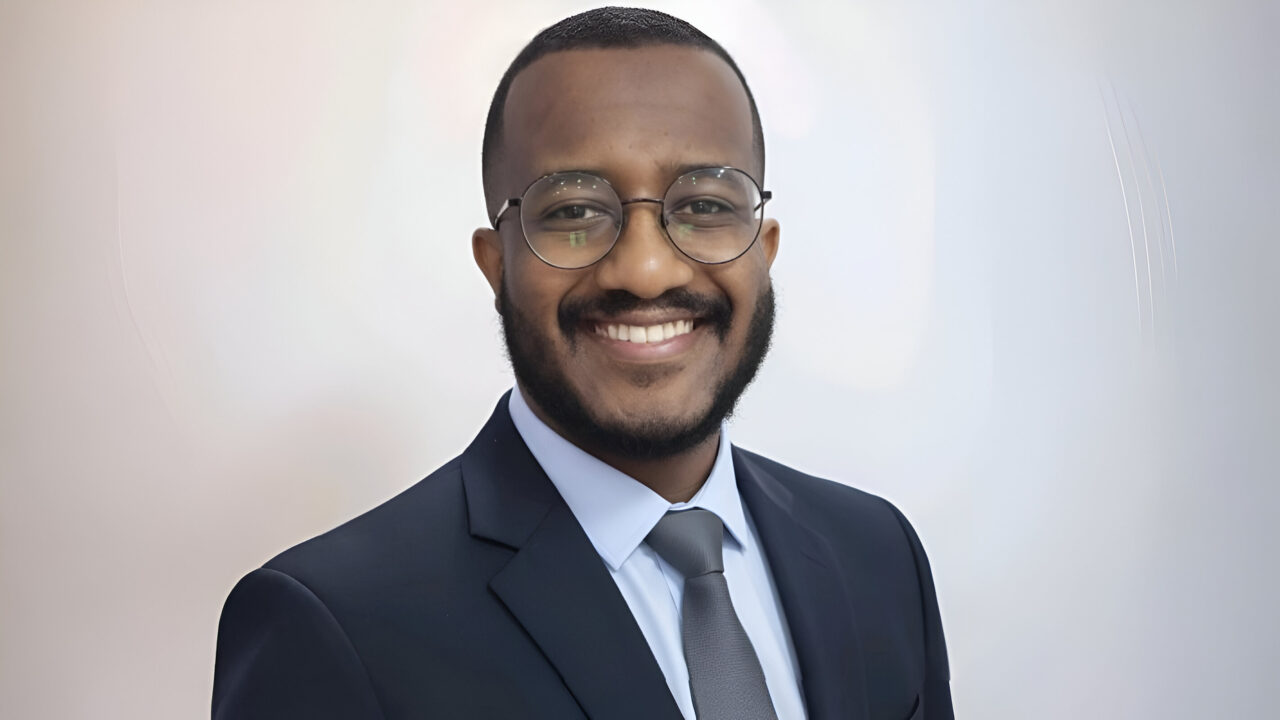
Khabab Abbasher Hussien Mohamed Ahmed Announces 2 New Publications
Khabab Abbasher Hussien Mohamed Ahmed, Global Burden of Disease (GBD) Senior Collaborator at Institute for Health Metrics and Evaluation, shared on LinkedIn:
”Honored to Announce Our Recent Two New Publications in Reputable Journals:
I am proud to share the publication of two important research contributions addressing critical challenges in Neurology, Medical Education, Psychiatry and Public Health.
These works reflect collaborative efforts across institutions and highlight important realities affecting clinical outcomes and trainee well-being.
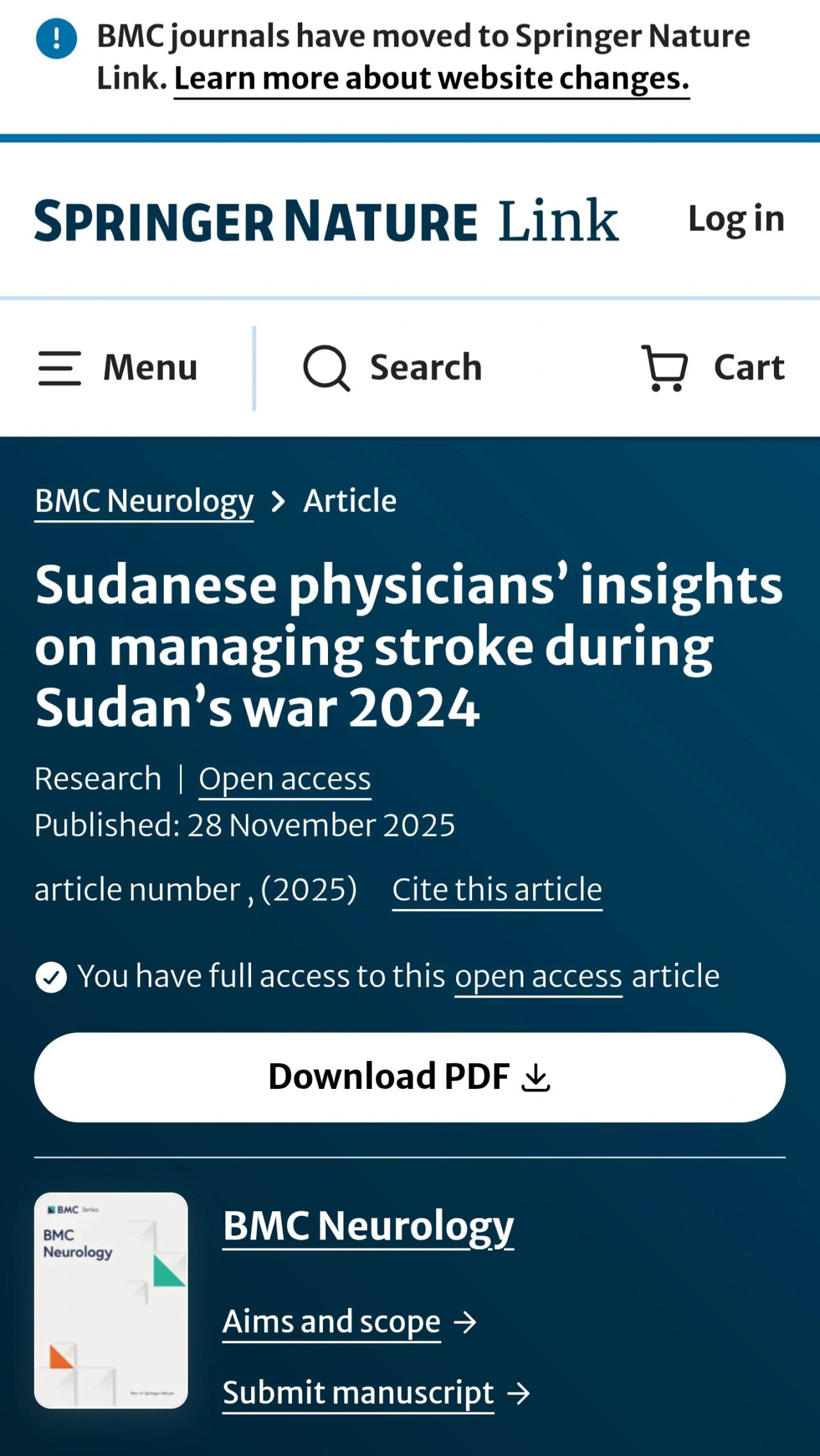
1. “Sudanese Physicians’ Insights on Managing Stroke During Sudan’s War 2024”
Published in: BMC Neurology, IF: 2.2, A Q2 Journal (Springer Nature Group).
This study captures frontline physicians’ lived experiences in delivering stroke care amidst the conflict in Sudan.
The findings reveal the devastating effects of war on acute stroke intervention, neuroimaging access, thrombolysis availability, rehabilitation continuity, workforce security, and patient outcomes.
The research underscores the urgent need for humanitarian strategies, strengthened infrastructure, mobile-health responses, and conflict-specific stroke protocols.
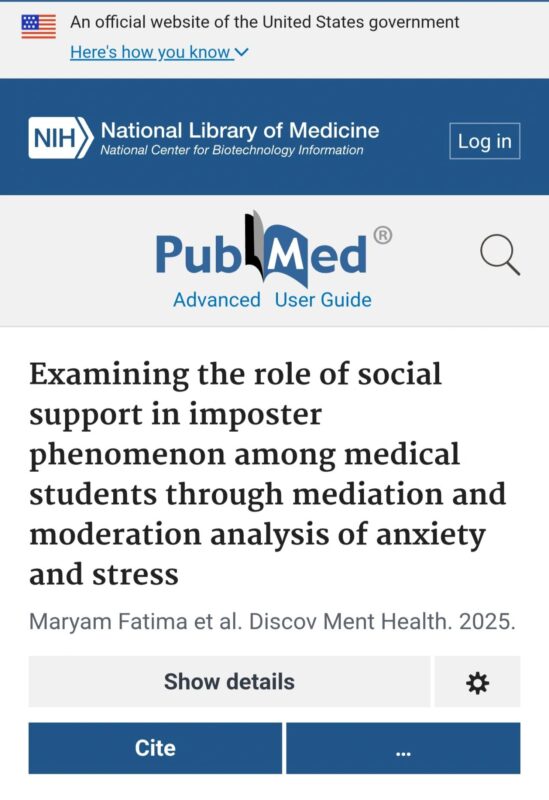
2. “Examining the Role of Social Support in Imposter Phenomenon Among Medical Students Through Mediation and Moderation Analysis of Anxiety and Stress”
Published in: Discover Mental Health, IF: 2.7, A Q2 Journal (Springer Nature Group).
This multi-center study among Pakistani medical students provides deep insight into how perceived social support influences imposter syndrome.
Importantly, our results show that social support reduces imposter feelings indirectly by mediating anxiety and stress, rather than acting as a direct buffer.
The implications extend to institutional culture, academic mentorship models, psychological support systems, and resilience-building in medical training.
Both publications are open-access, enabling unrestricted academic and humanitarian benefit to clinicians, researchers, policy-makers, and educators internationally.
I extend my sincere appreciation to my outstanding co-authors and institutional partners for their dedication and collaboration.
It remains an honor to contribute to evidence-based research that informs both clinical and educational transformation.”
Stay updated with Hemostasis Today.
-
Sep 23, 2026, 07:28Isabelle Grenier-Pleau: Targeting Von Willebrand Disease to Transform Women’s Health
-
Sep 23, 2026, 07:07Wolfgang Miesbach: Mechanisms of Liver Injury After Hemophilia A Gene Therapy
-
Sep 23, 2026, 06:24Nicolas Gendron: Everolimus and Venous Thromboembolic Risk in Kidney Transplantation
-
Sep 23, 2026, 06:07Hoori Shahwar: Cerebral Venous Sinus Thrombosis Diagnosis and Management
-
Sep 23, 2026, 06:06Advancing Hemophilia Care and Patient Advocacy in Bangladesh – World Federation of Hemophilia
-
Sep 23, 2026, 05:54Bringing the Global Thrombosis and Haemostasis Community Together in 2027 – ISTH
-
Sep 23, 2026, 04:34David Akande: When Sickle Cell Crises Have No Clear Trigger
-
Sep 23, 2026, 04:13Jean Connors: Safety of Heparin Re-Exposure in Patients with Remote HIT
-
Sep 23, 2026, 04:09Beth Psaila: Applications Now Open for the Gordon Research Conference on Megakaryocytes and Platelets