

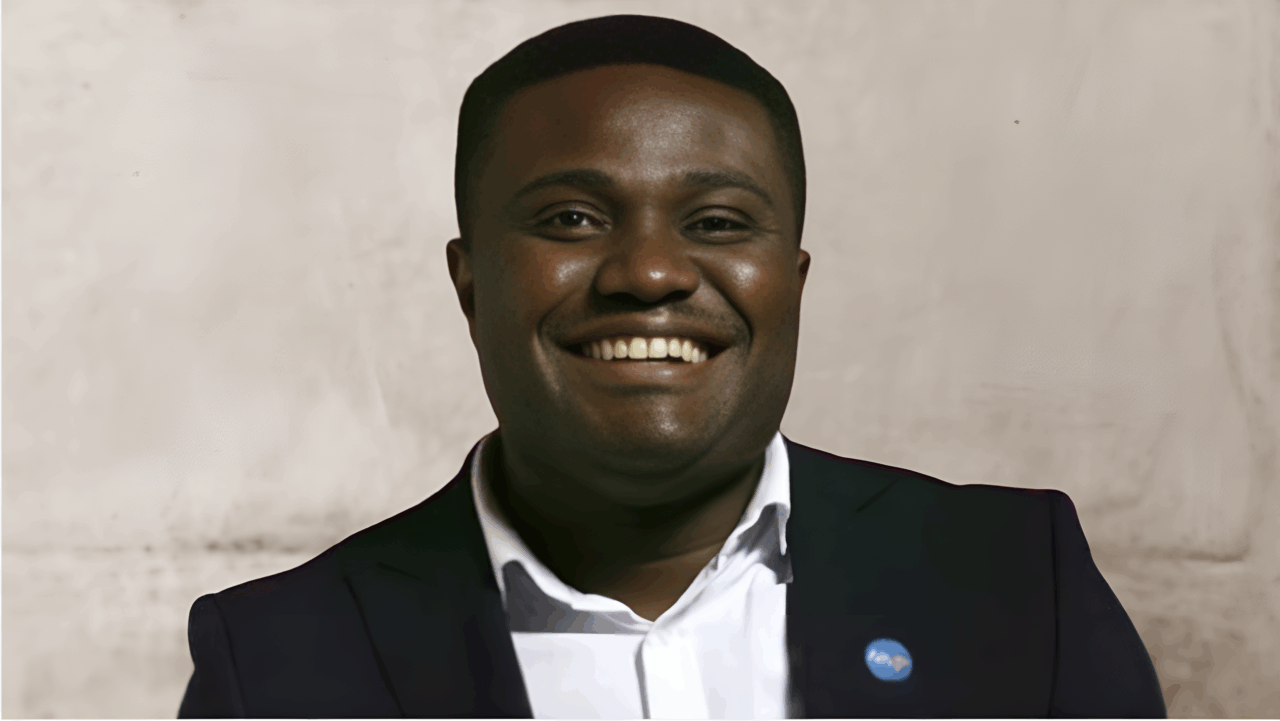
Paul Bolaji: Beyond Acute Stroke Care – Independent Integrated Living After Stroke
Paul Bolaji, Education Lead (Stroke Services) at Dorset County Hospital NHS Foundation Trust, shared on LinkedIn:
”Stroke Reflection Series 35
Beyond Acute Stroke Care: Independent, Integrated Living After Stroke
‘Recovery does not start and end in the hospital. It lives in daily life.’- Dr. Evans Obaigwa
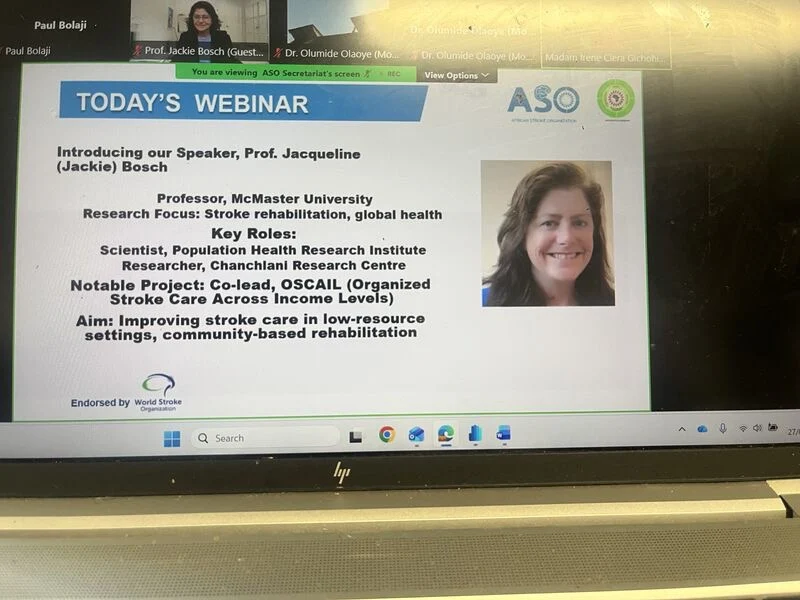
I was both intrigued and deeply inspired during the recent African Stroke Organization (ASO) Webinar
Watching Prof. Jackie Bosch Project Co-Lead of OSCAIL (Organised Stroke Care Across All Levels), speak so effortlessly about enhancing occupational therapy (OT) capacity in LMIC was a reminder that stroke recovery is not only clinical , it is structural, educational, and systemic.
She described tiered technologies from Tier 0 to Tier 4, outlining practical layers of innovation that can optimise OT care after stroke.
What struck me most was not just the sophistication of the framework, but the optimism grounded in reality of the potentials in Africa such as:
- High mobile device uptake
- Expanding broadband access
- A young, tech-savvy population
- Growing innovation hubs
- Strong community health worker networks
Africa does not lack potential. It must harness it.
Equally compelling was Dr. Evans Obara Obaigwa, former Head of the Kenya Occupational Therapy Society, who emphasised the need for culturally responsive stroke rehabilitation.
He reminded us that evidence-based practice has three pillars and the third pillar, patient-sensitive, context-aware intervention, must be restored.
Therapy must be designed around lived reality.
Adapted to culture.
Grounded in community.
Stroke is sudden, incapacitating, and often distressing.
While acute reperfusion therapies have improved survival, nearly one-third of stroke survivors still require support with activities of daily living.
Survival is not enough. Independence, Participation, Identity and Dignity are sacrosanct.
Stroke care must be viewed through the biopsychosocial lens (Engel’s view).
A neurological insult becomes an activity limitation.
That limitation affects participation, social roles, employment, and identity, often triggering psychological distress.
Stroke Care must therefore be multipronged, multidisciplinary, and holistic.
As Prof Jackie Bosch highlighted, low-cost technologies, even something as simple as a mobile phone, can power tele-rehabilitation, caregiver education, follow-up support, and scalable stroke recovery models in resource-limited settings.
In Africa, the time has come to stop defining ourselves by inequity and start defining ourselves by ingenuity.
Our resources may differ.
They may not always be enough.
But we have talent.
We have resilience.
We have technology.
We have community.
When we remember the ‘why’ of our profession, when we place the stroke survivor at the centre, we can endure any ‘how’ required to restore independence and integration to patients with stroke – Nietzsche
As said in ‘The Great Debaters’ starring Denzel Washington:
‘Use what you have to get what you want.’
PB 26
N.B: This piece is my personal opinion.”
Stay updated with Hemostasis Today.
-
Oct 19, 2026, 17:44Paul Riley: Moderating a Webinar on Anticoagulation Monitoring
-
Oct 19, 2026, 16:36Christopher Pittman: Blood Clot Prevention Cannot End at Hospital Discharge
-
Oct 19, 2026, 16:13Javier M. Floren: When Immune Cells Move With Their Environment
-
Oct 19, 2026, 16:04Hussnain Javaid: New EHA Guidelines for HbSC Disease Management
-
Oct 19, 2026, 15:50Deep Madkaiker: A New Academic Opportunity in Transfusion Medicine at ACTREC
-
Oct 19, 2026, 15:19Why Hematologists Should Care About Diminished Ovarian Reserve in SCD – ASH Education
-
Oct 19, 2026, 14:16Hyperfibrinolysis as an Underrecognized Cause of Bleeding
-
Oct 19, 2026, 13:36Shobhna Ladva: Aspen Pharma EME Raises Awareness of Blood Clot Risks During Hormonal Transitions
-
Oct 19, 2026, 13:11Giulia Furnari: Connecting With Global Hematology Experts at IACH 2026