

Tareq Abadl: Laboratory Diagnosis of Anemia
Tareq Abadl, Medical Laboratory Specialist and Director of the Blood Bank at Dr. Abdelkader Al-Mutawakkil Hospital, posted on LinkedIn:
“Laboratory Diagnosis of Anemia
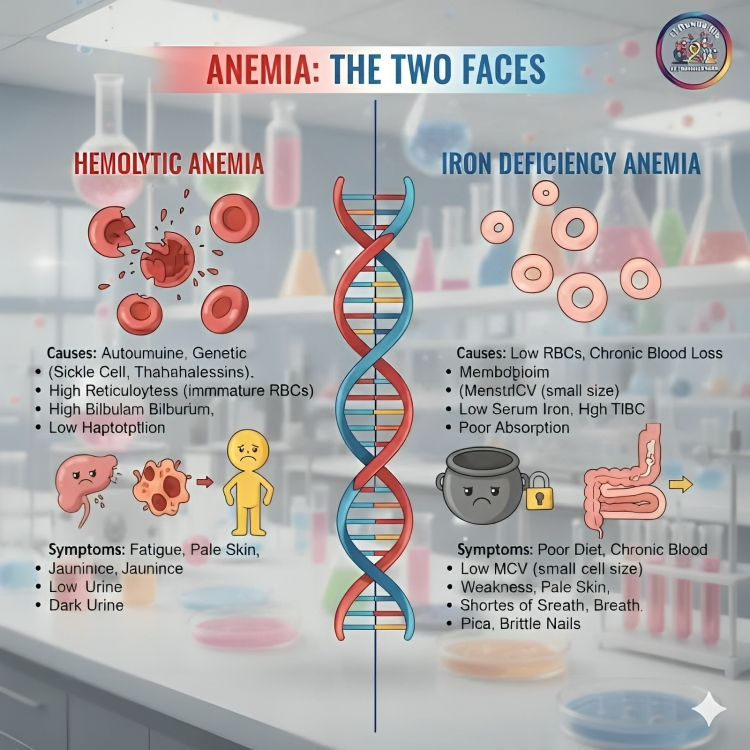
1. Iron Deficiency Anemia (IDA)
When iron deficiency is suspected, several tests must be evaluated together to get the full picture:
- Hemoglobin (Hb)
The iron-containing protein that carries oxygen.
Low Hb → early indicator of anemia.
- Hematocrit (Hct)
Measures the percentage of RBCs in blood.
Low Hct → possible iron deficiency.
- Ferritin
The main iron-storage protein.
Low ferritin → strongest marker of IDA.
- Serum Iron
Measures circulating iron in blood.
Low value supports the diagnosis but not enough alone.
- Total Iron-Binding Capacity (TIBC)
In IDA, TIBC increases because the body tries to capture more iron.
- Transferrin Saturation
Low saturation → low available iron.
- RBC Indices
MCV: Low (microcytic)
MCHC: Low (hypochromic)
All these tests together give a complete assessment of iron status and confirm Iron Deficiency Anemia.
2. Hemolytic Anemia (HA)
Hemolytic anemia is a completely different mechanism—RBCs are being destroyed. Key tests include:
- Hemoglobin (Hb)
Normal or low depending on severity.
- Reticulocyte Count
Elevated retics → bone marrow trying to compensate for RBC destruction.
- Peripheral Blood Smear
Fragmented or abnormal RBCs → evidence of hemolysis.
- Bilirubin (Indirect)
Increases due to breakdown of hemoglobin.
- Haptoglobin
Decreased because it binds free hemoglobin released during hemolysis.
- LDH (Lactate Dehydrogenase)
High levels indicate cell destruction.
- Direct Coombs Test
Positive result → immune-mediated hemolysis.
These tests clarify the type, cause, and severity of hemolysis before treatment decisions.
Summary
- Iron Deficiency Anemia → Iron profile + RBC indices
- Hemolytic Anemia → Hemolysis markers + Coombs test + Reticulocytes
Combining the right tests provides accurate diagnosis and guides precise treatment.”
Follow the latest in Hemostasis Today.
-
Sep 21, 2026, 09:52Afreenish Tasadaq: Contributing to Awareness about Bleeding Disorders
-
Sep 21, 2026, 08:49Andrea Bridges: When Support Becomes a Commitment to Give Back
-
Sep 21, 2026, 08:21Managing Thrombotic Risk in Pregnancy
-
Sep 21, 2026, 04:06Allison Lewin: How Gender Shapes the Way We Receive Medical Care
-
Sep 21, 2026, 03:49Jessica Lee: Walking Together for a Stronger Bleeding Disorders Community
-
Sep 21, 2026, 03:36Syed Asif Ali Shah: From Pakistan to Australia – A Clinical Haematology Milestone
-
Sep 21, 2026, 03:22Katie Baca-Motes: Estradiol Fluctuations May Help Explain Menstrual Migraine
-
Sep 21, 2026, 03:00Family History Can Reveal Hidden Risk of Aortic Dissection – The Marfan Foundation
-
Sep 21, 2026, 02:47Transitioning from Paediatric to Adult Haemophilia Care – Haemophilia Foundation Australia