


New EAS Consensus Highlights Advances in Pediatric FH Care
European Atherosclerosis Society shared a post on LinkedIn about a recent article by Albert Wiegman et al., published in European Heart Journal։
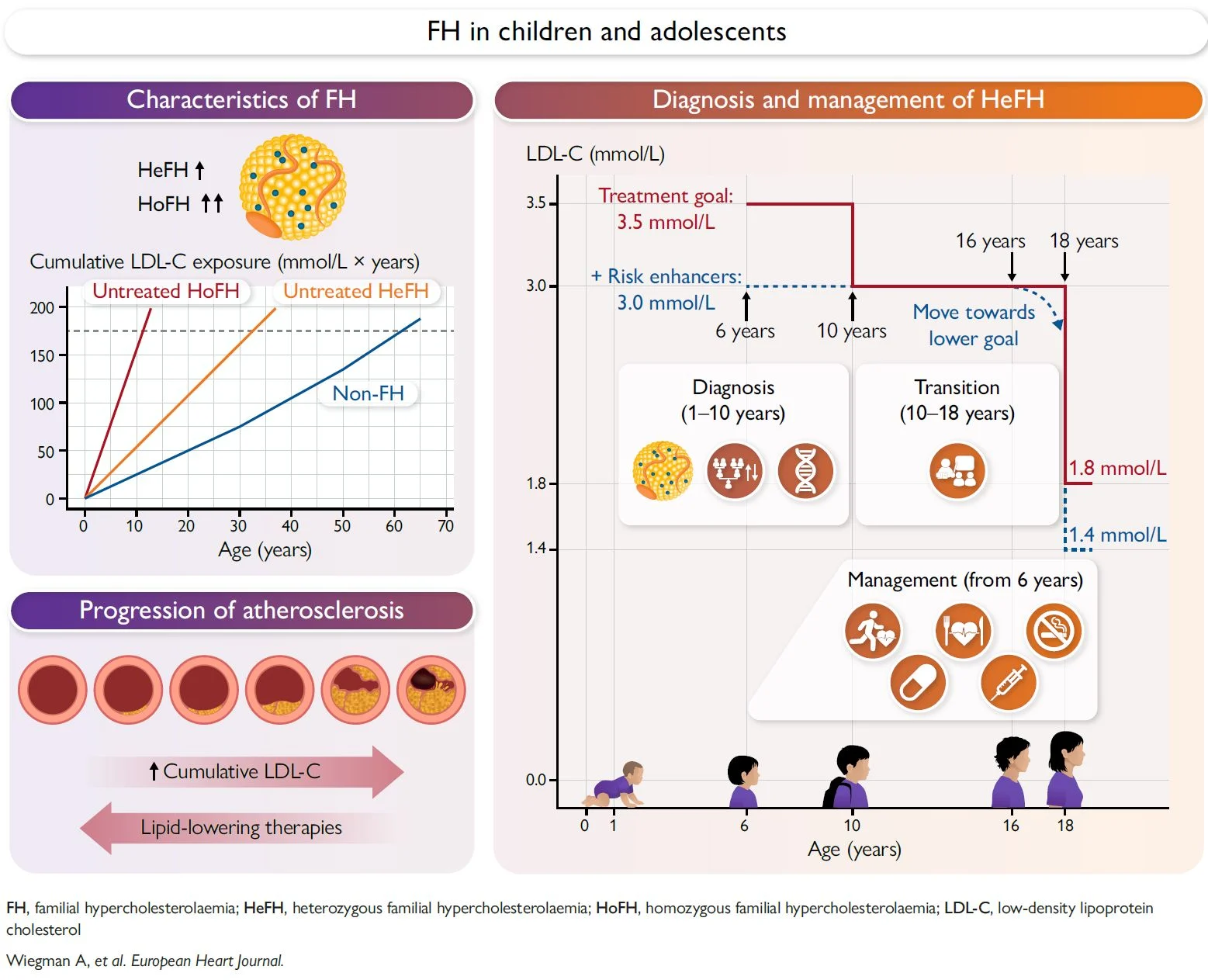
“Familial hypercholesterolaemia (FH) is a common genetic disorder characterized by lifelong elevated low-density lipoprotein cholesterol (LDL-C) concentrations, which increase the risk of premature atherosclerotic cardiovascular disease (ASCVD).
FH affects around 1 in 300 people worldwide, while the more severe form, Homozygous FH (HoFH), affects about 1 in 300,000 people and can lead to serious cardiovascular complications already in childhood.
Early diagnosis and treatment can dramatically improve – and even normalize – life expectancy.
Yet, fewer than 10% of affected children in Europe are currently identified.
The European Atherosclerosis Society (EAS) consensus statement on FH in children and adolescents highlights:
- Improved diagnostic criteria
- Earlier treatment initiation – sometimes from age 6
- Lower LDL-C treatment targets
- New lipid-lowering therapies
- Updated treatment algorithms
- Better transition from paediatric to adult care.
The statement emphasizes one key message: reducing lifelong exposure to high LDL-C is critical to protecting cardiovascular health from an early age.”
Title: Familial hypercholesterolaemia in children and adolescents: a European Atherosclerosis Society consensus statement
Authors: Albert Wiegman, Mafalda Bourbon, Tomas Freiberger, Samuel S Gidding, Susanne Greber-Platzer, Urh Groselj, Kirsten B Holven, Lisa C Hudgins, Steve E Humphries, Barbara A Hutten, Daiana Ibarretxe, Cristina Pederiva, Noel Peretti, Frederick J Raal, Uma Ramaswami, Veronika Sanin, Raul D Santos, Elisabeth Steinhagen-Thiessen, Gerald F Watts, Rosie Perkins, Marianne Benn, Christoph J Binder, Stefano Romeo, Jeanine E Roeters van Lennep
Stay updated with Hemostasis Today.
-
Oct 9, 2026, 16:23David Boone: Distinguishing Stroke Prevention from Rhythm Control in Atrial Fibrillation
-
Oct 9, 2026, 15:27Mohamed Hegazi: Geostatistical Modelling Maps Global β-Thalassaemia Carrier Prevalence
-
Oct 9, 2026, 15:15Maha Othman: Uncovering the Consensus on TXA in TBI – Call for Collaboration on a Landmark Umbrella Review
-
Oct 9, 2026, 15:07Daniel D. Han: How Inhalation Product Exposure Impairs Cardiac and Platelet Recovery After MI
-
Oct 9, 2026, 14:58William Toole: How Ultrasound-Guided PRP Therapy Relieves Joint and Tendon Pain
-
Oct 9, 2026, 14:50Shayan Mohammadmoradi: In Corpus Christi for the 20th Midwest Platelet Conference
-
Oct 9, 2026, 14:37Tariq Tramboo: High Platelet Concentrate for Osteoarthritis Knee – Recent Meta-Analyses
-
Oct 9, 2026, 14:26Yousma Khan: Hematology Series – Beyond RBCs, WBCs and Platelets
-
Oct 9, 2026, 14:13Jesus Ardila Novoa: Why the WHO’s Historic Essential Medicines List Decision Is Just the Beginning