

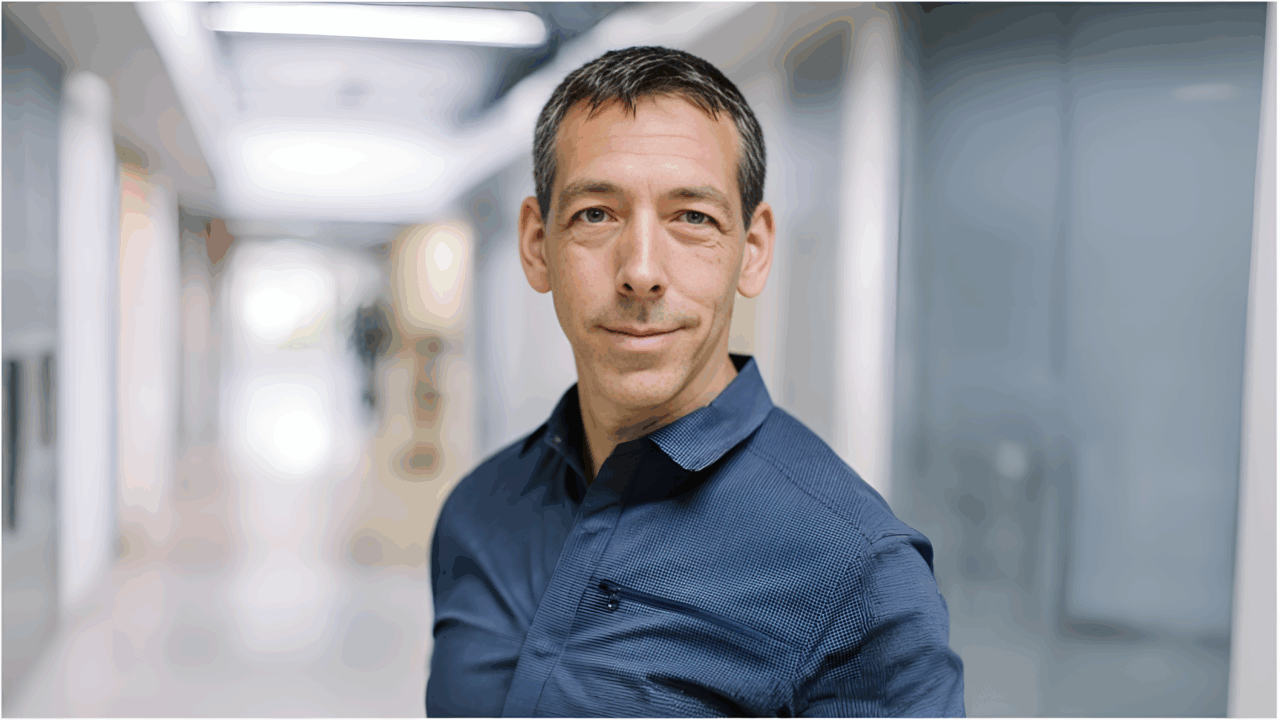
Euan Ashley on the Functional Landscape of Coding Variation in the FH Gene LDLR
Euan Ashley, Chair at Stanford Department of Medicine, Author of The Genome Odyssey, shared on LinkedIn:
”So excited about this new work from our CardioVar consortium out this week in Science Magazine led by the amazing Daniel Tabet, and Fritz Roth.
Familial hypercholesterolemia (FH) is among the most common inherited cardiovascular diseases.
It causes early heart attacks that are preventable with modern therapy and a genomics-forward strategy for family testing.
The challenge is that many variants identified by sequencing are of unclear significance.
The new science of “variant effect mapping” uses cellular biology to model all possible variants in important genes in advance, providing scientists and clinicians with estimates as to their pathogenicity.
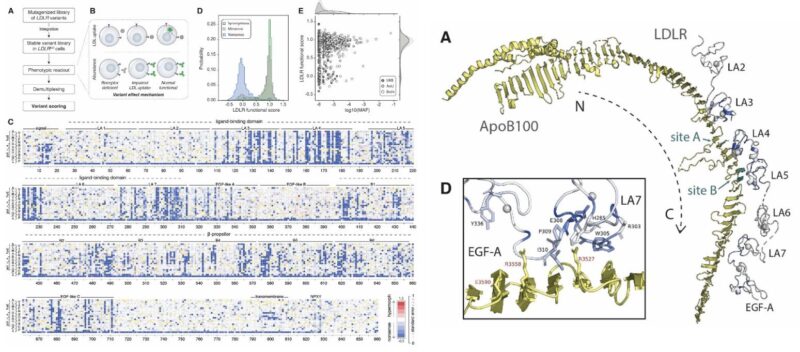
Here, Daniel and team tested the impact of nearly all possible (~17,000) missense coding variants in the receptor for LDL (“bad cholesterol”), the gene most commonly responsible for FH.
Importantly, they tested two functional readouts: LDLR cell-surface abundance and LDL uptake.
This yielded sequence–function maps that recapitulate known biochemistry, offer functional insights, and provide evidence for interpreting clinical variants.
Further, functional scores correlated with hyperlipidemia phenotypes in prospective human cohorts and augmented polygenic scores to improve risk inference.
These sorts of maps will increasingly become central tools in our quest to understand disease-causing human genes to help patients and prevent disease.
Amazing work from Daniel, Fritz and team.
Paper.
Variant effect map review.
Cardiovar consortium.
Atlas of variant effect maps.”
Read the full article in Science.
Article: The functional landscape of coding variation in the familial hypercholesterolemia gene LDLR
Authors: Anna Axakova, Euan Ashley, Mafalda Bourbon, Jack M. P. Castelli, Melina Claussnitzer, Elizabeth T. Cirulli, Atina G. Coté, Carmela Serio Carrero, Da Kuang, Daniel R. Tabet, Douglas M. Fowler, Iosifina Fotiadou, Aanshi Gandhi, Michael Garton, Andrew M. Glazer, Robert A. Hegele, Mohammad Majharul Islam, Jennifer J. Knapp, Joshua W. Knowles, Brett M. Kroncke, Nishka Kishore, Roujia Li, Megan C. Lancaster, Calum A. MacRae, Kenneth Matreyek, Ranim Maaieh, Victoria N. Parikh, Simon G. Pfisterer, Ashyad Rayhan, Dan M. Roden, Frederick P. Roth, Shahin Sowlati-Hashjin, Olivia Taverniti, Jochen Weile.
Stay updated on all scientific advances with Hemostasis Today.
-
Sep 21, 2026, 10:18Mana Alshehri: A New Step Toward Hemophilia B Gene Therapy in Adolescents
-
Sep 21, 2026, 09:52Afreenish Tasadaq: Contributing to Awareness about Bleeding Disorders
-
Sep 21, 2026, 08:49Andrea Bridges: When Support Becomes a Commitment to Give Back
-
Sep 21, 2026, 08:21Managing Thrombotic Risk in Pregnancy
-
Sep 21, 2026, 04:06Allison Lewin: How Gender Shapes the Way We Receive Medical Care
-
Sep 21, 2026, 03:49Jessica Lee: Walking Together for a Stronger Bleeding Disorders Community
-
Sep 21, 2026, 03:36Syed Asif Ali Shah: From Pakistan to Australia – A Clinical Haematology Milestone
-
Sep 21, 2026, 03:22Katie Baca-Motes: Estradiol Fluctuations May Help Explain Menstrual Migraine
-
Sep 21, 2026, 03:00Family History Can Reveal Hidden Risk of Aortic Dissection – The Marfan Foundation