


Unmasking BDUC: Johanna Gebhart’s Call for Change at EHC 2025
Johanna Gebhart, Associate Professor and Haemostasis Expert at the Medical University of Vienna, shared a post by Wolfgang Miesbach on LinkedIn:
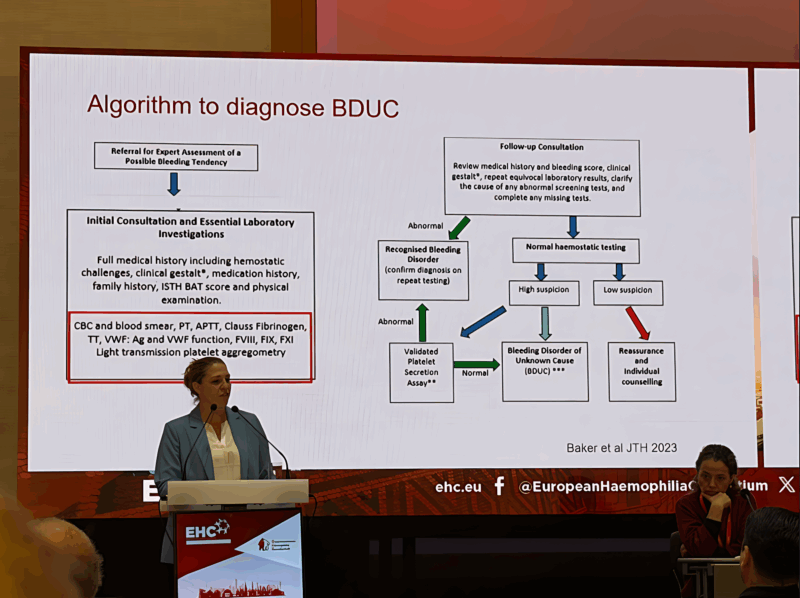
”It was a real pleasure to present our work on Bleeding Disorder of Unknown Cause (BDUC) at EHC 2025 in Vienna.
BDUC remains a challenging and often overlooked condition – yet it affects many patients with mild to moderate bleeding where no clear cause is found. Advancing research in this field is essential to ensure these patients receive the attention and care they deserve.
Many thanks to Wolfgang Miesbach for acknowledging our work and to the European Haemophilia Consortium for providing such an inspiring platform to share and discuss these important topics.”
Quoting Wolfgang Miesbach’s post:
”Great Research at EHC 2025. The great presentation by Johanna Gebhart from the Medical University of Vienna at this year’s EHC Conference in Vienna, focused on “BDUC: a new group that deserves attention”.
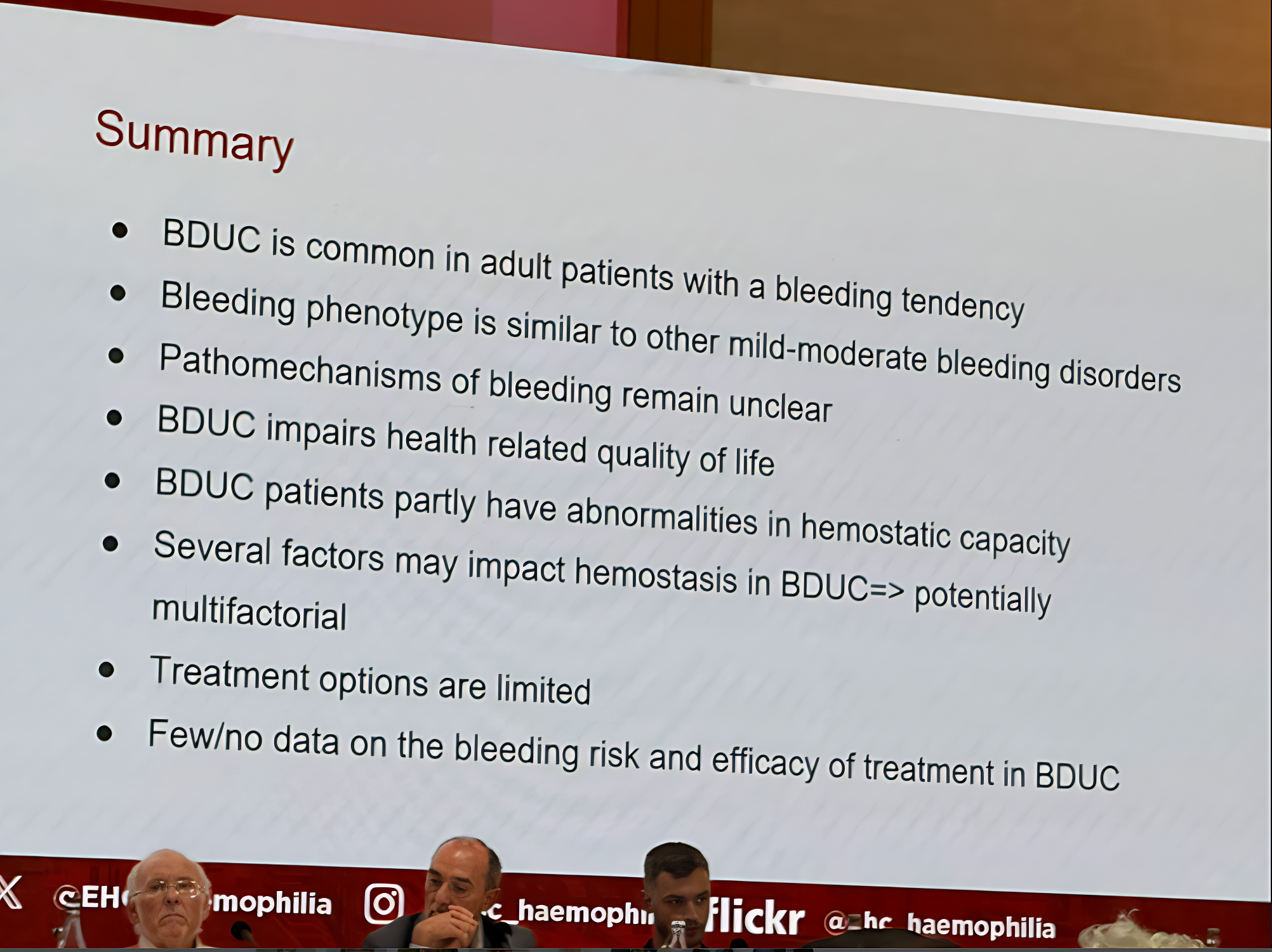
Dr. Gebhart’s work on Bleeding Disorder of Unknown Cause (BDUC) may transform our understanding of this challenging diagnostic and treatment category. Her research reveals that BDUC affects up to 60% of patients with mild-to moderate bleeding disorders where no underlying cause:
– BDUC patients show bleeding phenotypes indistinguishable from other mild bleeding disorders
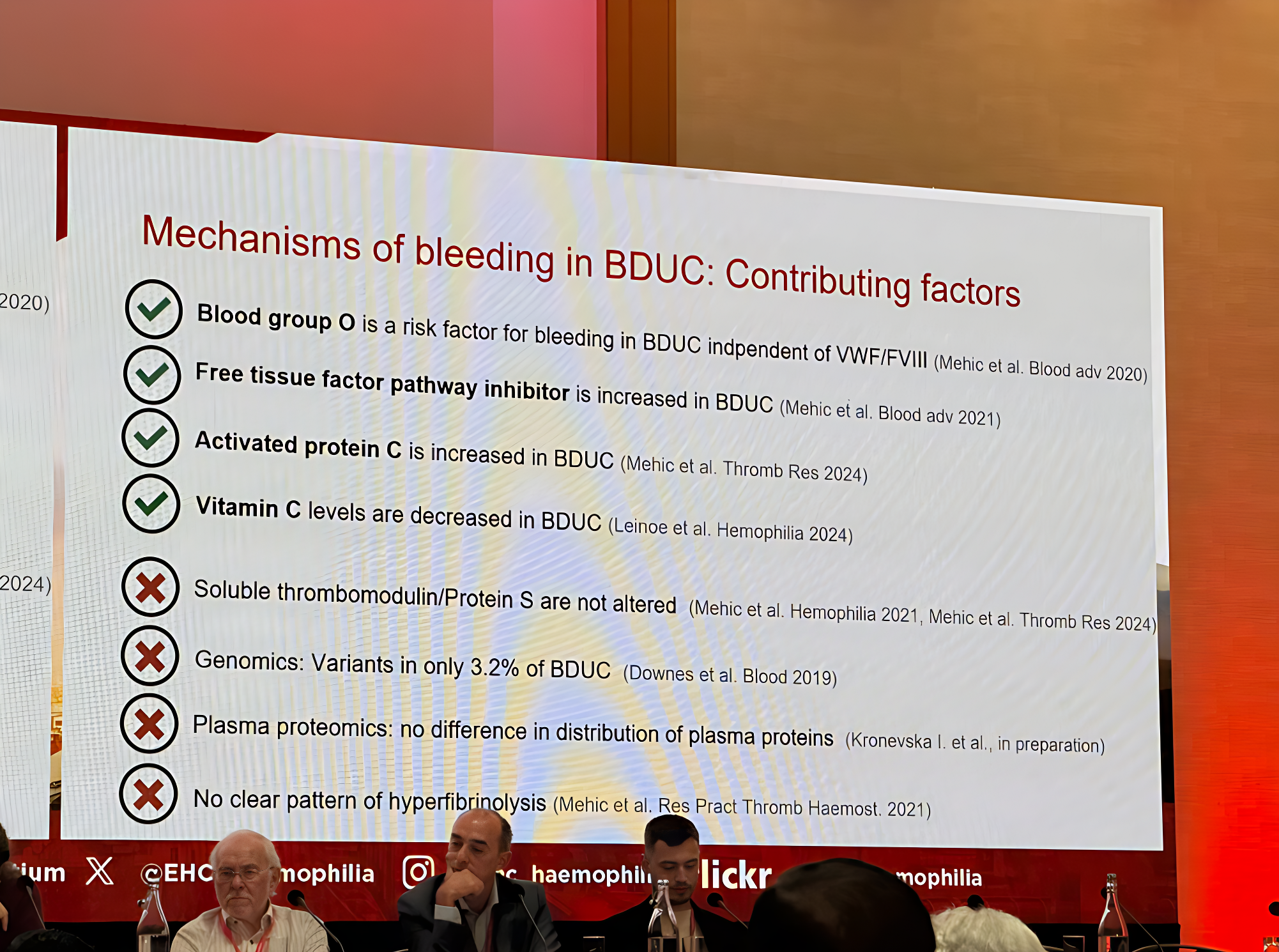
– Contributing factors include blood group O, increased tissue factor pathway inhibitor, activated protein C, and decreased vitamin C levels
– BDUC significantly impacts health-related quality of life despite “normal” lab results
– Treatment options remain limited with few evidence-based therapies available
As the Principal Investigator of the Vienna Bleeding Biobank (VIBB), Dr. Gebhart is pioneering research into the pathophysiology of these previously overlooked bleeding tendencies. Her work emphasizes that BDUC patients deserve the same attention and specialized care as those with well-defined bleeding disorders.”
Stay updated with Hemostasis Today.
-
Sep 16, 2026, 16:06Katrina Louise Manalaysay: In Your 20s, You Might be Given the Opportunity to Donate Blood for the First Time
-
Sep 16, 2026, 15:45Matthew Hazell: A Brilliant Explanation of Phenotype vs Genotype Using a LEGO House
-
Sep 16, 2026, 15:23Ahmad Al-Ramahi: Presenting the Military Pharmacists Blood Training Course at the FIP World Congress
-
Sep 16, 2026, 15:21HIT Reimagined: Can 12-Lipoxygenase Inhibition Stop Immune Thrombosis?
-
Sep 16, 2026, 14:42Ruchi Punamia: Beyond the Blood Bank and The Clinical Impact of Apheresis
-
Sep 16, 2026, 14:06Kalyan Roy: Celebrating Apheresis, Advancing Care, Saving Lives
-
Sep 16, 2026, 13:38Andrew Zapfel: Advancing Sickle Cell Disease Care and Research
-
Sep 16, 2026, 13:30Thirunavukkarasu Angappan: Why Plasma-Derived Factor VIII Still Matters for Inhibitor Patients
-
Sep 16, 2026, 13:22Matthew Hazell: New BSH Guidance for Fetal, Neonatal and Paediatric Transfusion