


Kari Tikkinen: Defining Thromboprophylaxis in MIBC Neoadjuvant Care
Kari Tikkinen, Professor of Public Health at University of Helsinki, shared a post on LinkedIn, about recent article by Alex L.E. Halme et al. published in Clinical-Genitourinary, adding:
“Hot off the press – ACB Survey published in Clinical Genitourinary Cancer This marks the first publication from our new ACB research programme, focused on generating evidence to guide anticoagulation decisions during neoadjuvant treatment for muscle-invasive bladder cancer (MIBC).
Should patients with MIBC receive thromboprophylaxis during neoadjuvant therapy?
Shortly: We urgently need better evidence.
Our international survey on thromboprophylaxis practices during neoadjuvant chemotherapy (NAC) for MIBC is published:
Why this matters
- MIBC patients receiving NAC have meaningful risk of thrombosis
- VTE before cystectomy may delay surgery and cause serious complications
- Anticoagulation may reduce VTE but can increase bleeding
- Guidelines remain unclear
What did we do?
- International survey in United Kingdom, Finland, Sweden, Denmark and Iceland.
- Clinicians treating MIBC with NAC
- High response rate (69%) and very high completion rate (98%)
Findings
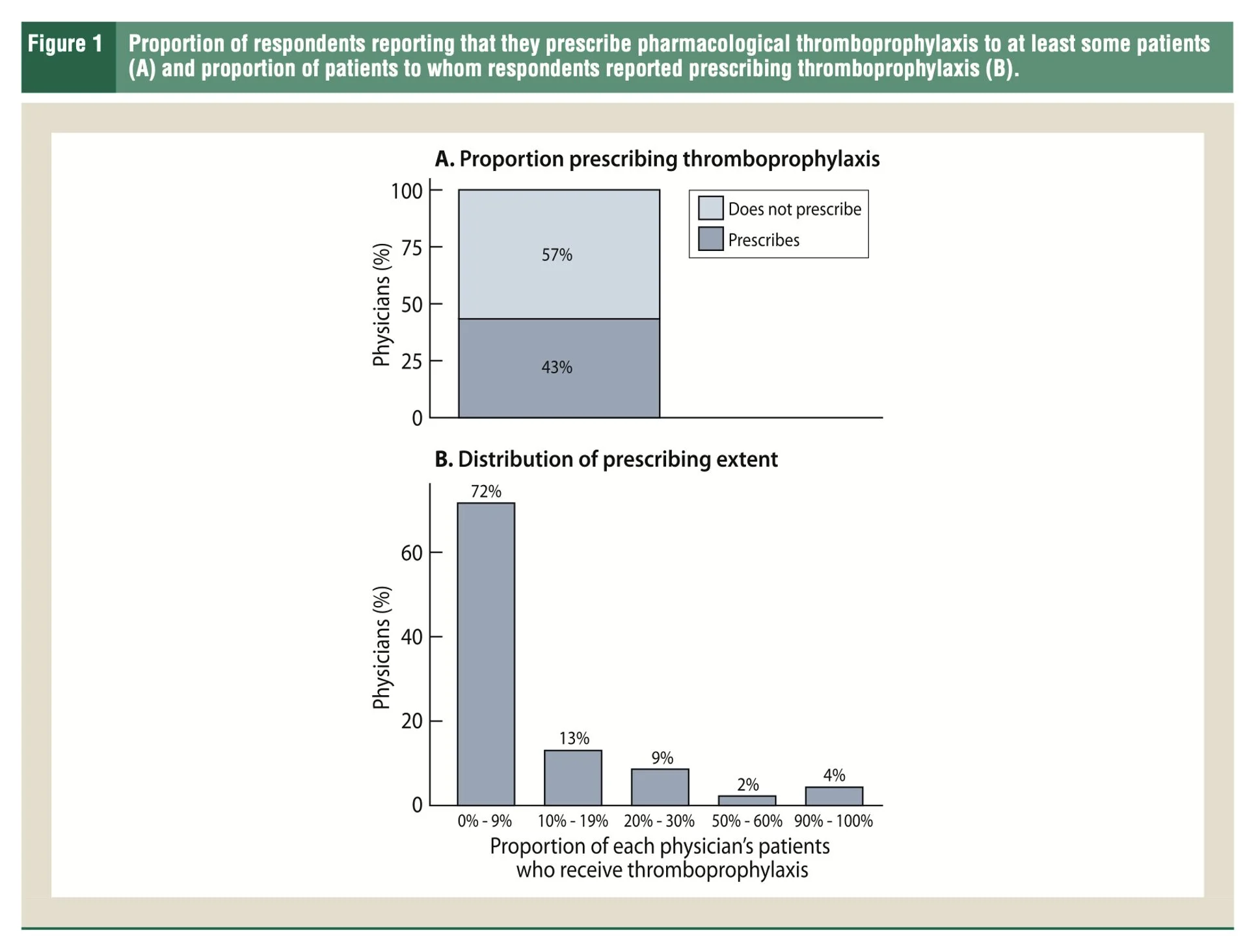
- 57% prescribed no thromboprophylaxis during NAC (and 43% did)
- 72% prescribed prophylaxis to fewer than 10% of patients and only 4% prescribed it to ≥90% of patients
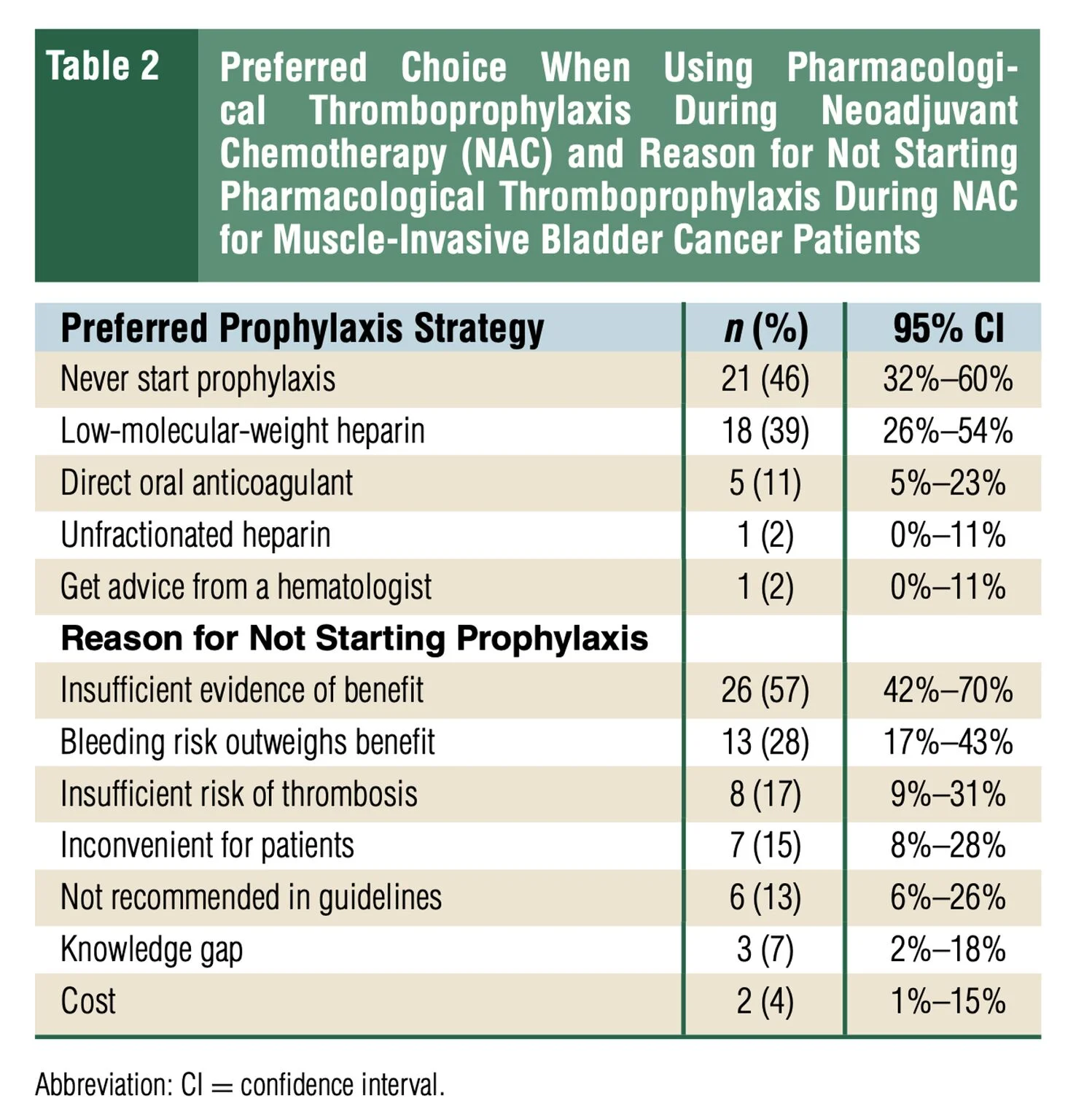
- LMWH preferred agent when used, followed by DOACs
- Main reasons for withholding: insufficient evidence of benefit (57%), bleeding concerns (28%)
- 72% interested in joining a randomized trial
Interpretation and Implications
- Practice heterogeneous
- Concerns about both thrombosis and bleeding
- A definitive randomized trial is needed
- Future work should identify who benefits most, and who may be harmed
This survey directly supports the rationale for the ACB research programme:
Trial on apixaban vs no anticoagulation during neoadjuvant for MIBC
Net clinical benefit: preventing thrombosis without causing unacceptable bleeding
Toward precision thromboprophylaxis: identifying who benefits, who is harmed, and who can safely avoid anticoagulation
Big thanks to all participating clinicians and collaborators across the UK and Nordic countries!
Big thanks to all co-authors.”
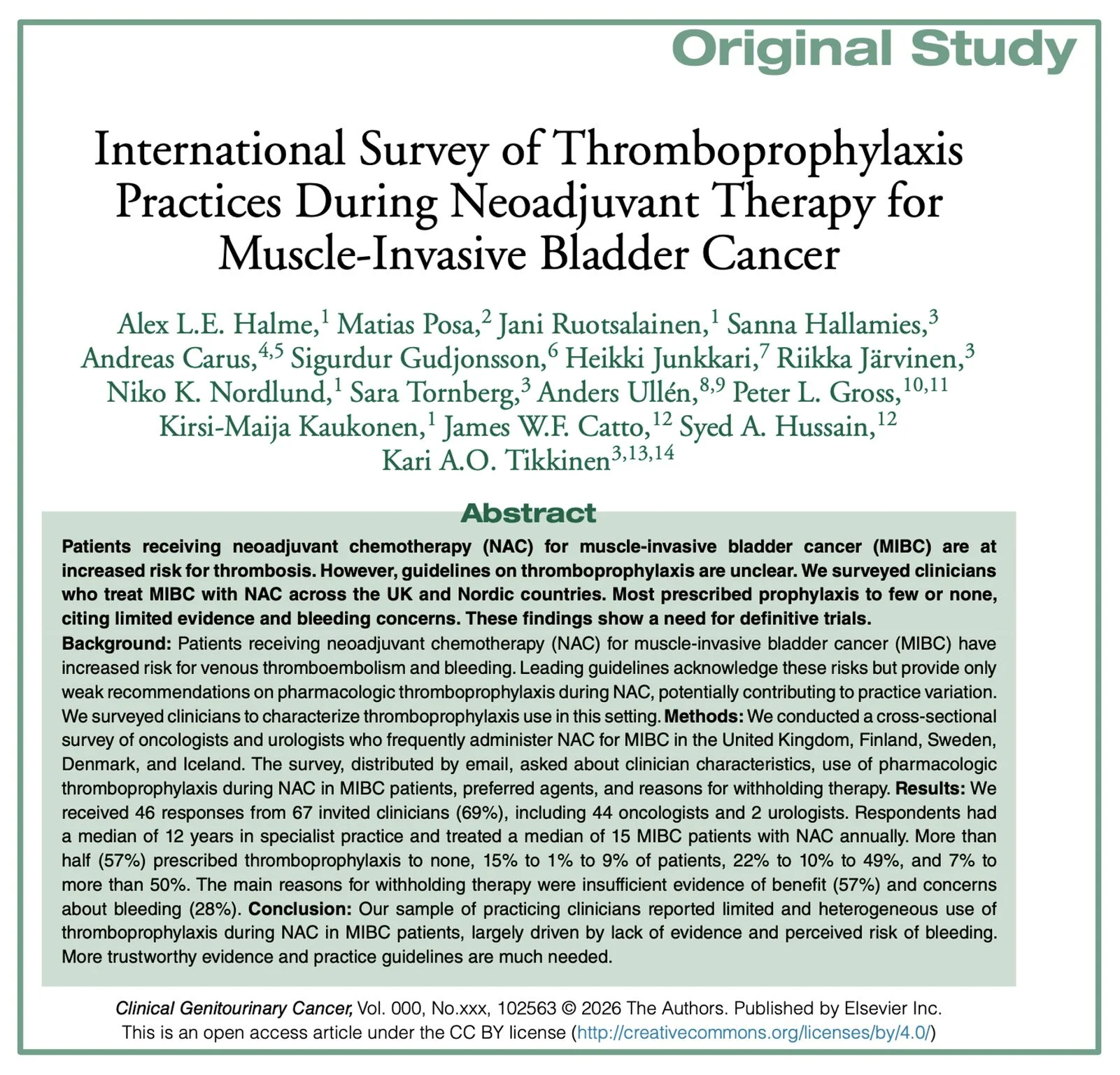
Title: International Survey of Thromboprophylaxis Practices During Neoadjuvant Therapy for Muscle-Invasive Bladder Cancer
Authors: Alex L.E. Halme, Matias Posa, Jani Ruotsalainen, Sanna Hallamies, Andreas Carus, Sigurdur Gudjonsson, Heikki Junkkari, Riikka Järvinen, Niko K. Nordlund, Sara Tornberg, Anders Ullén, Peter L. Gross, Kirsi-Maija Kaukonen, James W.F. Catto, Syed A. Hussain, Kari A.O. Tikkinen

Stay updated on all scientific advances with Hemostasis Today.
-
Sep 29, 2026, 22:45Victor Agunyego: Paracetamol – The Most Common Drug We Underestimate
-
Sep 29, 2026, 22:42Nova Sinclair: Advancing the Future of Hematology – Meet Our 2027 Organizing Committee
-
Sep 29, 2026, 22:41Lorenz Räber: Intracoronary Imaging in PCI – Why, When, How, and Which Modality?
-
Sep 29, 2026, 22:31Selma Turkovic: Pleased to Deliver the Opening Presentation at Kingston Hospital
-
Sep 29, 2026, 22:31Miguel Teran: Ultrasound and Simulation in Arterial Blood Sampling
-
Sep 29, 2026, 21:47Javed Anees: DADA2 – When a Young Stroke Is More Than a Stroke
-
Sep 29, 2026, 22:28Mohammad Refaei: Navigating Your Career in Hematology From Training to Practice
-
Sep 29, 2026, 22:27Matteo Foschi: 10 Clinical Pearls for Antithrombotic Therapy in Secondary Stroke Prevention
-
Sep 29, 2026, 22:26A Global Call for Action on Cardiovascular Health on World Heart Day – ISTH