

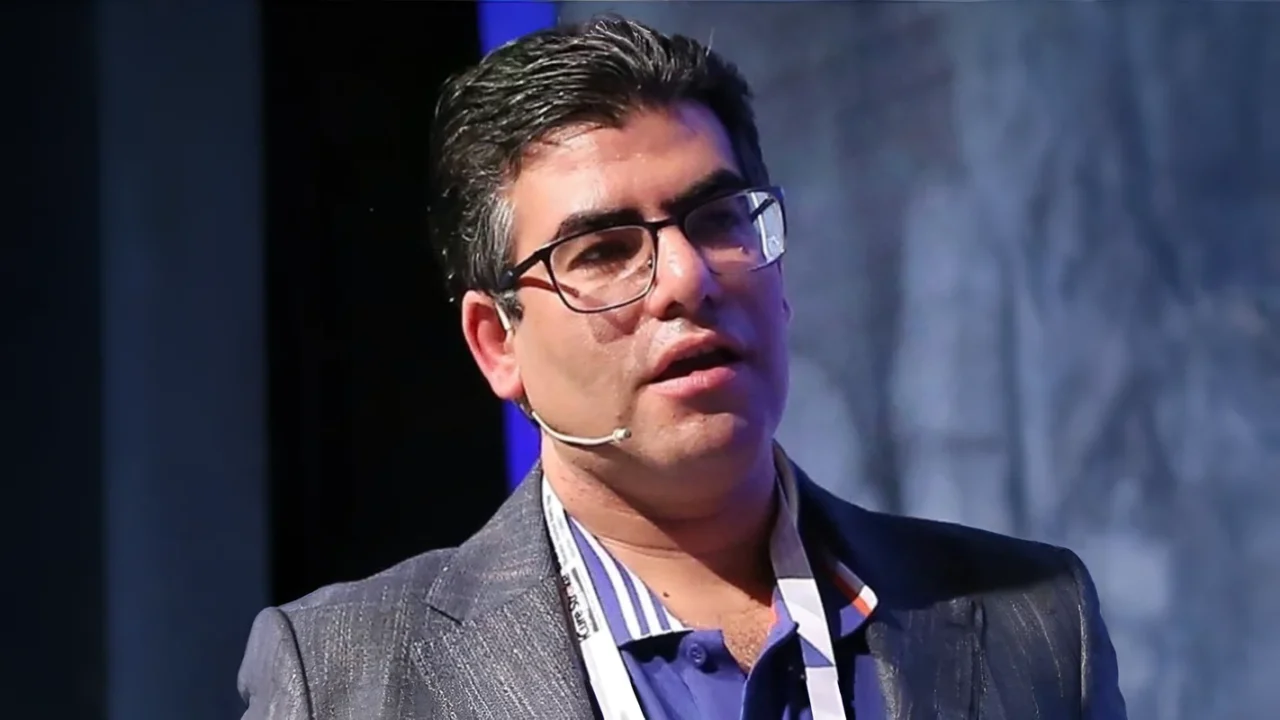
Ossama Mansour: Landmark MENA Guidelines for Acute Ischemic Stroke Management
Ossama Mansour, Chief Executive Officer of a Semoha University Campus, Faculty of Medicine at Alexandria University, shared on LinkedIn about a recent article he and his colleagues co-authored, adding:
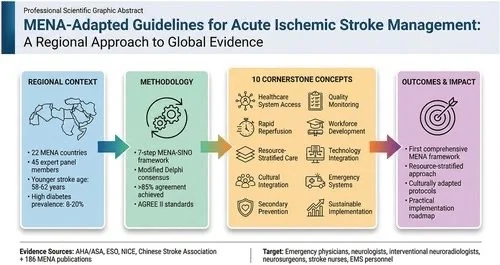
”We are proud to highlight the publication of the first comprehensive, resource-stratified guidelines for acute ischemic stroke management in the Middle East and North Africa an initiative that represents years of collaborative work by 45 multidisciplinary experts from 22 countries, published in ‘Neurological Research‘ (2026).
Why does this matter?
The MENA region bears a disproportionate stroke burden. Approximately 75% of stroke-related deaths worldwide occur in low- and middle-income countries.
In our region, strokes strike nearly a decade earlier than in Western populations (mean age 58–62 vs. 68–72 years), against a backdrop of high diabetes prevalence (8–20%), hypertension (26–38%), and smoking rates exceeding 50% in men.
Yet until now, clinical guidance has been directly transplanted from Western or East Asian evidence — often without accounting for our geography, culture, healthcare infrastructure, conflict realities, or economic constraints.
What these guidelines deliver:
Using the MENA-SINO systematic seven-step adaptation framework and adhering to AGREE II standards, the expert panel synthesized evidence from AHA/ASA, ESO, NICE, and Chinese Stroke Association guidelines alongside 186 regional publications.
Through three rounds of modified Delphi consensus achieving >85% agreement, the guidelines introduce:
- A tiered (3-level) hub-and-spoke stroke care system adapted to MENA realities
- The ‘Drip and Ship’ model with MENA-specific ’30-Minute Rule’ for urban traffic
- Tenecteplase as the preferred thrombolytic for resource-limited settings (single bolus advantage)
- Clear EVT guidance for large core infarcts, basilar artery occlusion, and medium vessel occlusions
- Culturally sensitive decision-making frameworks including family-centered consent and Ramadan-specific protocols
- Conflict zone and refugee population management strategies
- Secondary prevention tailored to regional risk factor patterns, including ICAD-specific DAPT protocols
- Cost-effectiveness analyses guiding resource prioritization
The numbers that drive urgency:
- Door-to-needle time regional benchmark: currently 145 minutes target: <60 minutes
- IVT rate in eligible patients: currently only 12% target: >60% for Tier 2 centers
- Stroke mortality in conflict zones: up to 65%
- Mechanical thrombectomy available in fewer than 30% of stroke-receiving hospitals
These guidelines are a living document.
They call upon Ministries of Health, international organizations, research institutions, and every neurologist, emergency physician, and nurse in the region to act because time is brain, and our patients deserve evidence that speaks their language.
Overflowing with pride and a deep sense of gratitude, I feel incredibly fortunate to stand shoulder to shoulder with this powerhouse constellation of regional experts a brilliant league of minds united by one bold mission: to revolutionize stroke care across our region.”
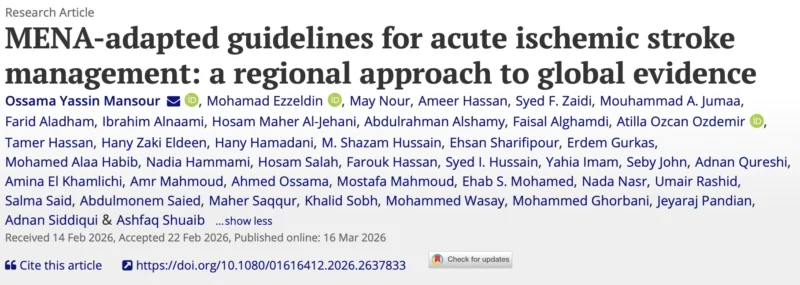
Title: MENA-adapted guidelines for acute ischemic stroke management: a regional approach to global evidence
Authors: Ossama Yassin, Mohamad Ezzeldin, May Nour, Ameer Hassan, Syed Zaidi, Mouhammad Jumaa, Farid Aladham, Ibrahim Alnaami, Hosam Al-Jehani, Abdulrahman Alshamy, Faisal Alghamdi, Atilla Ozdemir, Tamer Hassan, Hany Eldeen, Hany Hamadani, M. Hussain, Ehsan Sharifipour, Erdem Gurkas, Mohamed Habib, Nadia Hammami, Hosam Salah, Farouk Hassan, Syed Hussain, Yahia Imam, Seby John, Adnan Qureshi, Amina El Khamlichi, Amr Mahmoud, Ahmed Ossama, Mostafa Mahmoud, Ehab Mohamed, Nada Nasr, Umair Rashid, Salma Said, Abdulmonem Saied, Maher Saqqur, Khalid Sobh, Mohammed Wasay, Mohammed Ghorbani, Jeyaraj Pandian, Adnan Siddiqui, Ashfaq Shuaib
Read the Full Article on Neurological Research
Stay updated on all scientific advances with Hemostasis Today.
-
Sep 29, 2026, 19:00Caitlin Raymond: Can Artificial Blood Solve Blood Supply Shortages?
-
Sep 29, 2026, 18:51Chaza Alaji: Dyslipidemia, Thrombosis and the DIC Diagnostic Trap
-
Sep 29, 2026, 17:31Rajnikant Patel: Bridging Ayurvedic Concepts and Modern Toxin-Mediated Disease
-
Sep 29, 2026, 17:13Nicholas Lang։ A Meaningful Case of Immune Thrombocytopenia
-
Sep 29, 2026, 16:55Ayatullah Gamal Wahab: When the CBC Lies
-
Sep 29, 2026, 16:35Jonathan Douxfils: Navigating the VTE Risk Continuum in Reproductive Medicine
-
Sep 29, 2026, 16:35Chaima Rajeh: Types of Anemia and Their Laboratory Features
-
Sep 29, 2026, 16:27Scott Isaacs: How GLP-1 RAs Target Systemic Inflammation to Drive Cardio, Autoimmune, and Gut Health
-
Sep 29, 2026, 16:21Yitshak Kreiss: From Treating Patients to Defining the Standard of Knowledge