


Winel Fonbah: Elevating Anticoagulation Literacy
Winel Fonbah, Registered Nurse at Regional hospital limbe, shared a post on LinkedIn:
“Elevating Anticoagulation Literacy: A Must-Know Guide for Clinicians!
Navigating the landscape of anticoagulants is fundamental for patient safety and effective treatment of conditions like AFib, DVT, and PE. I came across this excellent breakdown (shared below) and wanted to add some crucial context and clinical insights for my fellow healthcare professionals.
Anticoagulants: The Unsung Heroes of Cardiovascular Care.
In healthcare, few medication classes have as much impact on patient safety as anticoagulants, meds that prevent existing blood clots from getting bigger and stop new ones from forming.
While we often focus on the big names—Heparin, Warfarin (Coumadin), and newer Direct Oral Anticoagulants (DOACs)—what’s equally important is understanding how they differ, how they’re monitored, and how we keep patients safe.
Key Insights:
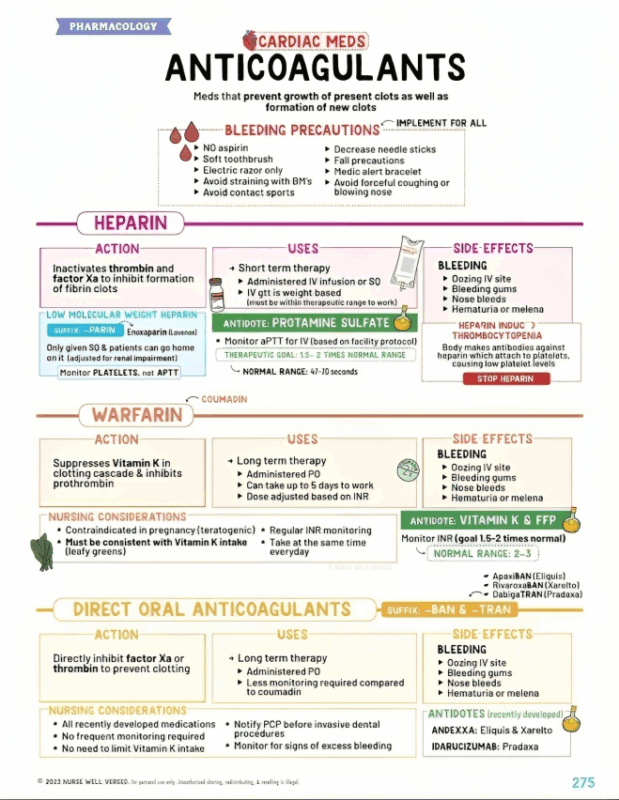
- Heparin: Fast-acting, short-term therapy; requires aPTT monitoring and has an antidote (Protamine sulfate). Watch for heparin-induced thrombocytopenia.
- Warfarin: Long-term therapy that needs consistent Vitamin K intake and regular INR monitoring, It has a slower onset, with antidotes including Vitamin K and FFP.
- DOACs: A newer class offering long-term protection with fewer monitoring requirements and fewer food interactions. Recently, more antidotes have been approved—making them even safer.
Across all anticoagulants, bleeding precautions remain essential, from avoiding aspirin to using soft toothbrushes and minimizing invasive procedures.
As clinicians, educators, or healthcare leaders, staying updated on these meds isn’t just knowledge—it’s patient safety.
Question for you:
- What’s one insight or tip you think every new nurse or healthcare student should know about anticoagulants?
Drop it in the comments—let’s build a resource together.”
Stay informed with Hemostasis Today.
-
Oct 19, 2026, 19:44Where You Live Should not Determine Whether You Receive Care – World Federation of Hemophilia
-
Oct 19, 2026, 19:42Belen Bianco: Prevention, Early Suspicion and an Interdisciplinary Approach Save Lives
-
Oct 19, 2026, 19:40Christina Chrysohoou: Catheter-Based LAAC vs OAC for Stroke Prevention in Atrial Fibrillation
-
Oct 19, 2026, 19:38Matthew Flick: A Two-Day Research Meeting on Fibrinogen, Hemostasis and Thrombosis
-
Oct 19, 2026, 19:37Hayat Saeed: Excited to Share Our Publication on the FGL1–Hepcidin Axis in Iron Homeostasis and Disease
-
Oct 19, 2026, 19:08IPAW 2026 Comes to a Close, but the Work Continues – PPTA
-
Oct 19, 2026, 17:44Paul Riley: Moderating a Webinar on Anticoagulation Monitoring
-
Oct 19, 2026, 16:36Christopher Pittman: Blood Clot Prevention Cannot End at Hospital Discharge
-
Oct 19, 2026, 16:13Javier M. Floren: When Immune Cells Move With Their Environment