


Wolfgang Miesbach: Predicting Breakthrough Bleeding in Emicizumab-Treated Acquired Haemophilia A
Wolfgang Miesbach, Professor of Medicine at Frankfurt University Hospital, shared on LinkedIn:
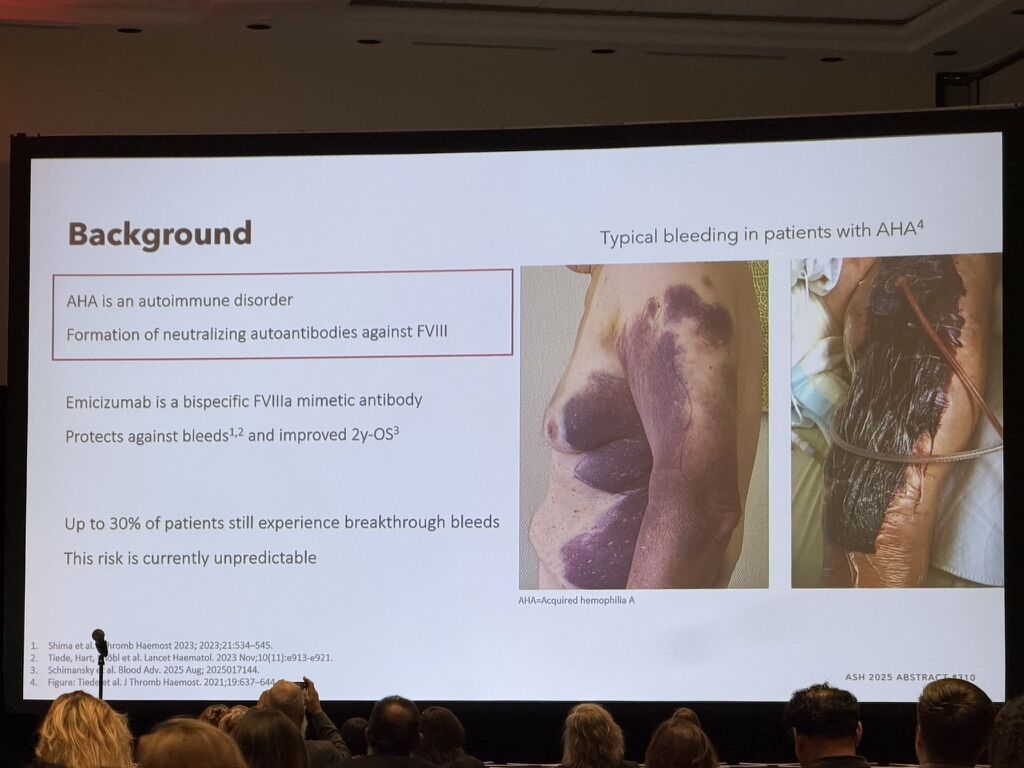
“Predicting Breakthrough Bleeding in Emicizumab-Treated Acquired Haemophilia A. Excellent work presented at ASH2025 by Fabius Pelzer addressing one of the most pressing challenges in acquired haemophilia A:
Despite emicizumab’s remarkable efficacy in preventing bleeds, up to 30% of patients still experience breakthrough bleeding—and we currently lack reliable predictive tools to identify who’s at risk.
This changes today.
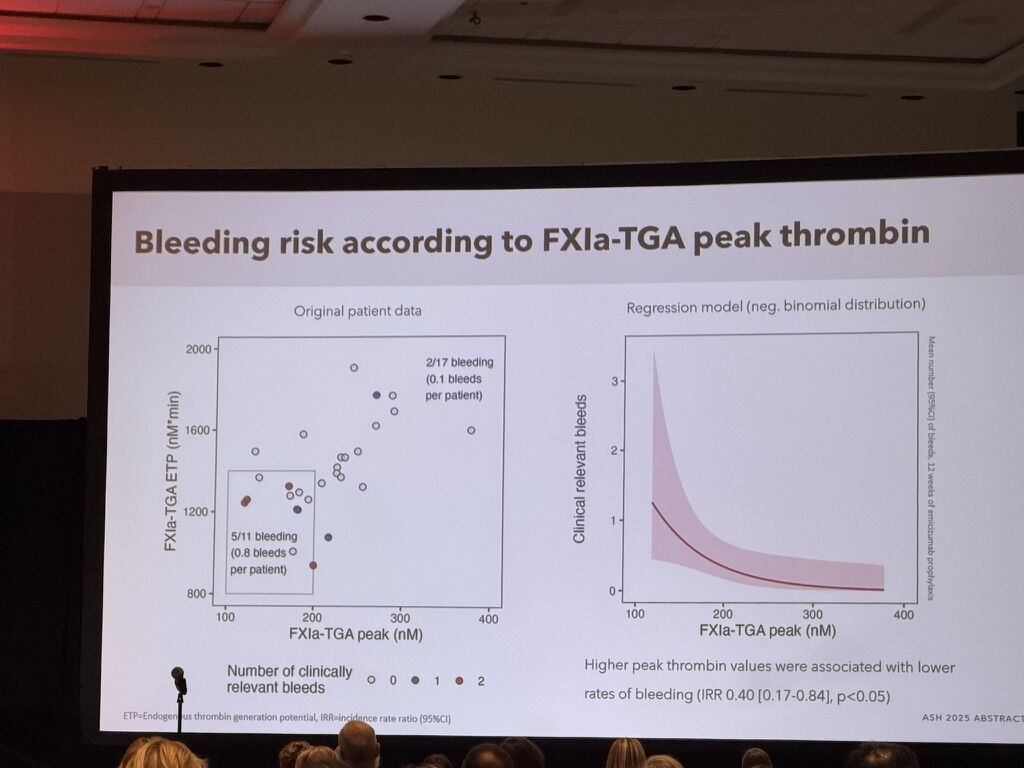
Using FXIa-triggered thrombin generation (FXIa-TGA) as a surrogate biomarker, Pelzer and colleagues developed an innovative nomogram to assess individual bleeding risk based on:
- Peak thrombin generation potential
- Emicizumab levels
- Residual Factor VIII activity
Main findings:
- FXIa-TGA peak thrombin is more sensitive than conventional TGA to low factor levels and emicizumab concentrations
- Both emicizumab and residual Factor VIII significantly influence peak thrombin generation in the multivariable model
- Higher peak thrombin values correlated with lower bleeding rates (IRR 0.40 [0.17-0.84])
This is precision haemostasis and enables patient-specific risk stratification in real time. Moving beyond one-size-fits-all dosing to truly personalized management of AHA.
Having a functional biomarker that predicts individual risk opens pathways for:
- Optimized prophylactic dosing strategies
- Early detection of patients requiring intervention
- Better understanding of emicizumab mechanism in real-world AHA
Congratulations to Fabius, Andreas Tiede and the entire GTH study team on this rigorous work that has now been published in Haematologica Journal.”
Read more posts from Wolfgang Miesbach on Hemostasis Today.
-
Oct 5, 2026, 15:31Irma Bagdoniene: Multidisciplinary Management of High-Risk Familial Hypercholesterolaemia and CAD
-
Oct 5, 2026, 15:00Serena Williams and Pulmonary Embolism: From Personal Crisis to Lessons in Venous Thromboembolism
-
Oct 5, 2026, 14:55Marco Moscarelli: 3D Reconstruction Enhances Volumetric Assessment of Post-TAVI Thrombosis
-
Oct 5, 2026, 13:24Abdul Muqtadir Abbasi: Diagnostic Pearls for Evaluating Isolated Thrombocytopenia in Residents
-
Oct 5, 2026, 13:16Katerina Pavenski: Rethinking What ‘Normal’ Means for Iron Deficiency
-
Oct 5, 2026, 13:09Rick Matthews: Balancing Established VTE Partnerships with Innovative Interventional Technologies
-
Oct 5, 2026, 13:01Nawsherwan Mohammad: Recognizing TTP Before the ADAMTS13 Result Arrives
-
Oct 5, 2026, 12:51Bruno Pougault: The Hidden Challenges Behind Anti Xa Testing
-
Oct 5, 2026, 12:41Syed Huzaifa Khan: Rethinking CTRP12 as a Biomarker for In Stent Restenosis