


Tareq Abadl: Low Haptoglobin – Practical Lab Interpretation
Tareq Abadl, Medical Laboratory Specialist and Director of the Blood Bank at Dr. Abdelkader Al-Mutawakkil Hospital, shared a post on LinkedIn:
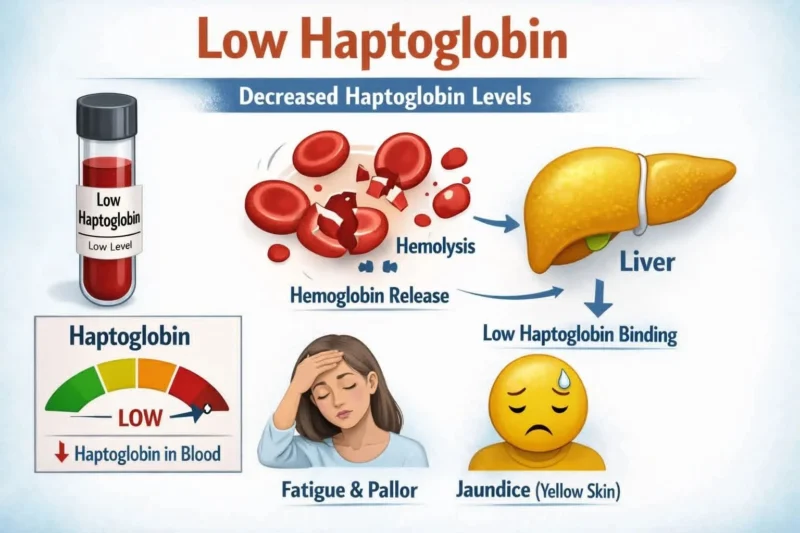
“Low Haptoglobin – Practical Lab Interpretation
Haptoglobin binds free hemoglobin released into plasma during intravascular hemolysis.
A low level suggests hemolysis, but it is not specific and must be interpreted with the full lab pattern and clinical context.
1) Intravascular hemolysis
Ongoing or massive RBC destruction rapidly consumes haptoglobin.
Supportive lab pattern:
- Increased LDH
- Increased Indirect (unconjugated) bilirubin
- Decreased Haptoglobin
- Increased Reticulocyte count
Schistocytes / hemolytic features on blood smear
Lab pearl: If labs suggest hemolysis but the clinical picture (or ECG, vitals) doesn’t fit → pause and reassess before triggering urgent calls.
2) Liver disease
Haptoglobin is synthesized in the liver.
Advanced liver dysfunction → Decreased production → low haptoglobin without hemolysis
Always correlate with AST, ALT, ALP, bilirubin, INR
Key pitfall: Low haptoglobin ≠ hemolysis if the liver can’t make it.
3) Post-transfusion or delayed transfusion reaction
Hemolytic transfusion reactions can cause true intravascular hemolysis.
Always review:
- Recent transfusion history
- Timing of symptoms vs lab changes
Add-on tests if suspected:
- DAT (Direct Coombs)
- Plasma free hemoglobin
- Urine hemoglobin
4) Mechanical / device-related hemolysis
Seen with:
- ECMO
- Prosthetic heart valves
- Extracorporeal circuits
Shear stress → chronic intravascular hemolysis → persistently low haptoglobin
Trend matters more than a single value.
5) Pre-analytical & interpretation pitfalls
In vitro hemolysis (traumatic draw, delayed centrifugation, pneumatic tube transport) can falsely mimic hemolysis
Haptoglobin is an acute-phase reactant
→ Can be normal or high despite active hemolysis in inflammation or infection
Always check:
- Hemolysis index
- Sample quality
- Repeat on a clean specimen if uncertain
Quick Lab Workflow (Before Calling Clinicians )
- Check hemolysis index & sample integrity
- Review: CBC + smear, reticulocytes, LDH, total & indirect bilirubin, haptoglobin
- Ask about transfusions, valves, ECMO, devices
- If unclear → recommend repeat testing + clinical correlation
When hemolysis stops, haptoglobin typically recovers over days to weeks — recheck per protocol.
Normal Reference Range (Important!)
Haptoglobin (adult):~30–200 mg/dL (≈ 0.3–2.0 g/L)
Ranges vary by laboratory and method — always use local reference values.
Extra High-Yield Pearls
Congenital anhaptoglobinemia → chronically undetectable haptoglobin (rare but real)
Extravascular hemolysis (e.g., hypersplenism) may have normal haptoglobin
Haptoglobin alone should never be used to diagnose hemolysis.”
More posts from Tareq Abadl on Hemostasis Today.
-
Sep 30, 2026, 14:13Ashok Choudhury: Portal Vein Thrombosis and Outcomes in Cirrhosis
-
Sep 30, 2026, 13:57Leslye Conde Bazán: When Conventional Imaging Is Not Enough – The Role of IVUS
-
Sep 30, 2026, 13:41Huda Salah Eldin: The Challenge of Balancing Antithrombotic Therapy After PCI
-
Sep 30, 2026, 13:29Abdus Salam: What Can CT Venography Reveal About the Veins?
-
Sep 30, 2026, 13:03Amira Mohy: Diagnostic Flow Cytometry Panels for Hematological Malignancies
-
Sep 30, 2026, 12:52Paul Watton: Could Repetitive Head Impacts Leave a Molecular Memory?
-
Sep 30, 2026, 12:41The Journey to ISTH 2027 Starts in Vancouver
-
Sep 30, 2026, 11:36Basit Ali: A Closer Look at CT Venography
-
Sep 30, 2026, 11:16Christina Pohlman: Could aPL Levels Help Predict Stroke Recurrence?