

Caitlin Raymond: Understanding Risks in Rare Group A Subtypes with Anti-A1 Antibodies in Transfusion Medicine
Caitlin Raymond, Assistant Professor of Pathology and Transfusion Medicine at the University of Wisconsin-Madison, shared a post on LinkedIn:
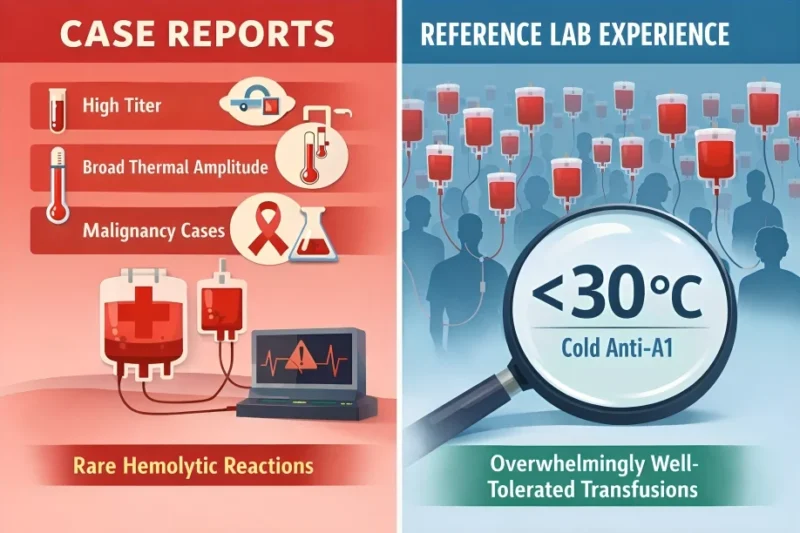
”In transfusion medicine, some risks feel larger than they actually are — not because they’re common, but because the evidence we have is skewed toward worst-case scenarios.
I recently wrote a follow-up blog post on rare group A subtypes with anti-A1 antibodies, prompted by a real case and a conversation with a reference laboratory.
Case reports tell us what can go wrong. Reference labs see what actually does go wrong — and how often.
This post walks through:
- When cold reacting anti-A1 actually becomes dangerous
- Why malignancy-associated cases don’t generalize
- When to choose group O blood for rare group A subtypes
If you’ve ever felt uneasy making decisions where the literature offers warnings but no denominator, this one’s for you.”
Stay updated with Hemostasis Today.
-
Sep 25, 2026, 12:43Thomas Dayspring: Reshaping the Biology of Atherosclerotic Plaques with New Therapies
-
Sep 25, 2026, 12:14Garima Sharma: Community Clinical Linkages for Better Postpartum Cardiovascular Care
-
Sep 25, 2026, 10:49Shefina S: From Presenting to Hosting at TRANSCON 2026
-
Sep 25, 2026, 10:37Michelle Leona Cecil: Hemophilia Advocacy and the Power of Community
-
Sep 25, 2026, 10:13Michael Baria: Platelet Concentration and PRP Outcomes in Partial Rotator Cuff Tears
-
Sep 25, 2026, 09:49Haley Coleman: Volunteering to Support Hemophilia Awareness
-
Sep 25, 2026, 08:55Hitarth Mehta: BHMS Students Gain Practical Exposure to Haemophilia Diagnosis
-
Sep 25, 2026, 07:25Varun Capoor: How Therapeutic Apheresis and Transfusion Medicine Can Complement Clinical Management in SCD
-
Sep 25, 2026, 07:14Manshi Kesharwani: SAK-GQDs Modulate Thrombus Burden and Endothelial Function in Deep Vein Thrombosis