


Irma Bagdoniene։ Why Intensive Prevention is the Most Rational Strategy in Preventive Cardiology
Irma Bagdoniene, Cardiologist Specializing in Prevention & Lipidology, shared on LinkedIn about a recent article by Jennifer G. Robinson et al, published in Journal of the American Heart Association:
”Is early, intensive prevention ‘aggressive’? It’s not. On World Logic Day, it just makes sense.
I often tell my patients:
The human body follows simple logic.
In preventive cardiology, clinical inertia is a common barrier. But the evidence to avoid delays is overwhelming. This is the basis of our ‘strike early, strike strong’ strategy:
- The logic of time: Atherosclerosis results from cumulative exposure. It’s the total LDL burden over decades—the “mg-years”—that defines risk. The sooner we act, the more years we protect.
- The logic of causality: LDL cholesterol is a proven causal factor in ASCVD. Mendelian randomization studies and large clinical trials consistently confirm this. Lowering LDL prevents downstream events.
- The logic of measurement: We cannot manage what we don’t detect. Risk scores alone fall short. Advanced assessments like CACS, CCTA, Lp(a), and ApoB provide clear evidence of subclinical disease—calling for early intervention.
The conclusion is simple. The evidence and tools are ready. Early application is the most rational approach to stopping heart attacks before they occur.
Prevention is not aggressive—it is the sensible choice.
On World Logic Day (Jan 14), proclaimed by UNESCO, a reminder:
Good medicine is often just good logic!”
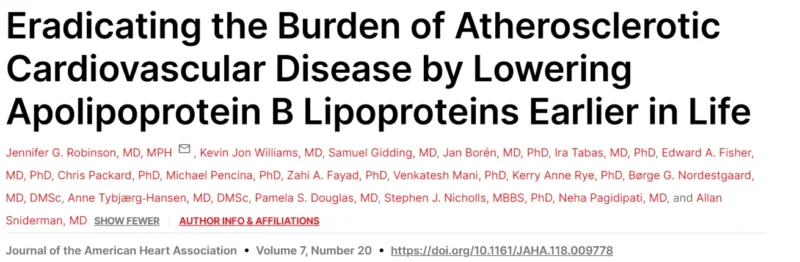
Title: Eradicating the Burden of Atherosclerotic Cardiovascular Disease by Lowering Apolipoprotein B Lipoproteins Earlier in Life
Authors: Jennifer G. Robinson, Kevin Jon Williams, Samuel Gidding, Jan Borén, Ira Tabas, Edward A. Fisher, Chris Packard, Michael Pencina, Zahi A. Fayad, Venkatesh Mani, Kerry Anne Rye, Børge G. Nordestgaard, Anne Tybjærg-Hansen, Pamela S. Douglas, Stephen J. Nicholls, Neha Pagidipati, Allan Sniderman
Read the Full Article on Journal of the American Heart Association․
Stay updated on all scientific advances with Hemostasis Today.
-
Sep 25, 2026, 10:49Shefina S: From Presenting to Hosting at TRANSCON 2026
-
Sep 25, 2026, 10:37Michelle Leona Cecil: Hemophilia Advocacy and the Power of Community
-
Sep 25, 2026, 10:13Michael Baria: Platelet Concentration and PRP Outcomes in Partial Rotator Cuff Tears
-
Sep 25, 2026, 09:49Haley Coleman: Volunteering to Support Hemophilia Awareness
-
Sep 25, 2026, 08:55Hitarth Mehta: BHMS Students Gain Practical Exposure to Haemophilia Diagnosis
-
Sep 25, 2026, 07:25Varun Capoor: How Therapeutic Apheresis and Transfusion Medicine Can Complement Clinical Management in SCD
-
Sep 25, 2026, 07:14Manshi Kesharwani: SAK-GQDs Modulate Thrombus Burden and Endothelial Function in Deep Vein Thrombosis
-
Sep 25, 2026, 06:20Farjah Hassan Algahtani: How Can We Better Identify Patients at Risk of Blood Clots after Metabolic and Bariatric Surgery?
-
Sep 25, 2026, 05:59Carla Lewis: Kids Conquering Sickle Disease Joins Nemours Children’s Hospital for 2nd Annual Awareness Event