


Tareq Abadl: Hematuria vs Hemoglobinuria vs Myoglobinuria
Tareq Abadl, Medical Laboratory Specialist and Director of the Blood Bank at Dr. Abdelkader Al-Mutawakkil Hospital, shared a post on LinkedIn:
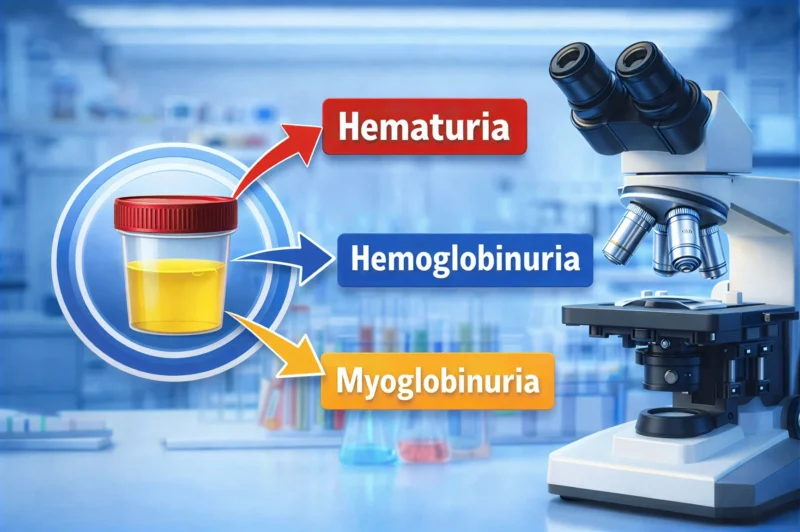
”Hematuria vs Hemoglobinuria vs Myoglobinuria – Made Simple
1. Hematuria – Blood in the Urine
Definition:
Presence of intact red blood cells (RBCs) in urine.
Mechanism:
Bleeding from any part of the urinary tract or kidneys (glomeruli, renal pelvis, ureters, bladder).
Urine Color:
Dark red, often cloudy.
Common Causes:
Kidney stones
Glomerulonephritis
Pyelonephritis / UTI
Tumors
Trauma
Chemical exposure
Anticoagulant therapy
Strenuous exercise
Lab Clue:
RBCs visible on urine microscopy
2. Hemoglobinuria – Free Hemoglobin in Urine
Definition:
Presence of free hemoglobin in urine without RBCs.
Mechanism:
Occurs due to intravascular hemolysis → free hemoglobin exceeds haptoglobin capacity → filtered by glomeruli.
Urine Color:
Red or cola-colored, clear.
Common Causes:
Acute transfusion reactions
Hemolytic anemias
Severe burns
Infections (e.g., malaria)
March hemoglobinuria (repetitive trauma to RBCs)
Brown recluse spider bite
Lab Clues:
– Positive blood on dipstick
– No RBCs on microscopy
– Low haptoglobin
3. Myoglobinuria – Muscle Pigment in Urine
Definition:
Presence of myoglobin in urine due to muscle breakdown (rhabdomyolysis).
Mechanism:
Muscle injury → myoglobin released → filtered by kidneys.
High levels are toxic to renal tubules → risk of acute kidney injury.
Urine Color:
Reddish-brown / tea-colored.
Common Causes:
Muscle trauma
Crush injuries
Prolonged immobilization or coma
Seizures
Muscular dystrophies
Alcohol abuse or overdose
Drug abuse
Extreme exercise
Statins
Lab Clues:
– Positive blood on dipstick
– No RBCs on microscopy
– Creatine kinase (CK) markedly elevated
Easy Memory Trick (Never Forget!)
Hematuria: Whole blood to RBCs present
Hemoglobinuria: Blood without cells to Free hemoglobin
Myoglobinuria: Muscle-related to Free myoglobin, brown urine
Important Note:
Urine color alone is not diagnostic.
Laboratory analysis is essential to confirm the underlying cause. ”
Stay updated with Hemostasis Today.
-
Oct 7, 2026, 16:44Amor Salah: 2026 NCS/SCCM Guidelines for Managing Antithrombotic-Associated ICH
-
Oct 7, 2026, 16:04NETs in Thrombosis: From Mechanism to Therapeutic Target
-
Oct 7, 2026, 15:28Amir Samimi: Prognostic Value of Platelet Count in Resected HNSCC
-
Oct 7, 2026, 15:21Eloïse Laouenan: Bridging Immunity and Thrombosis in MVTE
-
Oct 7, 2026, 15:10Uthra Sundaram: Honouring Donors During International Plasma Awareness Week
-
Oct 7, 2026, 15:04Daniel Victor Ortigoza: Should Frail Older Patients With AF Switch From VKA to DOACs?
-
Oct 7, 2026, 14:53Susan Noone: Donor Turned Recipient Shares Lifesaving Transfusion Story
-
Oct 7, 2026, 14:49Aimee Burtenshaw: The Impact of the Infected Blood Inquiry on Hospital Transfusion Laboratories
-
Oct 7, 2026, 14:41Vikash Jaiswal: Does Timing Matter for Calcium in Pre-Eclampsia Prevention?