


Joseph Raffaele: How Gut Aging Drives Cardiovascular Risk
Joseph Raffaele, Physician-Scientist in Longevity Medicine, CEO of PhysioAge LLC, posted on LinkedIn:
“The heart is one of the most sensitive organs to aging.
And now we’re learning it can respond to early degenerative signals coming from the gut.
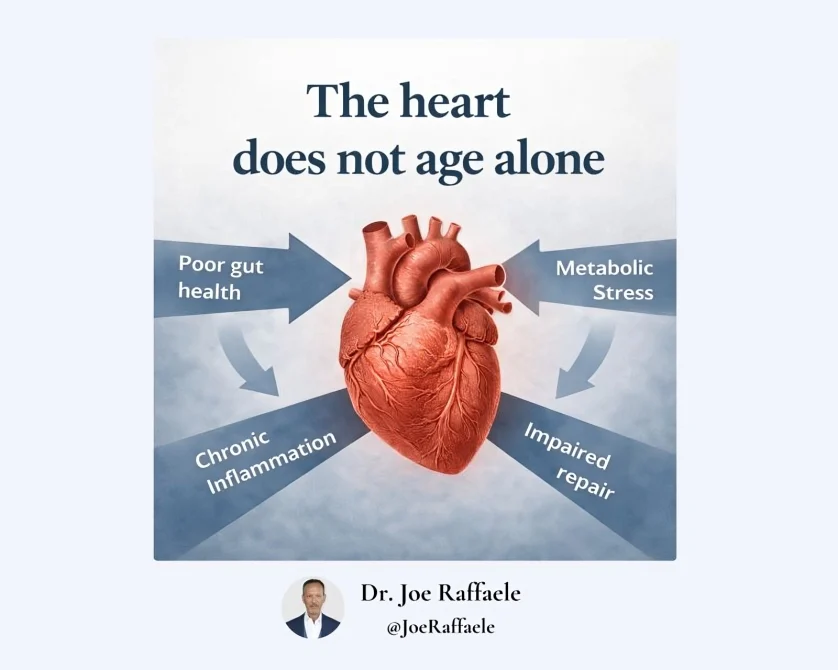
Cardiovascular aging is not an isolated process, as the heart sits downstream of metabolic, inflammatory, and immune signaling that comes from other organ systems.
A January 2026 study highlights one of those upstream drivers.
Researchers identified a hidden aging program in the gut, where intestinal stem cells accumulate predictable epigenetic changes over time. These changes weaken tissue repair, increase inflammatory signaling, and closely overlap with patterns seen in colon cancer.
Here’s why this matters for the heart:
Chronic gut inflammation increases systemic inflammatory load.
Systemic inflammation accelerates vascular stiffness, endothelial dysfunction, and atherosclerotic risk.
Over time, the cardiovascular system becomes the organ that reveals the cost.
Aging in the gut follows a structured, modifiable pattern. In lab models, restoring iron balance and key cellular signaling partially reversed epigenetic drift and improved cellular function.
This study also gives us a key reframe: the heart reflects the biology it is exposed to.
When inflammation, metabolic stress, and impaired repair accumulate, the cardiovascular system ages faster.
Protecting your heart includes protecting the systems that feed it.
Eating fiber-rich, plant-forward diets.
Reducing ultra-processed foods.
Managing chronic inflammation early, not waiting for disease to appear.
Cardiovascular aging assessment benefits from a wider biological lens. Inflammatory markers, metabolic health, and gut-related risk factors help explain vascular aging with greater prediction and precision than we have historically had access to.
If you want more grounded breakdowns like this, connecting organ systems, biology, and real-world risk, follow me here for ongoing insights.”
Title: Gut Microbiota, Probiotics, and Aging: Molecular Mechanisms and Implications for Healthy Aging
Author: Joo-Yun Kim
Read the Full Article on JMB

Stay updated with Hemostasis Today.
-
Oct 7, 2026, 16:44Amor Salah: 2026 NCS/SCCM Guidelines for Managing Antithrombotic-Associated ICH
-
Oct 7, 2026, 16:04NETs in Thrombosis: From Mechanism to Therapeutic Target
-
Oct 7, 2026, 15:28Amir Samimi: Prognostic Value of Platelet Count in Resected HNSCC
-
Oct 7, 2026, 15:21Eloïse Laouenan: Bridging Immunity and Thrombosis in MVTE
-
Oct 7, 2026, 15:10Uthra Sundaram: Honouring Donors During International Plasma Awareness Week
-
Oct 7, 2026, 15:04Daniel Victor Ortigoza: Should Frail Older Patients With AF Switch From VKA to DOACs?
-
Oct 7, 2026, 14:53Susan Noone: Donor Turned Recipient Shares Lifesaving Transfusion Story
-
Oct 7, 2026, 14:49Aimee Burtenshaw: The Impact of the Infected Blood Inquiry on Hospital Transfusion Laboratories
-
Oct 7, 2026, 14:41Vikash Jaiswal: Does Timing Matter for Calcium in Pre-Eclampsia Prevention?