

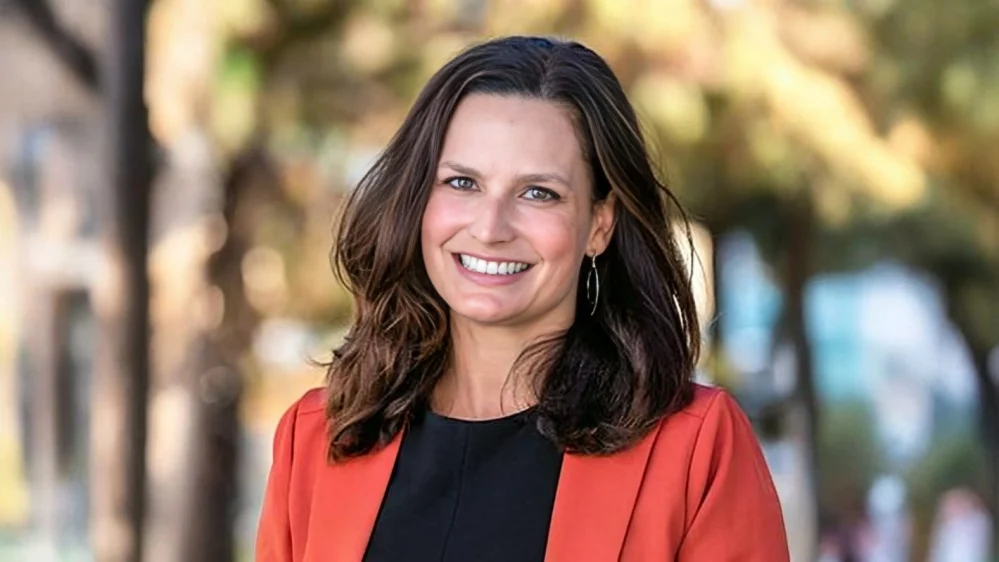
Katie Baca-Motes: Incorporating Menstrual Cycle and Hormonal Rhythms Into Clinical Research
Katie Baca-Motes, CEO of GSD Health Research, Co-Founder, Advisor at Scripps Research Digital Trial Center, shared a post on LinkedIn about a recent article by Natalie Thomas et al, adding:
“How should clinical studies incorporate menstrual cycle phase and hormonal rhythms when investigating complex chronic conditions?
Across the women’s health research ecosystem we are still working toward best practices for including menstrual cycle and hormonal data in study design.
These variables can shape physiology, symptoms, and biomarker measurements, yet they are often measured inconsistently or excluded altogether.
That is why protocol papers like this are so valuable.
They allow the field to see how investigators are operationalizing these data layers in real study designs and provide a practical starting point for others.
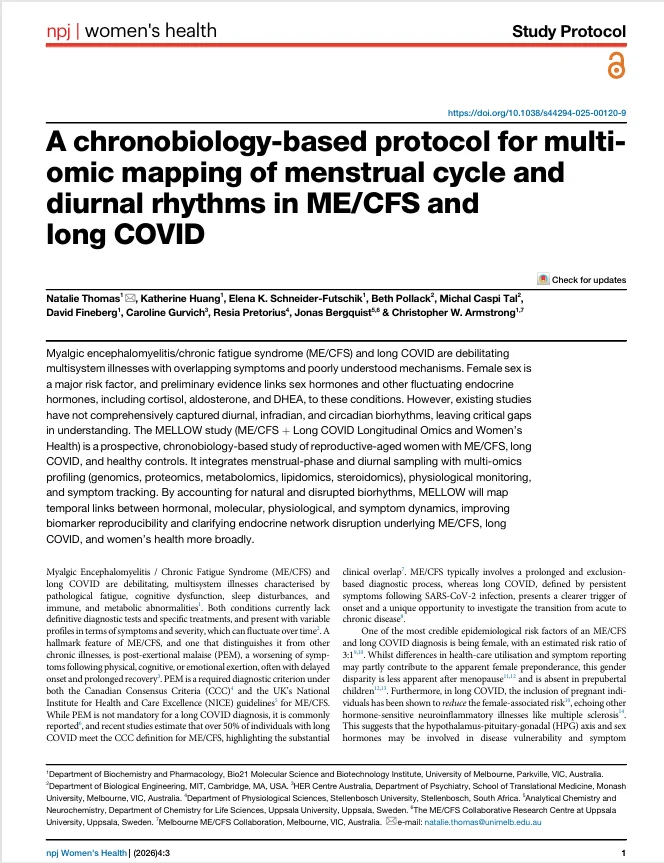
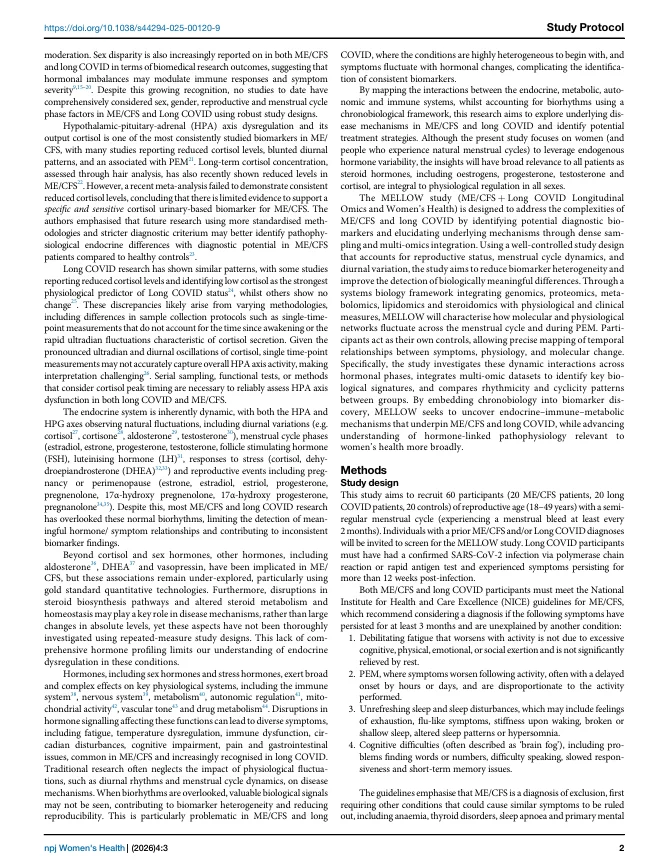
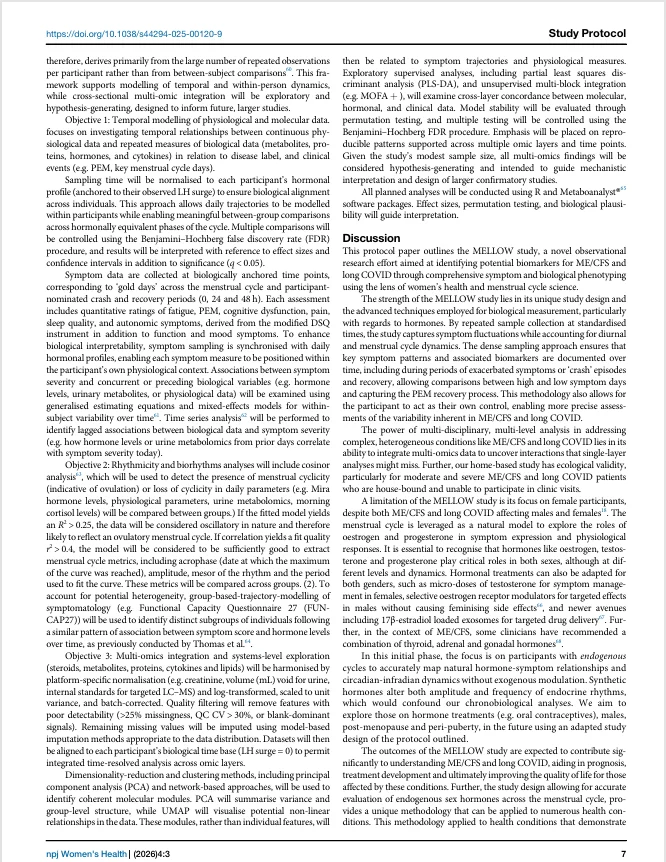
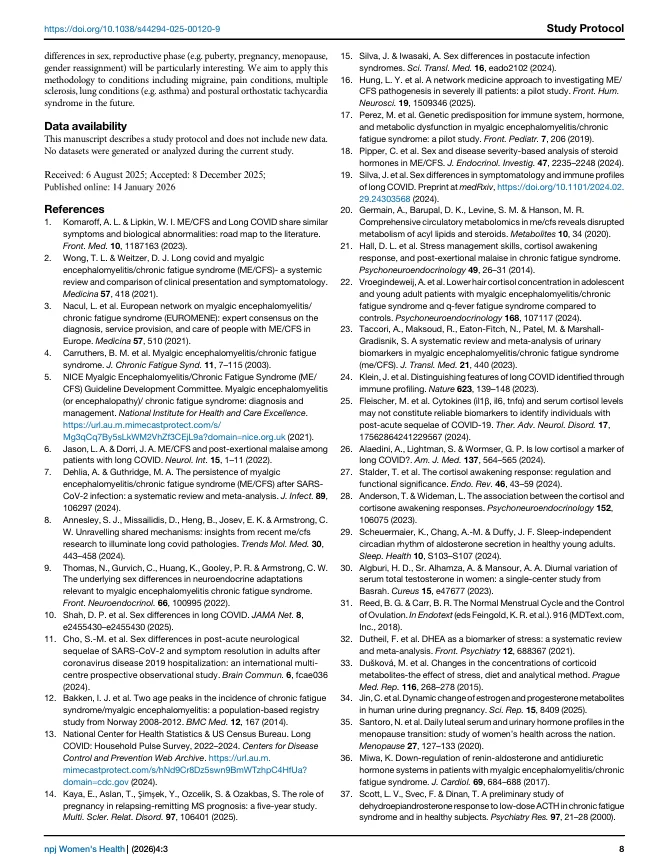
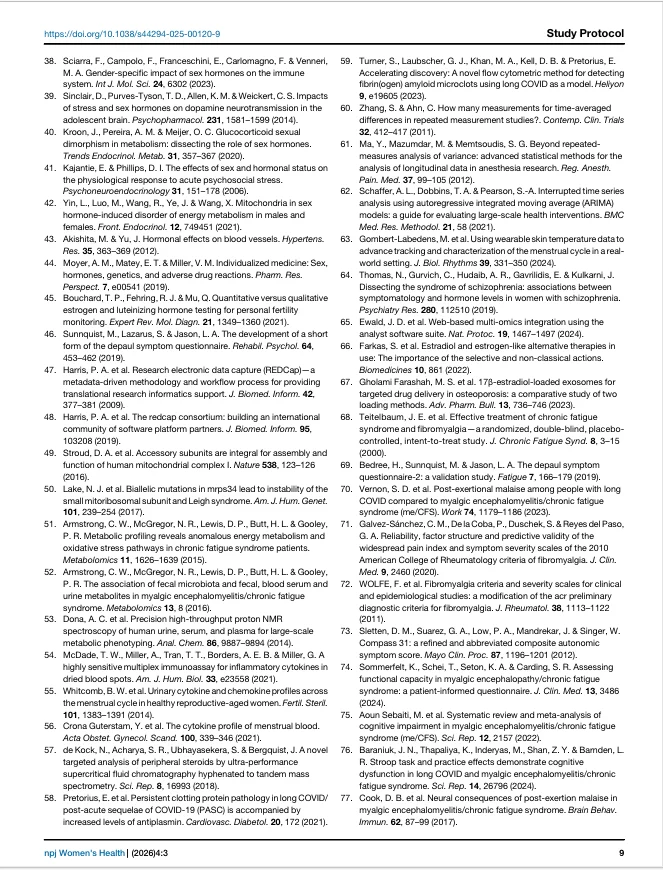
A recent protocol in npj Women’s Health describes a chronobiology based study designed to map menstrual cycle dynamics, daily hormonal rhythms, and multiomic signals in ME/CFS and long COVID.
The study, called Mellow (ME/CFS plus Long COVID Longitudinal Omics and Women’s Health), will follow reproductive aged participants with ME/CFS, long COVID, and healthy controls across the menstrual cycle using repeated sampling anchored to each participant’s hormonal profile.
Key elements of the design include:
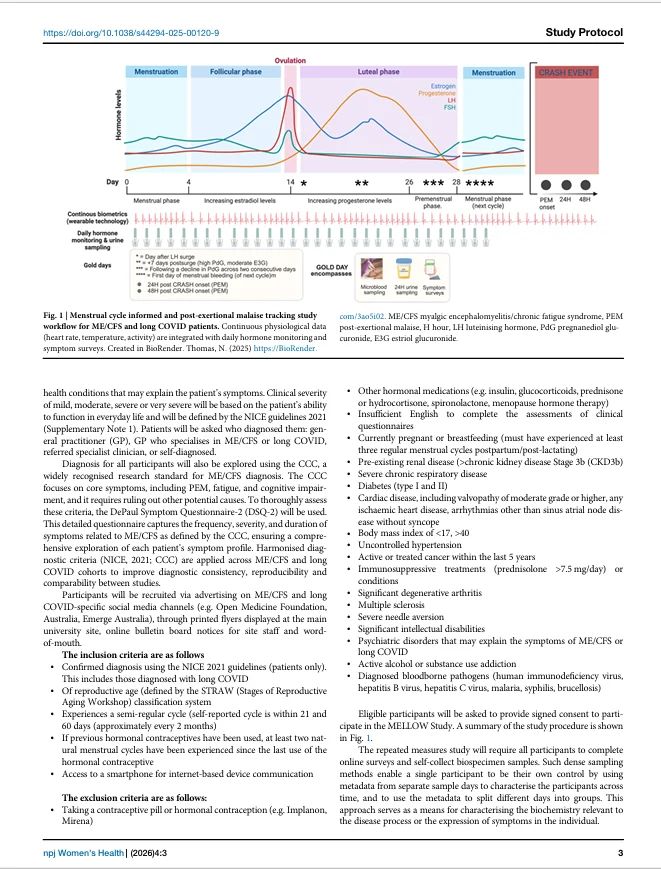
- Cycle informed sampling timed to the LH surge and ovulation rather than fixed calendar days.
- Hormone monitoring using the Mira digital analyzer, allowing daily tracking of estrogen and progesterone metabolites along with LH.
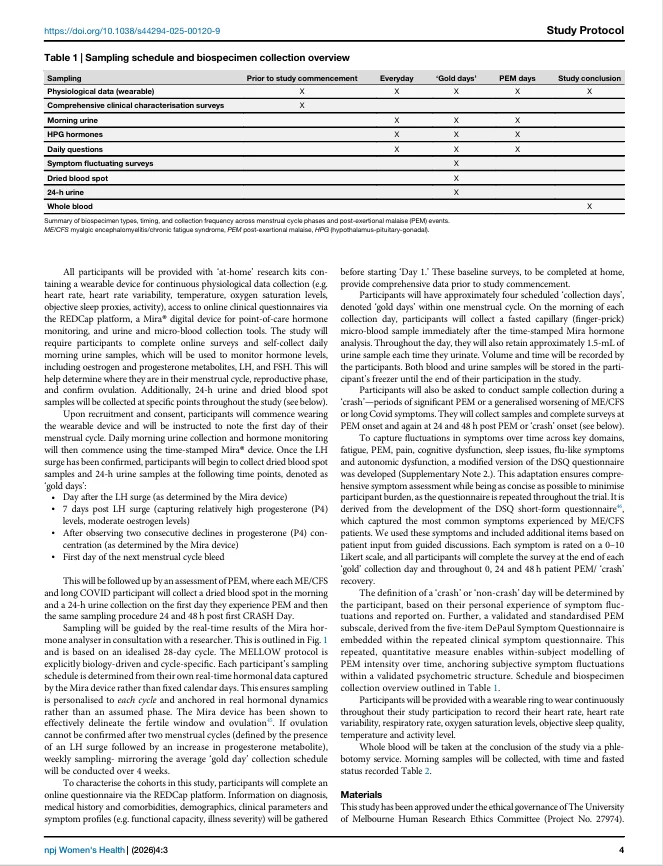
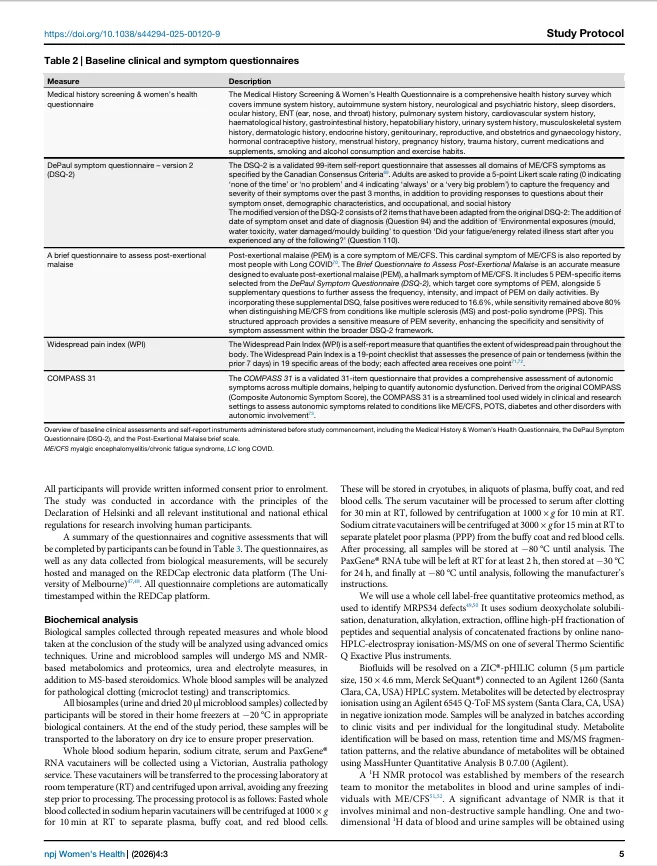
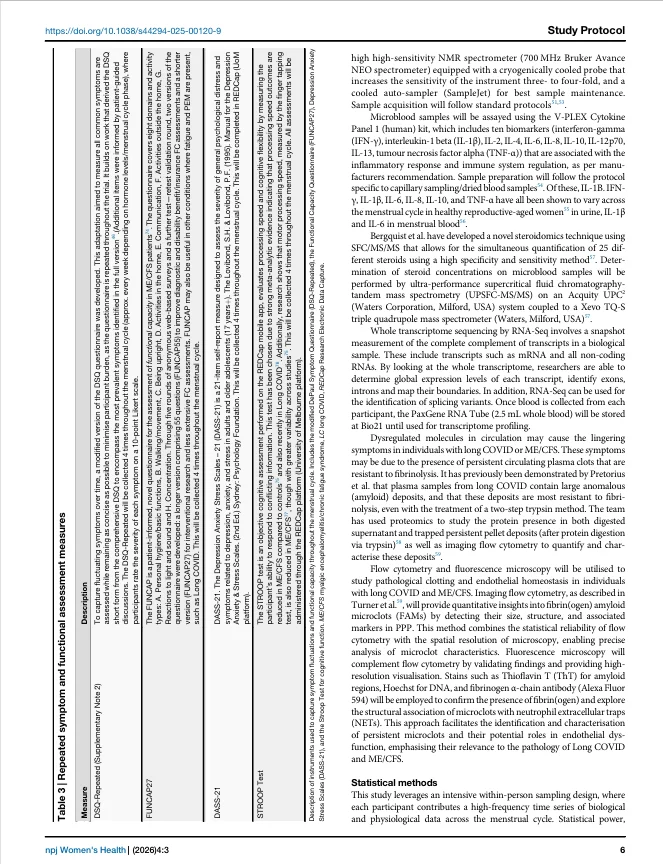
- Dense longitudinal data including wearable physiology, symptom surveys, urine samples, dried blood spots, and multiomic profiling.
- Additional sampling during post exertional malaise events, allowing biological signals to be examined during symptom flares.
Taken together, the study aims to map how hormonal rhythms, physiology, molecular signals, and symptoms interact across time.
More broadly, the protocol highlights an important methodological point.
Hormonal systems operate on daily and monthly rhythms, and ignoring those dynamics can obscure meaningful biological signals.
Approaches like this may help inform research across many conditions where hormonal rhythms influence disease biology, including migraine, autoimmune disease, and other chronic illnesses.
At GSD Health Research, this is an area we think about often when designing longitudinal studies in women’s health, particularly how hormonal context and life stage influence physiology and biomarker interpretation.
Many thanks to the authors (Natalie Thomas, Christopher Armstrong and team) for sharing this thoughtful protocol and contributing to the growing conversation around incorporating menstrual cycle biology into clinical research.
And thanks Danielle (Valcourt) Meadows, for sharing the paper with me!”
Title: A chronobiology-based protocol for multi-omic mapping of menstrual cycle and diurnal rhythms in ME/CFS and long COVID
Authors: Natalie Thomas, Katherine Huang, Elena K. Schneider-Futschik, Beth Pollack, Michal Caspi Tal, David Fineberg, Caroline Gurvich, Resia Pretorius, Jonas Bergquist, Christopher W. Armstrong
Read the Full Article on npj Women’s Health
Find more in Gallery.
Stay updated on all scientific advances with Hemostasis Today.
-
Sep 30, 2026, 10:55Rana Al Hrout: Diagnostic Approach to Hypochromic Microcytic Anemia
-
Sep 30, 2026, 01:52Javed Anees: DADA2 – When a Young Stroke Is More Than a Stroke
-
Sep 30, 2026, 01:51How a Venous Thrombus Becomes Revascularized – ISTH
-
Sep 29, 2026, 22:45Victor Agunyego: Paracetamol – The Most Common Drug We Underestimate
-
Sep 29, 2026, 22:42Nova Sinclair: Advancing the Future of Hematology – Meet Our 2027 Organizing Committee
-
Sep 29, 2026, 22:41Lorenz Räber: Intracoronary Imaging in PCI – Why, When, How, and Which Modality?
-
Sep 29, 2026, 22:31Selma Turkovic: Pleased to Deliver the Opening Presentation at Kingston Hospital
-
Sep 29, 2026, 22:31Miguel Teran: Ultrasound and Simulation in Arterial Blood Sampling
-
Sep 29, 2026, 22:28Mohammad Refaei: Navigating Your Career in Hematology From Training to Practice