


Heghine Khachatryan: Hematologic Causes of Cryptogenic Stroke
Heghine Khachatryan, Editor-in-Chief of Hemostasis Today, Head of Hemophilia and Thrombosis Center at Yeolyan Hematology and Oncology Center, shared a post on LinkedIn:
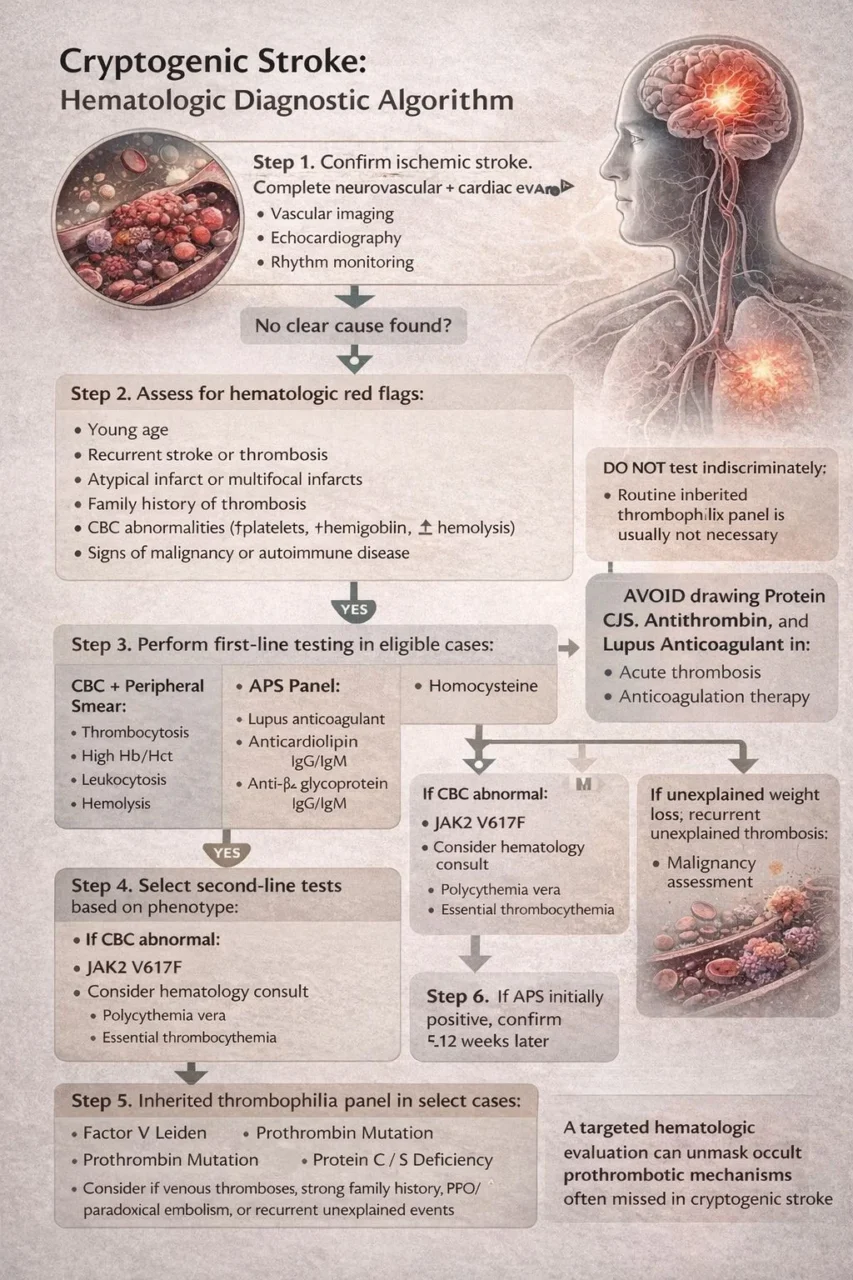
“Cryptogenic Stroke: When the Cause May Be Hematologic
Despite comprehensive evaluation, approximately twenty to thirty percent of ischemic strokes remain classified as cryptogenic.
In a meaningful proportion of these patients, the underlying mechanism may lie within the hemostatic or hematologic system.
A targeted diagnostic approach is therefore essential.
Before initiating extensive thrombophilia testing, clinicians should first complete the standard evaluation for ischemic stroke, including:
- Brain imaging
- Vascular imaging
- ECG and cardiac rhythm monitoring
- Echocardiography when indicated
Once common causes have been excluded, hematologic investigation becomes particularly relevant in selected patients, especially when the following features are present:
- Young age
- Recurrent stroke or unexplained thrombosis
- Multifocal or atypical infarct patterns
- Family history of thrombosis or early stroke
- Abnormalities on CBC (thrombocytosis, erythrocytosis, hemolysis)
- Clinical suspicion of malignancy or autoimmune disease
Practical first-line hematologic testing may include:
- Complete blood count and peripheral smear
- Antiphospholipid antibody panel
- Homocysteine level
Further testing should be guided by clinical phenotype.
For example:
- Antiphospholipid syndrome remains one of the most important immune-mediated causes of arterial thrombosis.
- Myeloproliferative neoplasms associated with JAK2 mutations may present with arterial events, including stroke.
- Rare disorders such as Paroxysmal nocturnal hemoglobinuria should be considered in patients with hemolysis or cytopenias.
- Malignancy-related hypercoagulability, including Trousseau syndrome, may also manifest as cryptogenic stroke.
Importantly, inherited thrombophilia panels should not be ordered indiscriminately.
Testing for conditions such as Factor V Leiden mutation or Prothrombin G20210A mutation is generally reserved for carefully selected cases.
Clinical takeaway
A targeted hematologic evaluation—rather than routine broad thrombophilia screening- can help identify occult prothrombotic states that may otherwise remain undetected in patients with cryptogenic stroke.
Recognizing these mechanisms is critical for improving secondary prevention strategies and long-term patient outcomes.”
Stay updated with Hemostasis Today.
-
Sep 25, 2026, 10:13Michael Baria: Platelet Concentration and PRP Outcomes in Partial Rotator Cuff Tears
-
Sep 25, 2026, 09:49Haley Coleman: Volunteering to Support Hemophilia Awareness
-
Sep 25, 2026, 08:55Hitarth Mehta: BHMS Students Gain Practical Exposure to Haemophilia Diagnosis
-
Sep 25, 2026, 07:25Varun Capoor: How Therapeutic Apheresis and Transfusion Medicine Can Complement Clinical Management in SCD
-
Sep 25, 2026, 07:14Manshi Kesharwani: SAK-GQDs Modulate Thrombus Burden and Endothelial Function in Deep Vein Thrombosis
-
Sep 25, 2026, 06:20Farjah Hassan Algahtani: How Can We Better Identify Patients at Risk of Blood Clots after Metabolic and Bariatric Surgery?
-
Sep 25, 2026, 05:59Carla Lewis: Kids Conquering Sickle Disease Joins Nemours Children’s Hospital for 2nd Annual Awareness Event
-
Sep 25, 2026, 05:47Omid Seidizadeh: Evolutionary Constraint and Population Variation Across Coagulation Genes
-
Sep 25, 2026, 05:40Gerald Bertrand: Presenting UMi-NGS Non-Invasive Foetal HPA Genotyping at DGTI 2026