


Nuha El Sayed: Focused Summary of the 2026 ACC/AHA Guideline on Management of Dyslipidemia in Diabetes
Nuha El Sayed, Endocrinologist/ Diabetologist at Brigham and Women’s Hospital, Director, Guideline Development and Implementation Course at Harvard Medical School, shared a post on LinkedIn about a recent article by Roger S. Blumenthal et al, adding:
“Here is a focused summary of the brand-new 2026 ACC/AHA/Multisociety Guideline on the Management of Dyslipidemia actionable items for clinicians caring for people with diabetes:
Risk assessment
- Initiate LLT for all aged greater than or equal to 40 with DM, without needing to calculate 10-year ASCVD risk first.
- Switch to PREVENT-ASCVD equations (replacing the older Pooled Cohort Equations) for 10- and 30-year risk estimation in adults aged 30–79 for primary prevention decisions.
- Measure Lp(a) at least once in every patient’s lifetime, to support intensified preventive efforts.
LDL-C targets (reinstated)
LDL-C goals have returned to the guideline.
- Primary prevention, high risk (diabetes plus greater than or equal to 1 ASCVD risk factor): LDL-C less than 70 mg/dL
- Secondary prevention, very high risk (diabetes + established ASCVD): LDL-C less than 55 mg/dL
- Borderline/intermediate risk: LDL-C less than 100 mg/dL
Corresponding non-HDL-C goals are 30 points higher than each LDL-C target (i.e., less than 85, less than 100, less than 130 mg/dL respectively).
Pharmacotherapy algorithm
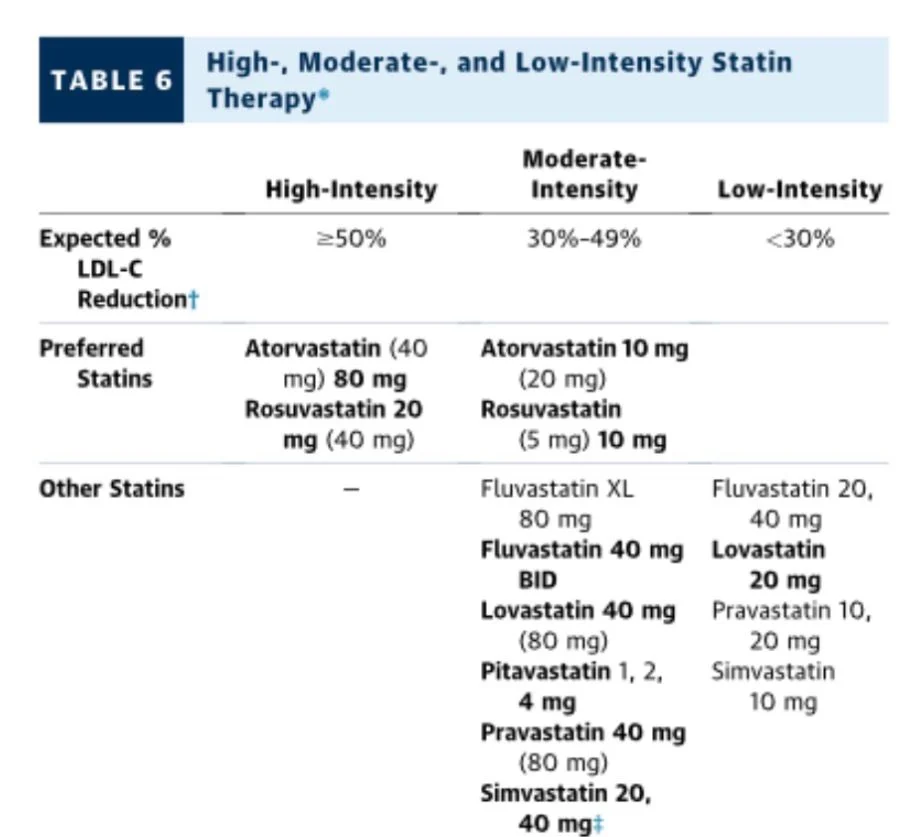
1. Maximize statin therapy first (high-intensity preferred, especially with ASCVD or high CV risk). Statins remain the cornerstone.
2. If LDL-C goal not achieved, add nonstatin therapy:
- Ezetimibe (generic, preferred first add-on)
- Bempedoic acid (oral, useful in statin-intolerant patients)
- PCSK9 monoclonal antibodies (for high/very-high-risk patients not at goal)
3. Inclisiran (siRNA, twice-yearly injection) may be considered for patients unable to tolerate or access PCSK9 inhibitors, though outcomes data are still pending.
ApoB: A new practical tool for diabetes
By incorporating apoB measurement, clinicians may better identify high-risk individuals who may otherwise be overlooked by traditional metrics.
- Measure apoB in those who have reached their LDL-C and non-HDL-C goals but have elevated triglycerides.
- ApoB targets: less than 55 mg/dL (very high risk), less than 70 mg/dL (high risk), less than 90 mg/dL (borderline–intermediate).
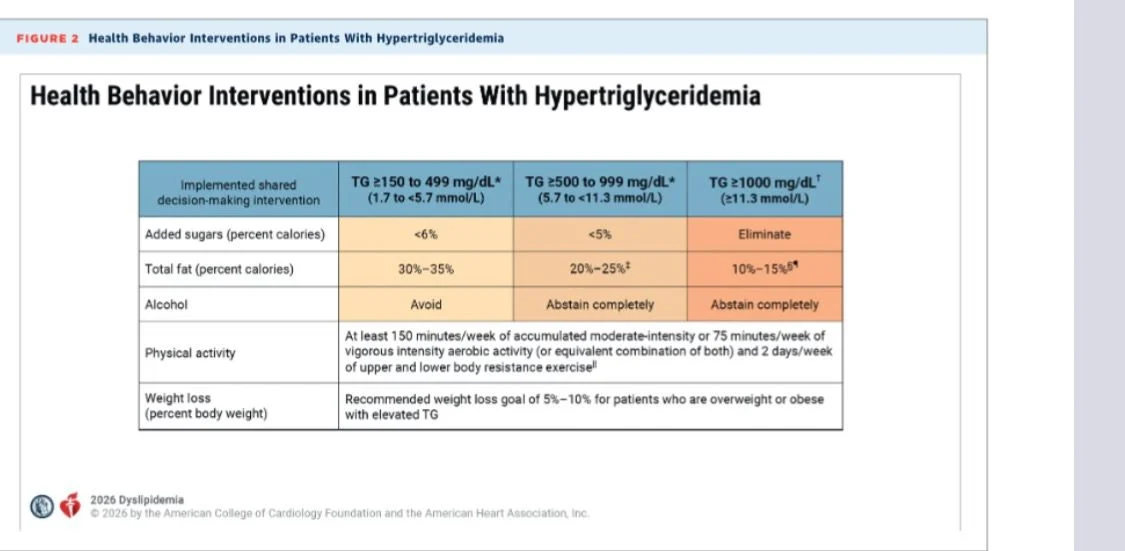
TGs levels of at least 150 mg/dL are associated with increased ASCVD risk, and levels are highly responsive to lifestyle intervention.
Lifestyle — still the foundation
Health behaviors such as body weight optimization, consistent physical activity, tobacco cessation, and adequate sleep hygiene form the foundational pillars of dyslipidemia management.
CAC scanning — A ‘tie breaker’
Coronary artery calcium testing recommendations have been strengthened, specifically for use as a ‘tie breaker’ when treatment is uncertain
Bottom line: The 2026 guideline takes a more aggressive, treat-to-goal approach than its 2018 predecessor.
For your patients with diabetes, the key shifts are: start LLT at 40, use PREVENT-ASCVD equations, target LDL-C to less than 70 mg/dL (primary prevention, high risk) or less than 55 mg/dL (with ASCVD), add apoB to guide intensification in those with high TGs, and escalate to PCSK9 inhibitors when targets aren’t met.”
Title: ACC/AHA/AACVPR/ABC/ACPM/ADA/AGS/APhA/ASPC/NLA/PCNA Guideline on the Management of Dyslipidemia
Authors: Roger S. Blumenthal, Pamela B. Morris, Mario Gaudino, Heather M. Johnson, Timothy S. Anderson, Vera A. Bittner, Ron Blankstein, LaPrincess C. Brewer, Leslie Cho, Sarah D. de Ferranti, Eugenia Gianos, Ty J. Gluckman, Kristen F. Gradney, Ijeoma Isiadinso, Donald M. Lloyd-Jones, Joel C. Marrs, Seth S. Martin, Kellie H. McLain, Laxmi S. Mehta, Samia Mora, Wudeneh M. Mulugeta, Pradeep Natarajan, Ann Marie Navar, Carl E. Orringer, Tamar S. Polonsky, Harmony R. Reynolds, Joseph J. Saseen, Michael D. Shapiro, Daniel E. Soffer, Sheila A. Tynes, Chloé D. Villavaso, Salim S. Virani, John T. Wilkins
Read the Full Article on JACC

Stay updated with Hemostasis Today.

-
Sep 14, 2026, 20:53YoonHwa An: Rusfertide in Polycythemia Vera – From Clinical Benefit to Strategic Value
-
Sep 14, 2026, 20:52Andres Alberto Mercado Pompa: External Validation of Prognostic Risk Scores in Cerebral Venous Thrombosis
-
Sep 14, 2026, 20:50Balaji Kirushnan: Advancing Regional Citrate Anticoagulation in CRRT – From Experience to Implementation
-
Sep 14, 2026, 20:48Valerie Dehondt: Nutritional Anemia Is Associated With Increased Risk of Severe COPD Exacerbations
-
Sep 14, 2026, 20:46Nupur Choudhury: Exploring AI-Based Detection of Anemia Using Eye and Fingernail Images
-
Sep 14, 2026, 20:44Shamee Shastry: Chart Before You Chase – Diagnosing Drug-Induced Hemolytic Anemia
-
Sep 14, 2026, 20:43David Reiner: Blood Tests That Can Reveal Nutrition Clues
-
Sep 14, 2026, 20:40Giuseppe Biondi Zoccai: Balancing Thrombosis and Bleeding in Acute MI With Hemophilia A
-
Sep 14, 2026, 20:39Kemal Karaagac: Kounis Syndrome as a Possible Cause of Very Late Stent Thrombosis