


Heghine Khachatryan: Platelets and Cancer Metastasis – More Than Just Hemostasis
Heghine Khachatryan, Editor-in-Chief of Hemostasis Today, Head of Hemophilia and Thrombosis Center at Yeolyan Hematology and Oncology Center, shared a post on LinkedIn:
“Platelets and Cancer Metastasis: More Than Just Hemostasis
Platelets are traditionally recognized for their essential role in hemostasis and thrombosis.
However, growing evidence shows that they also play a critical role in tumor progression and metastatic dissemination.
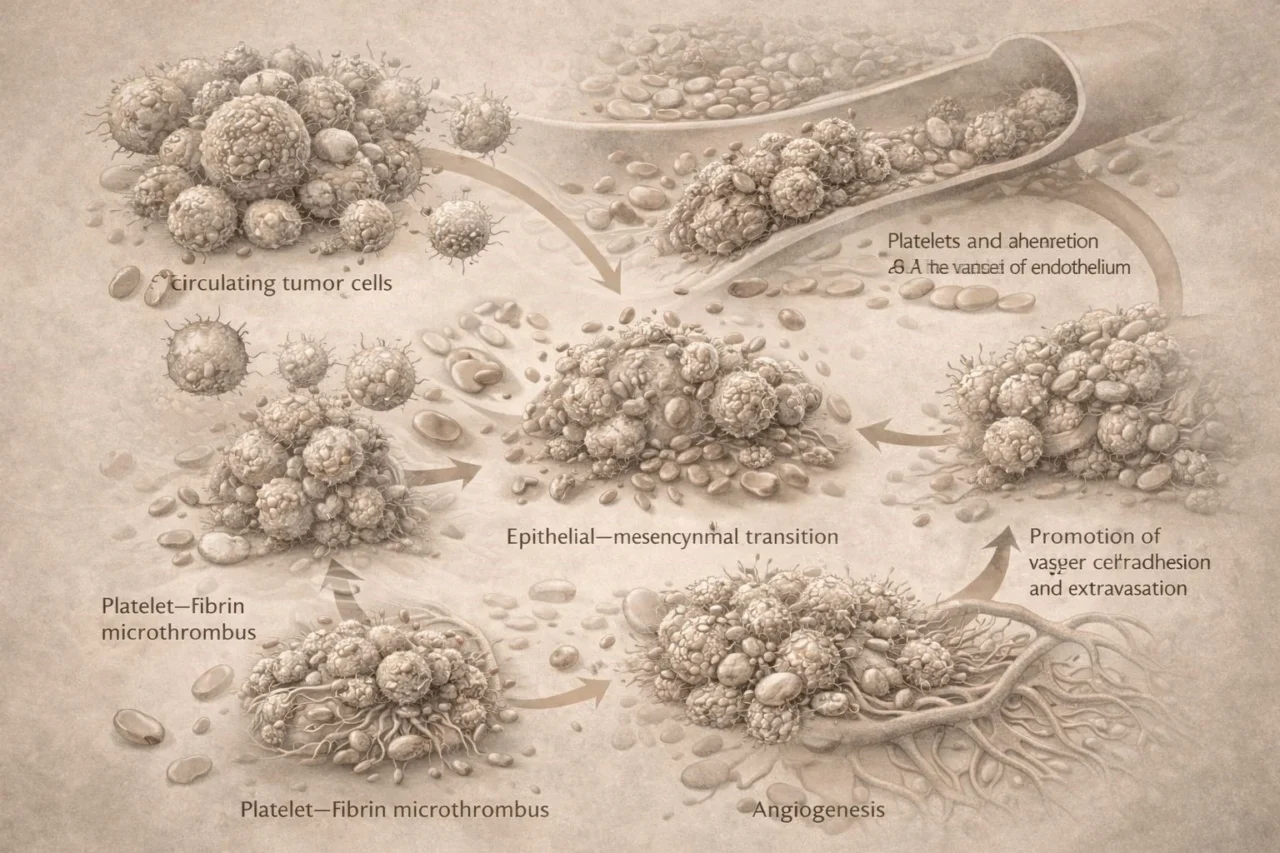
When tumor cells enter the bloodstream as circulating tumor cells (CTCs), they encounter a hostile environment characterized by immune surveillance and mechanical stress.
Platelets rapidly interact with these cells and contribute to the metastatic process through several key mechanisms.
1. Immune evasion
Platelets form a protective cloak around circulating tumor cells, shielding them from immune-mediated destruction.
Through the transfer of MHC class I molecules and the release of immunomodulatory factors, platelets help tumor cells evade natural killer (NK) cell–mediated cytotoxicity.
2. Induction of epithelial–mesenchymal transition (EMT)
Activated platelets release a variety of signaling molecules, including TGF-β, PDGF, and platelet-derived microparticles, which can induce epithelial–mesenchymal transition.
This process enhances tumor cell motility, invasiveness, and metastatic potential.
3. Promotion of tumor cell adhesion and extravasation
Platelets facilitate the attachment of circulating tumor cells to the vascular endothelium through interactions involving P-selectin, integrins, and glycoprotein receptors.
These interactions promote tumor cell arrest within the microvasculature and enable extravasation into distant tissues.
4. Formation of platelet–fibrin microthrombi
Platelet aggregation around tumor cells leads to the formation of platelet–fibrin microthrombi, which protect tumor cells from shear stress in the circulation and create a supportive microenvironment for metastatic seeding.
5. Stimulation of angiogenesis
Platelets are a rich source of pro-angiogenic mediators such as VEGF, PDGF, and FGF.
These factors support the formation of new blood vessels, which are essential for the survival and expansion of metastatic lesions.
Taken together, these mechanisms highlight the dual role of platelets not only as mediators of thrombosis but also as active participants in the biology of cancer metastasis.
Understanding platelet–tumor interactions may open new opportunities for therapeutic strategies targeting platelet-mediated pathways in cancer progression.”
Other posts featuring Heghine Khachatryan on Hemostasis Today.
-
Sep 25, 2026, 05:59Carla Lewis: Kids Conquering Sickle Disease Joins Nemours Children’s Hospital for 2nd Annual Awareness Event
-
Sep 25, 2026, 05:47Omid Seidizadeh: Evolutionary Constraint and Population Variation Across Coagulation Genes
-
Sep 25, 2026, 05:40Gerald Bertrand: Presenting UMi-NGS Non-Invasive Foetal HPA Genotyping at DGTI 2026
-
Sep 25, 2026, 05:33Urge Congress to support the Sickle Cell Disease Comprehensive Care Act – ASH
-
Sep 25, 2026, 05:24Isabelle Mahé: Reduced-Dose Apixaban in Extended CAT Treatment
-
Sep 25, 2026, 05:15Maria Cherska: High Cholesterol Isn’t Always Diet or Lifestyle – Sometimes It’s Genetic
-
Sep 25, 2026, 05:07Nancy Braithwaite: BBTS Specialist Certificate in Transfusion Science Practice
-
Sep 24, 2026, 18:43Hugh Nguyen: Honored to Accept the Friend of Singapore Red Cross Award
-
Sep 24, 2026, 18:42Titilope Fasipe: Proud to Support American Society of Hematology’s SCD Initiative