

Yves Bikorimana: Hemolysis – Why It Ruins Laboratory Results
Yves Bikorimana, CEO at MedData – Rwanda and Lab Scientist at The University Teaching Hospital of Kigali – Chuk, shared a post on LinkedIn:
”Hemolysis—Why It Ruins Laboratory Results
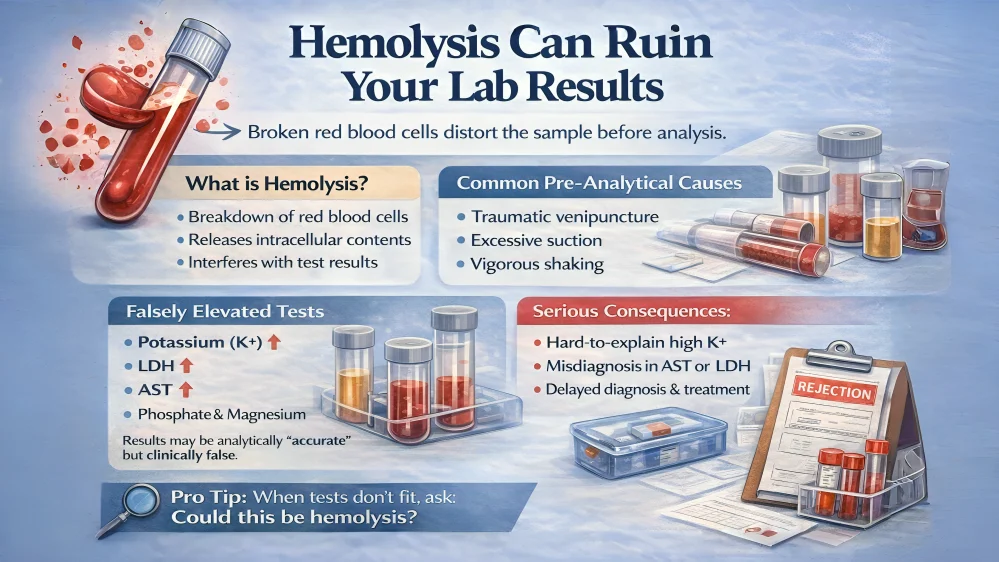
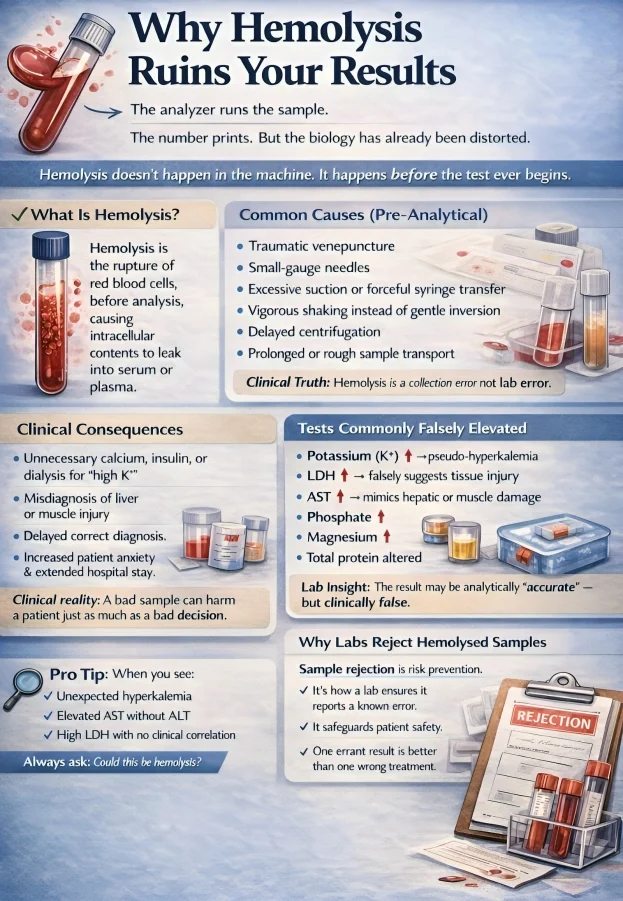
Hemolysis happens when red blood cells break open before a blood sample is properly analyzed in the laboratory. When these cells rupture, they release their internal contents, such as potassium, LDH, AST, and other substances into the serum or plasma. Laboratory analyzers are designed to test blood assuming the cells are intact. So even if the machine works perfectly and prints a result, the biology of the sample has already been altered. This means the result may look accurate on paper but does not truly reflect what is happening inside the patient’s body.
Importantly, hemolysis usually does not occur inside the analyzer. It happens before the testing process even begins, during what we call the pre-analytical phase. This includes the time of blood collection, handling, and transport. Common causes include traumatic venipuncture, using a needle that is too small, pulling the syringe too forcefully, shaking the tube vigorously instead of gently inverting it, delaying centrifugation, or transporting the sample roughly. In simple terms, hemolysis is most often a collection or handling error, not a machine error.
Hemolysis can significantly affect laboratory results. For example, potassium levels may appear falsely elevated (a condition called pseudo-hyperkalemia). LDH and AST levels may also increase, which can falsely suggest tissue damage, liver disease, or muscle injury. Phosphate and magnesium may rise, and total protein values may be altered. The analyzer may measure these substances correctly, but because they leaked out of broken cells, the result becomes clinically misleading.
The clinical consequences of hemolysis can be serious. A patient might receive unnecessary treatments, such as calcium, insulin, or even dialysis, due to falsely high potassium levels. A doctor might suspect liver or muscle injury when none exists. This can delay the correct diagnosis, increase patient anxiety, and sometimes prolong hospital stays.
This is why laboratories sometimes reject hemolyzed samples. Sample rejection is not bureaucracy, it is patient safety. Reporting a known false result can lead to inappropriate treatment. Recollecting a new sample may take more time, but it is far safer than acting on incorrect information. One redraw is always better than one wrong treatment.
As a healthcare professional or laboratory student, it is important to think critically. If you see unexpected hyperkalemia, elevated AST without ALT changes, or high LDH without clinical symptoms, always ask yourself: Could this be hemolysis? Recognizing this possibility can prevent misdiagnosis and protect patients.
In summary, hemolysis is a preventable pre-analytical error that distorts laboratory results. Proper blood collection, gentle handling, and timely processing are essential to ensure accurate and clinically meaningful results.”
Stay updated with Hemostasis Today.
-
Sep 25, 2026, 09:49Haley Coleman: Volunteering to Support Hemophilia Awareness
-
Sep 25, 2026, 08:55Hitarth Mehta: BHMS Students Gain Practical Exposure to Haemophilia Diagnosis
-
Sep 25, 2026, 07:25Varun Capoor: How Therapeutic Apheresis and Transfusion Medicine Can Complement Clinical Management in SCD
-
Sep 25, 2026, 07:14Manshi Kesharwani: SAK-GQDs Modulate Thrombus Burden and Endothelial Function in Deep Vein Thrombosis
-
Sep 25, 2026, 06:20Farjah Hassan Algahtani: How Can We Better Identify Patients at Risk of Blood Clots after Metabolic and Bariatric Surgery?
-
Sep 25, 2026, 05:59Carla Lewis: Kids Conquering Sickle Disease Joins Nemours Children’s Hospital for 2nd Annual Awareness Event
-
Sep 25, 2026, 05:47Omid Seidizadeh: Evolutionary Constraint and Population Variation Across Coagulation Genes
-
Sep 25, 2026, 05:40Gerald Bertrand: Presenting UMi-NGS Non-Invasive Foetal HPA Genotyping at DGTI 2026
-
Sep 25, 2026, 05:33Urge Congress to support the Sickle Cell Disease Comprehensive Care Act – ASH