


María Florencia Giannini: Diagnosis and Management of VTE in Pregnancy and Postpartum
María Florencia Giannini Cardiologist at Moron Municipal Hospital shared a post on LinkedIn about a recent article by Brandon C. Maughan et al, publsihed in Obstetrical and Gynecological Survey.
“Venous thromboembolism (VTE), which includes deep vein thrombosis (DVT) and pulmonary embolism (PE), is a major cause of maternal morbidity and mortality during pregnancy and the postpartum period.
The risk of VTE increases progressively during pregnancy and is highest in the first weeks after delivery.
Pregnancy is a hypercoagulable state due to increased coagulation factors, reduced natural anticoagulants, and venous stasis caused by hormonal changes and uterine compression.
Risk factors include prior VTE, inherited or acquired thrombophilia, cesarean delivery, obesity, immobilization, infection, and certain medical conditions.
Most pregnancy-related DVTs occur in the left lower extremity, often involving the iliofemoral veins.
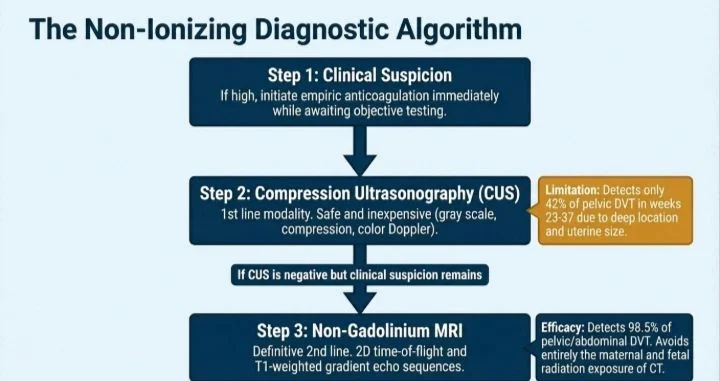
Diagnosis is challenging because normal pregnancy symptoms may mimic VTE.
Compression ultrasound is the first-line imaging test for suspected DVT.
For suspected PE, CT pulmonary angiography (CTPA) or ventilation-perfusion (V/Q) scanning are the main imaging modalities.
Treatment differs from the non-pregnant population.
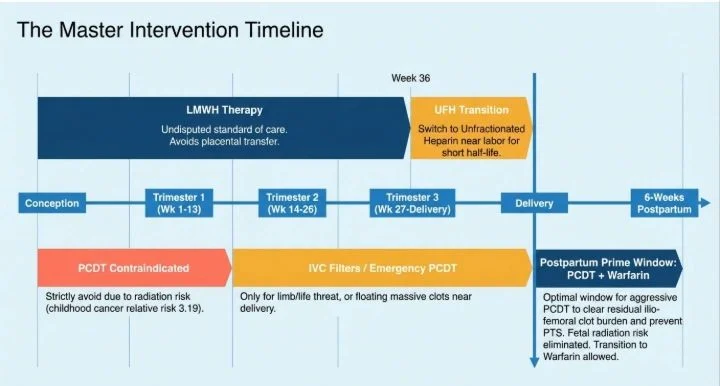
Low-molecular-weight heparin (LMWH) is the preferred anticoagulant because it does not cross the placenta and has a favorable safety profile.
Direct oral anticoagulants and warfarin are generally avoided during pregnancy.
In severe cases, such as massive PE or limb-threatening DVT, thrombolysis or invasive interventions may be required.
Overall, early recognition and appropriate management of VTE in pregnancy are critical to improve maternal and fetal outcomes.”
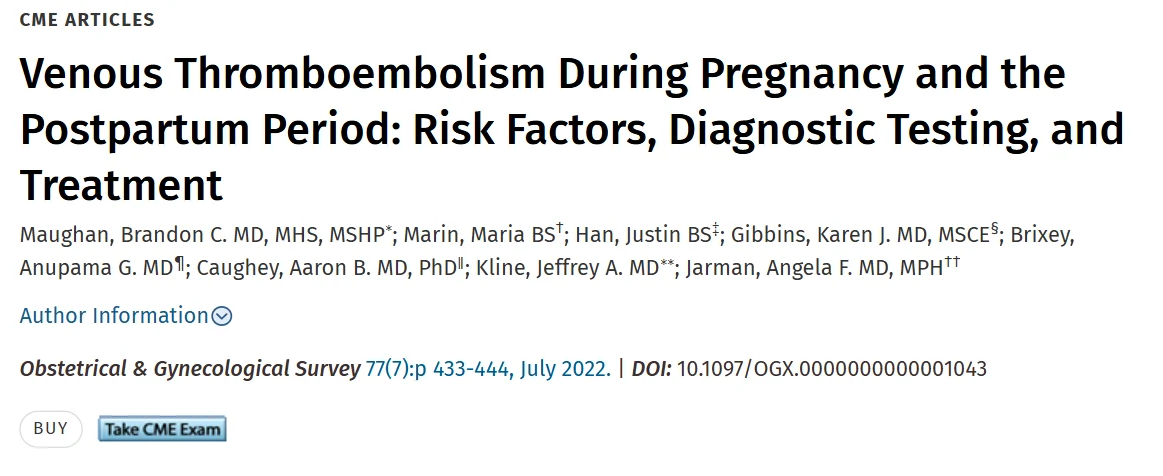
Title: Venous Thromboembolism During Pregnancy and the Postpartum Period: Risk Factors, Diagnostic Testing, and Treatment
Authors: Brandon C Maughan, Maria Marin, Justin Han, Karen J Gibbins, Anupama G Brixey, Aaron B Caughey, Jeffrey A Kline, Angela F Jarman
Read the Full Article on Obstetrical and Gynecological Survey
Stay updated with Hemostasis Today.
-
Sep 29, 2026, 03:53Nahrwan Masaoodi: Iron Deficiency Can Exist Without Anemia
-
Sep 29, 2026, 03:38Muhammad Yousaf: Iron Deficiency Beyond Diet
-
Sep 29, 2026, 03:21Parvez Ahmed Chowdhury: Synthesizing Aspirin in the Organic Chemistry Lab
-
Sep 29, 2026, 03:12Ahmed Hamandi: Building the Future of Hematopoietic Transplantation in Iraq
-
Sep 29, 2026, 03:09M V Chandrakanth: Aspirin in CRC – Old Drug, New Precision Oncology?
-
Sep 29, 2026, 03:07Caroline Pothet: Advancing Treatment Development in Sickle Cell Disease and Thalassaemia
-
Sep 29, 2026, 02:53Astha Jain: Thalassemia Care Through a Public Health Lens
-
Sep 29, 2026, 02:50Emma Groarke: Starting a New Career Path in Homeland
-
Sep 28, 2026, 19:14Aditya Sharma: An Outstanding Start to the Final Day of VSS 2026!