


Estrada Bernard: 3 Things Every Clinician Should Be Teaching Their Community About Stroke
Estrada Bernard, Neurosurgeon in Henderson, Nevada, shared on LinkedIn:
”Three things every clinician should be teaching their community about stroke — and one data point that should change how we talk about FAST.
Most public stroke education still revolves around the FAST acronym.
It is memorable, widely adopted, and reasonably effective—particularly for anterior circulation strokes.
But the data tells a more nuanced story.
1. FAST misses a meaningful subset of strokes
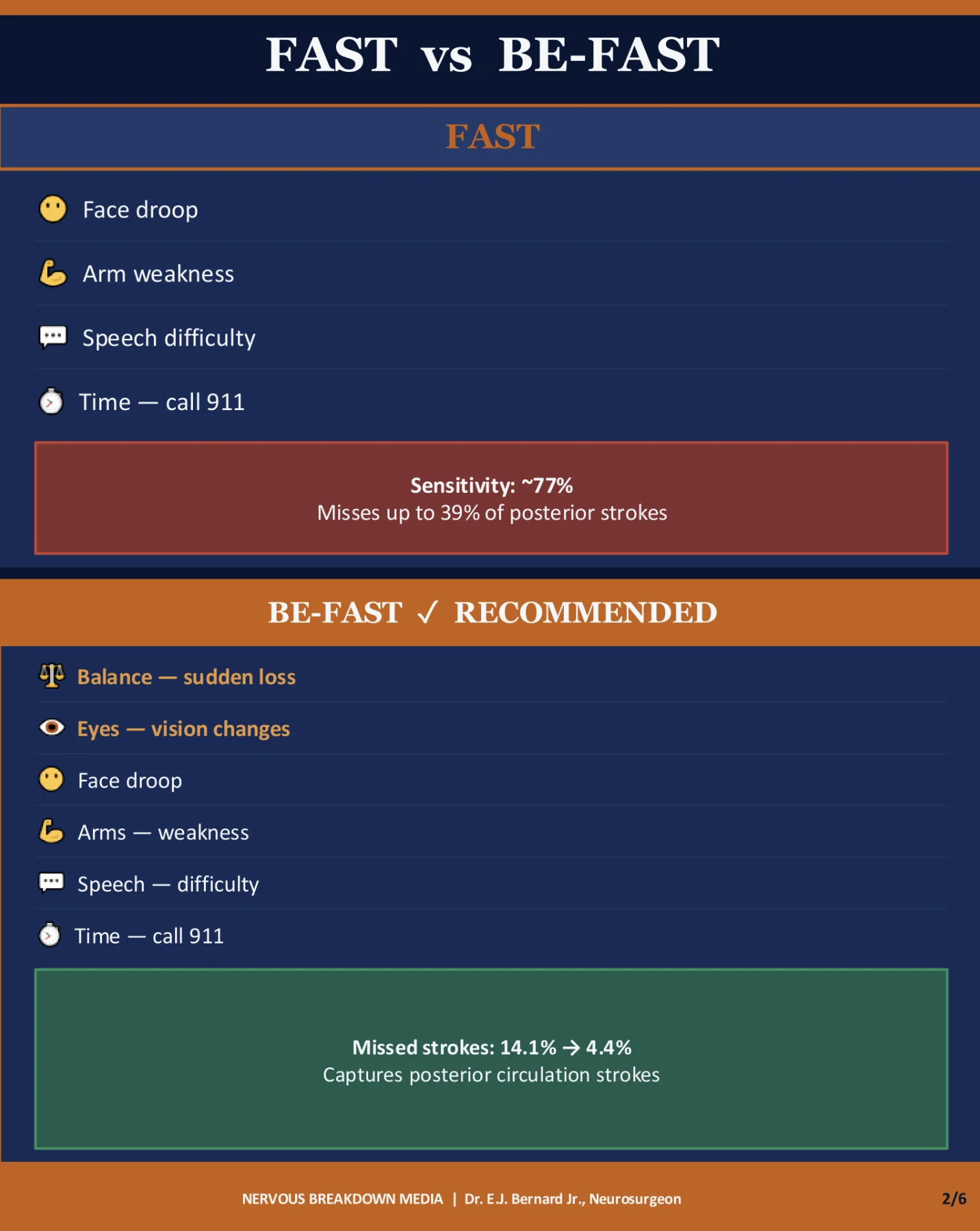
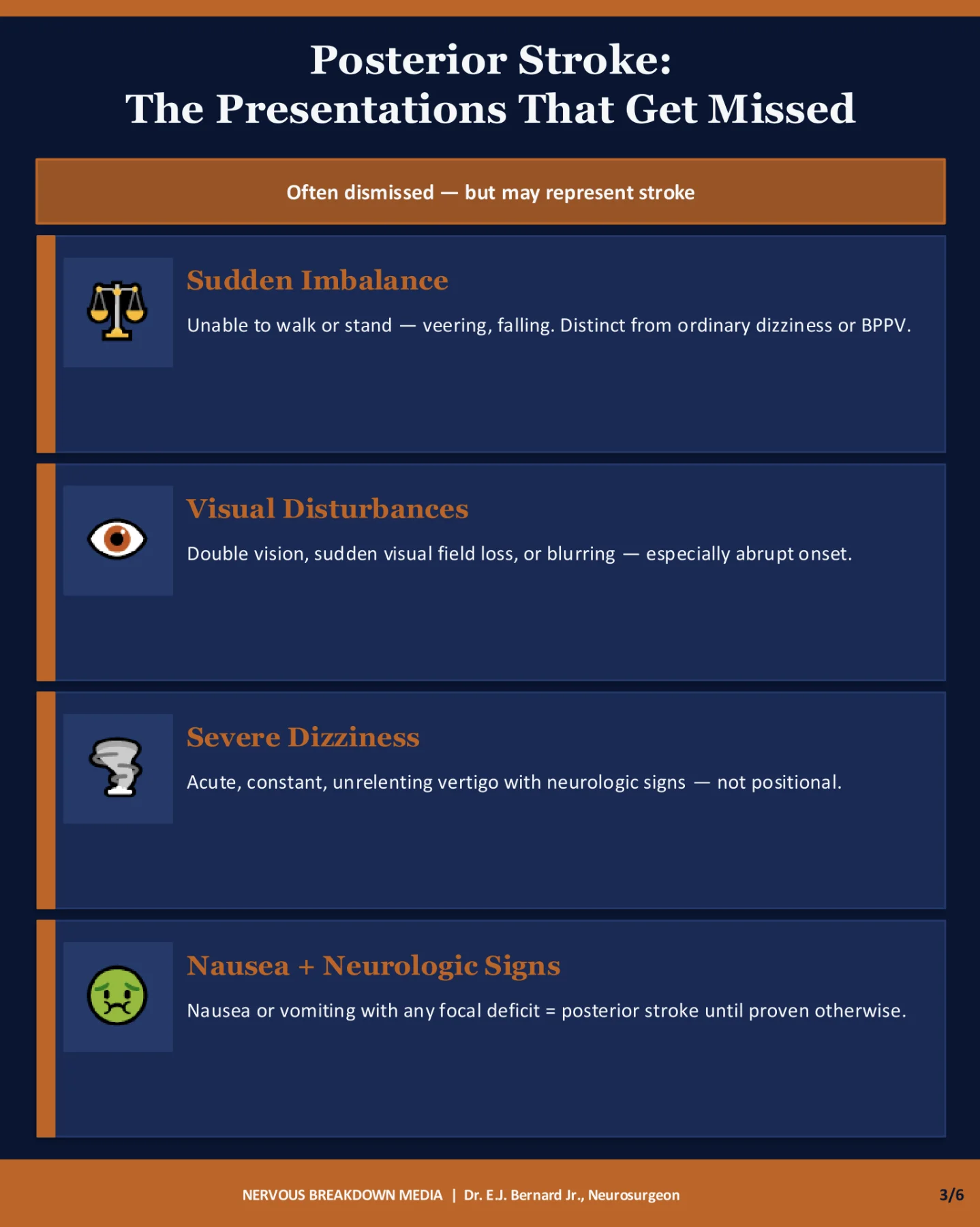
FAST has a pooled sensitivity of ~77%. Critically, it can miss up to 39% of posterior circulation strokes—those presenting with vertigo, imbalance, or visual disturbances rather than classic hemiparesis.
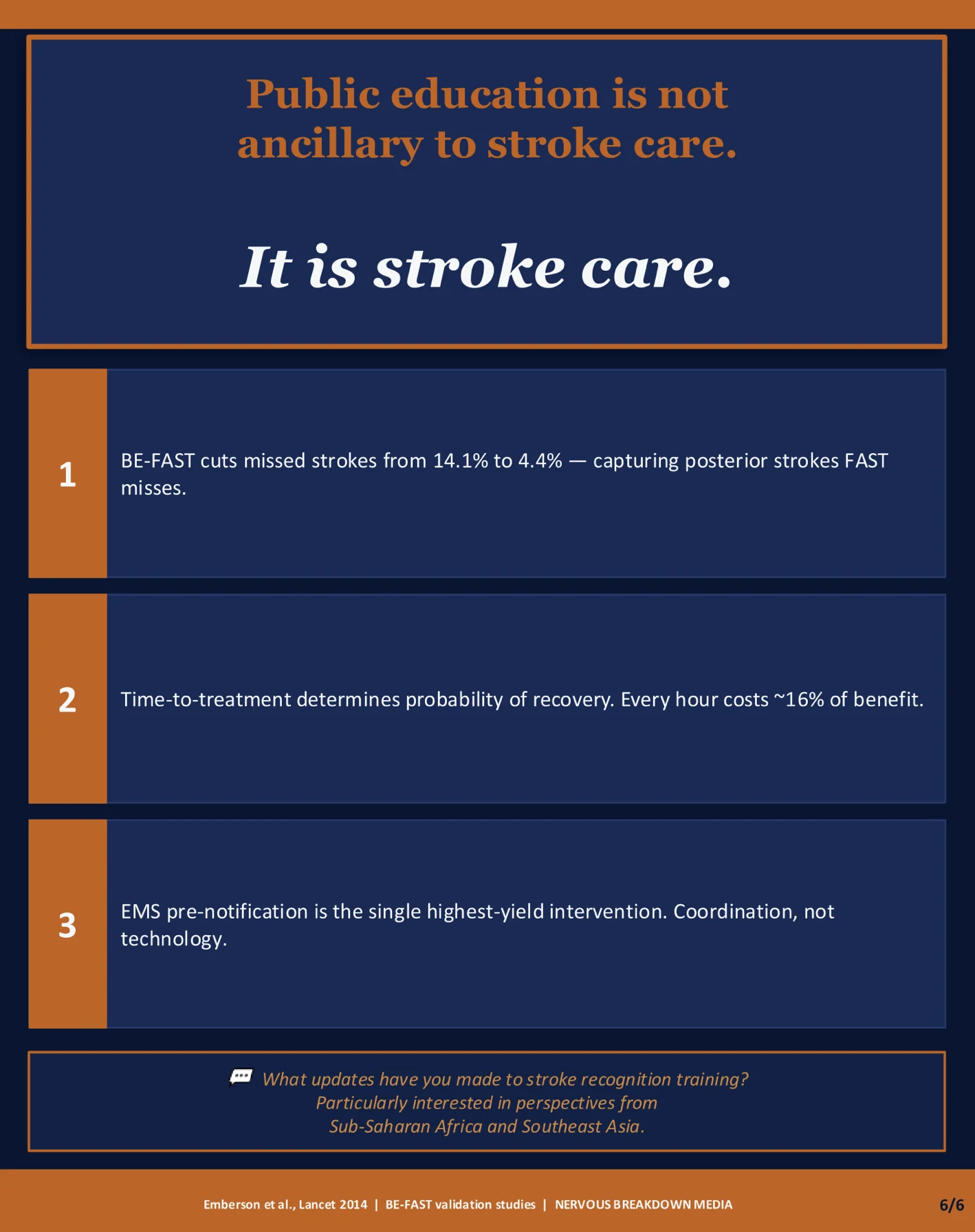
Expanding to BE-FAST (adding Balance and Eyes) reduces missed strokes from 14.1% to 4.4% in validation studies.
Yet, as of 2024, 35% of U.S. Comprehensive Stroke Centers still rely on FAST alone in public-facing materials.
2. Time is not just brain — it is probability
The relationship between time and outcome is stark:
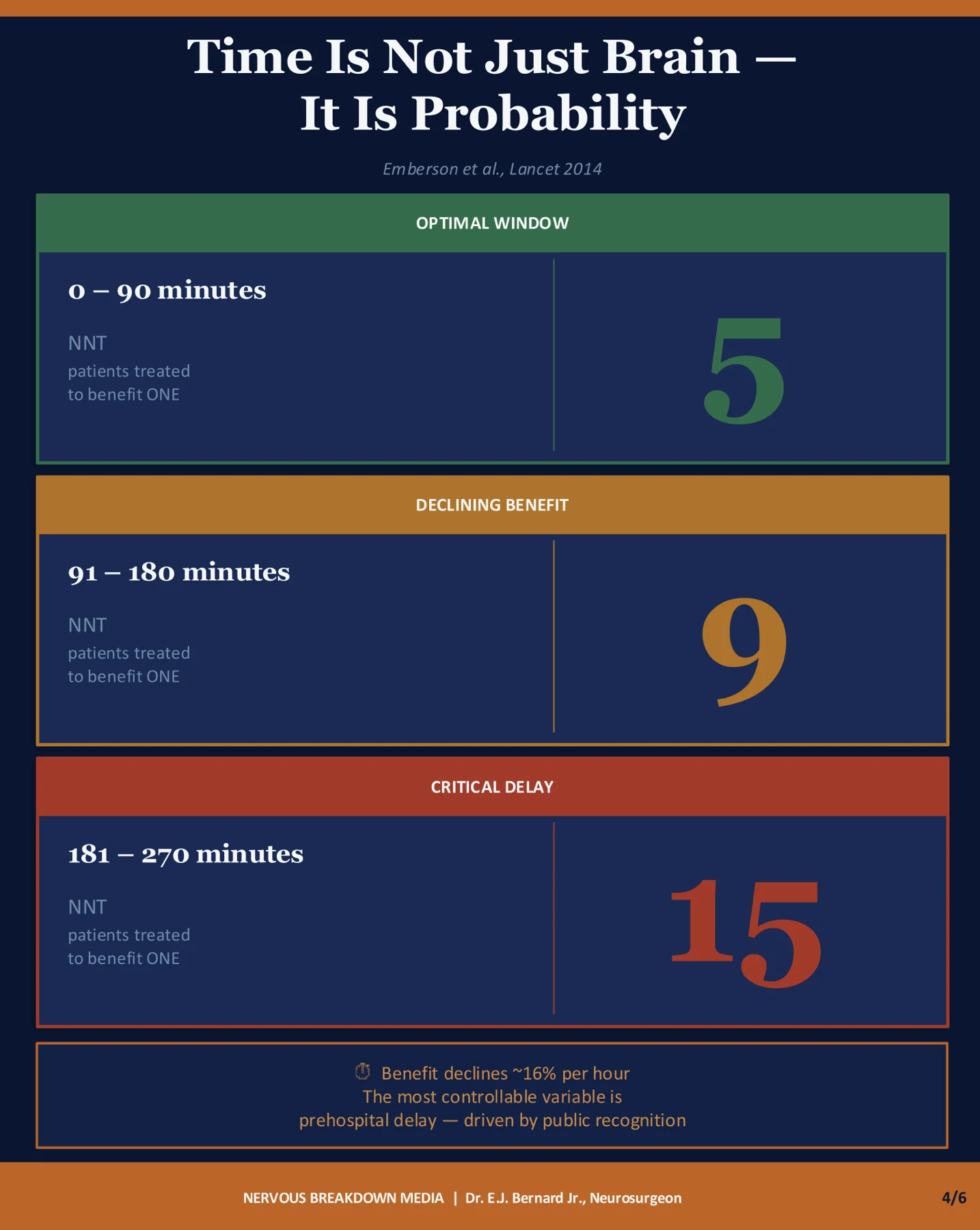
- NNT = 5 at 0–90 minutes
- NNT = 9 at 91–180 minutes
- NNT = 15 at 181–270 minutes
(Emberson et al., Lancet 2014)
For bridging therapy prior to thrombectomy, benefit declines by ~16% per hour.
The most controllable variable in this chain?
Prehospital delay — driven almost entirely by public recognition.
3. In resource-limited settings, one intervention stands above the rest
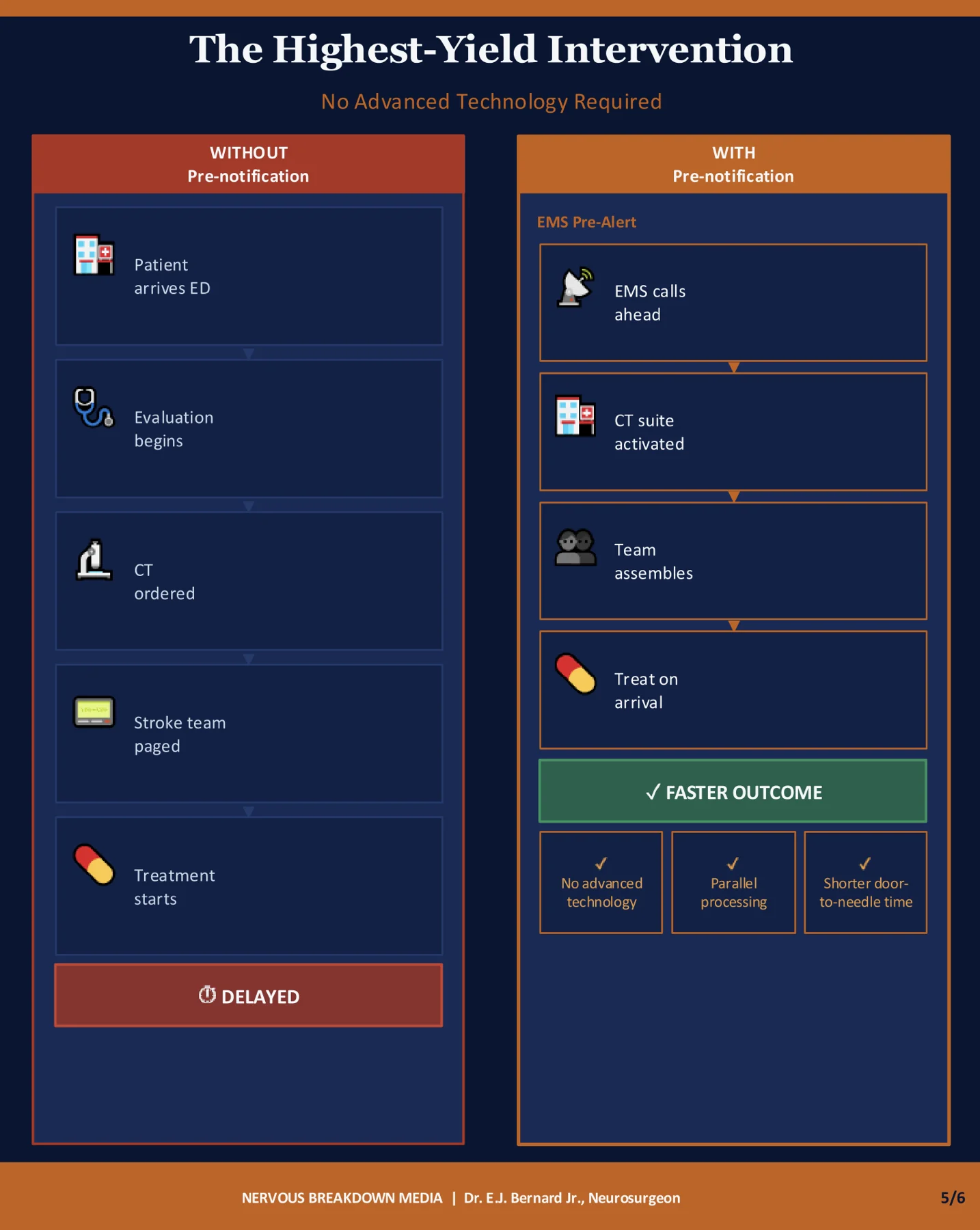
The single highest-yield strategy to improve door-to-needle time is EMS pre-notification.
It requires no advanced technology—just coordination.
It transforms stroke care from sequential to parallel processing.
The takeaway:
- Public education is not ancillary to stroke care.
- It is stroke care.
I am interested in how others are approaching this:
What updates have you made to stroke recognition training in your institution?
Particularly interested in perspectives from colleagues working in Sub-Saharan Africa and Southeast Asia, where system-level adaptations can have outsized impact.
New episode: ‘Suspect a Stroke? A Neurosurgeon Explains Exactly What to Do in the Next 10 Minutes’”
Stay updated with Hemostasis Today.
-
Sep 30, 2026, 01:52Javed Anees: DADA2 – When a Young Stroke Is More Than a Stroke
-
Sep 30, 2026, 01:51How a Venous Thrombus Becomes Revascularized – ISTH
-
Sep 29, 2026, 22:45Victor Agunyego: Paracetamol – The Most Common Drug We Underestimate
-
Sep 29, 2026, 22:42Nova Sinclair: Advancing the Future of Hematology – Meet Our 2027 Organizing Committee
-
Sep 29, 2026, 22:41Lorenz Räber: Intracoronary Imaging in PCI – Why, When, How, and Which Modality?
-
Sep 29, 2026, 22:31Selma Turkovic: Pleased to Deliver the Opening Presentation at Kingston Hospital
-
Sep 29, 2026, 22:31Miguel Teran: Ultrasound and Simulation in Arterial Blood Sampling
-
Sep 29, 2026, 22:28Mohammad Refaei: Navigating Your Career in Hematology From Training to Practice
-
Sep 29, 2026, 22:27Matteo Foschi: 10 Clinical Pearls for Antithrombotic Therapy in Secondary Stroke Prevention