


Ron DePinho: CRISPR Progress in Cellular Immunotherapy
Ron DePinho, Professor and Past President of MD Anderson Cancer Center, shared a post on LinkedIn about a recent article by Heidi Ledford, adding:
”CRISPR progress in cellular immunotherapy …
Researchers used a combination of engineered viruses and virus-like particles to target T cells. The particles carried RNA and protein machinery needed for CRISPR–Cas9 gene editing, and the viruses contained the DNA encoding the CAR protein. T cells had to receive both payloads to become a CAR T cell.
In mice with leukaemia and multiple myeloma, tumors were completely wiped out in the treated mice, and more than half of the treated group with sarcomas entered full remission. A biotechnology company, Azalea Therapeutics is now testing the approach in monkeys and hopes to have clinical trials in people by the end of next year. While encouraging, it remains to be seen how long the effects of the treatment last, or whether CRISPR–Cas9 might be introducing any unwanted changes to the genome.”
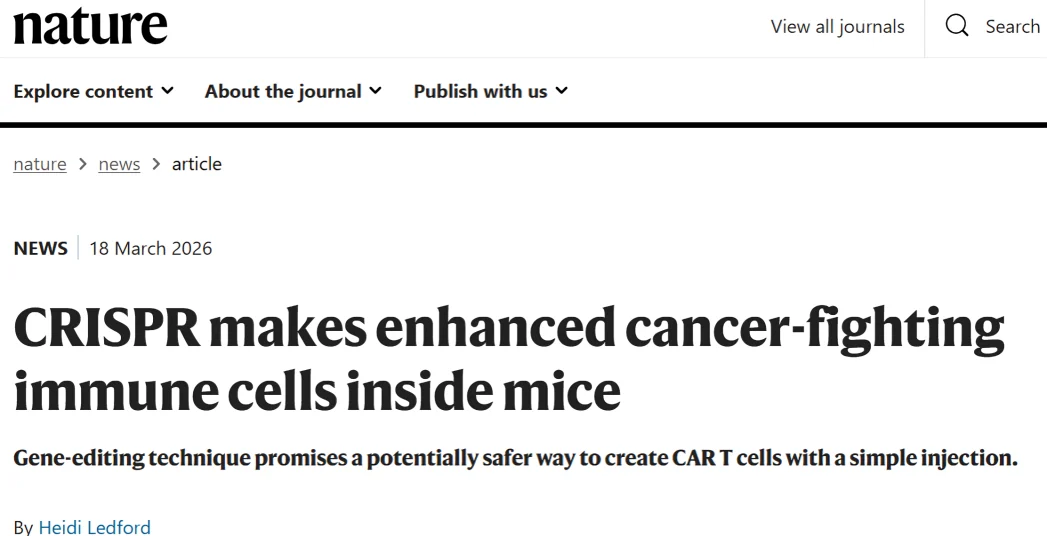
Title: CRISPR makes enhanced cancer-fighting immune cells inside mice
Author: Heidi Ledford
Read the Full Article on Nature
Stay updated on all scientific advances with Hemostasis Today.
-
Sep 29, 2026, 15:21Kanchan K Banerjee: Rusfertide Earns NCCN Category 1 Recommendation for Polycythemia Vera
-
Sep 29, 2026, 15:06Faizan Khan։ The Worldwide Burden of Venous Thromboembolism
-
Sep 29, 2026, 14:59Global Von Willebrand Disease Diversity Webinar Now Available on EHC YouTube – EHC
-
Sep 29, 2026, 14:43Mary Cushman: Apply to Shape Scientific Publishing as ISTH Associate Editor
-
Sep 29, 2026, 14:32Honoring Women Leaders Advancing Research, Care, and Innovation in Thrombosis and Hemostasis – Seminars in Thrombosis and Hemostasis
-
Sep 29, 2026, 14:20Nathan Connell: Key Takeaways from the 8th Aland Island Meeting on von Willebrand Disease
-
Sep 29, 2026, 14:09Mariusz Ratajczak: Are We Inadvertently Destroying the True Regenerative Power of PRP by Discarding the Plasma?
-
Sep 29, 2026, 14:00Nithin M: Proximal Splenic Artery Embolization Prior to Shunt-Directed Variceal Therapy
-
Sep 29, 2026, 13:12Wolfgang Miesbach: Teclistamab Targets the Source of Pathogenic Autoantibodies