

Peter Jaworski: The Shift in Plasma Center Locations Is About Demand, Not Economics
Peter Jaworski, Teaching Professor at Georgetown University, shared a post on LinkedIn:
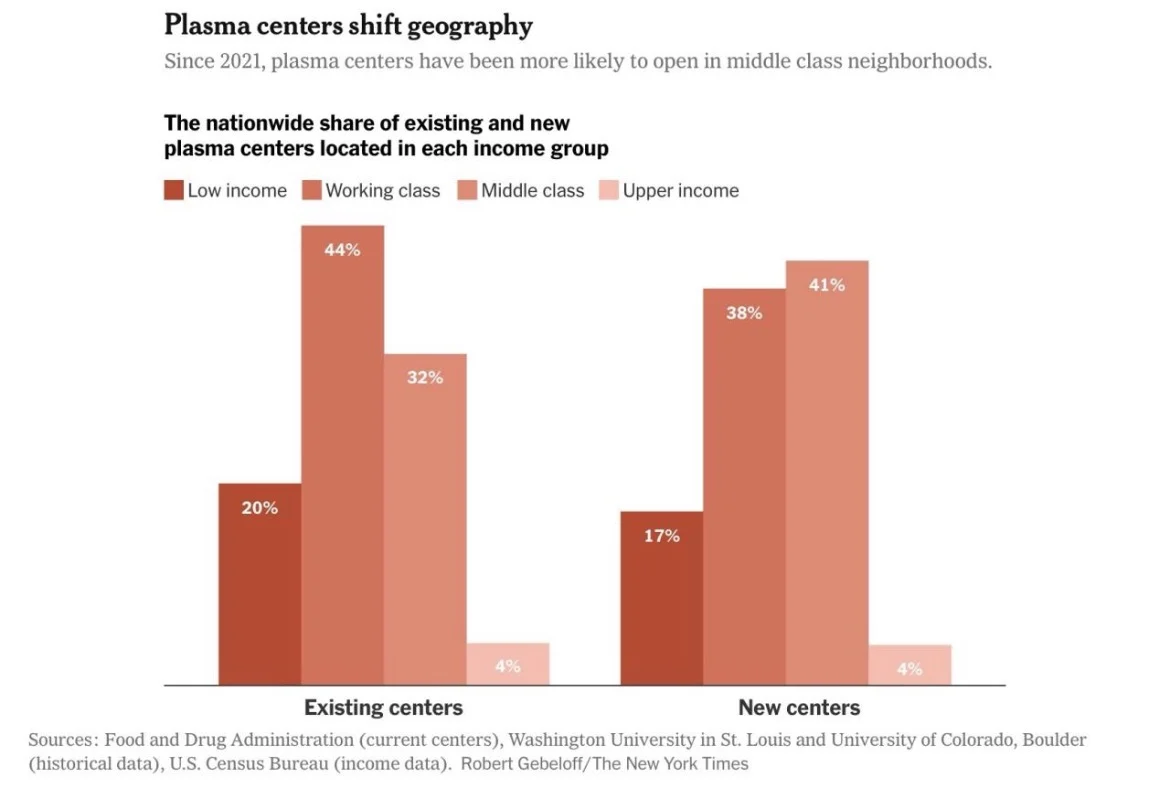
“On Friday, the New York Times discussed the shift towards more middle class neighbourhoods for plasma centres. They relied on the data I presented in my Substack, and I spent several weeks speaking with the reporter and hunting down additional data points (like the export value of plasma this and last year by month).
The shift is real, as evidenced by the locations of new plasma centres in the U.S.
But one thing I find unusual is the way people interpret this data. Many commentators in the comments of this article, on twitter, and elsewhere, see this as saying something significant about the economy.
It really doesn’t, though. Instead, it’s informative about the high demand for the medicines made from plasma, especially immunoglobulin.
Plasma centers don’t open because there are people who really want to donate plasma. They open because there are patients who desperately need more medicine.
The shift to more middle class neighbourhoods might just reflect the fact that there are so many centres in the U.S. (1,247) already that the better neighbourhoods with the right population density are now in wealthier places.
It might also signal (this is what I really hope) that stigma surrounding paid donation is decreasing, and that wealthier people no longer think that this is a hit to their social status.
But it doesn’t tell us much about the economy.
Open a plasma centre almost anywhere in the U.S. and people will donate. It’s an hour you can spend reading a book, doing your homework, or watching YouTube. If you’re scared of needles, okay, but it’s hard to think of anything else that will give you that much money ($50) to do so little, with the added benefit that the plasma you give is saving lives all over the world.
Name something else you can do that is so rewarding?
Uber doesn’t save lives, and being a nurse takes an enormous amount of effort and education.
Sure, some people will look down their noses at you, but doesn’t that just say more about them than you? They’re the jerks, not the people doing the thing that actually saves lives.”
Stay updated with Hemostasis Today.
-
Sep 25, 2026, 13:50Alejandro González Veliz: Beyond the Golden Hour in Stroke Care
-
Sep 25, 2026, 13:32Gevorg Yaghjyan: Low Drug Levels, Higher Cardiovascular Risk in Lupus
-
Sep 25, 2026, 12:53Bastu Odoka: What Happened to Blood Donation?
-
Sep 25, 2026, 12:43Thomas Dayspring: Reshaping the Biology of Atherosclerotic Plaques with New Therapies
-
Sep 25, 2026, 12:14Garima Sharma: Community Clinical Linkages for Better Postpartum Cardiovascular Care
-
Sep 25, 2026, 10:49Shefina S: From Presenting to Hosting at TRANSCON 2026
-
Sep 25, 2026, 10:37Michelle Leona Cecil: Hemophilia Advocacy and the Power of Community
-
Sep 25, 2026, 10:13Michael Baria: Platelet Concentration and PRP Outcomes in Partial Rotator Cuff Tears
-
Sep 25, 2026, 09:49Haley Coleman: Volunteering to Support Hemophilia Awareness