


Ahmed Koriesh/LinkedIn
Mar 27, 2026, 17:19
Ahmed Koriesh: Would You Start DAPT If the Patient Presents After 24 Hours?
Ahmed Koriesh, Director of Hospital Neurology Service at Cleveland Clinic Florida, shared on LinkedIn:
”Would you start DAPT if the patient presents after 24 hours?
Yes — why not.
The key concept
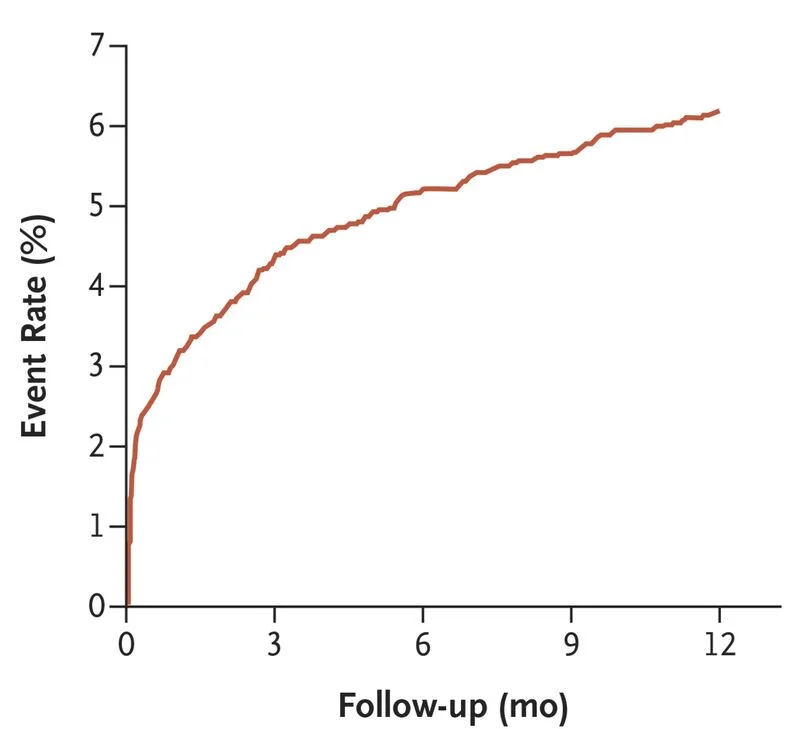
- Stroke recurrence risk is front-loaded.
- Highest risk in the first 3–7 days
- Then declines significantly
When you look at recurrence curves:
Steep early rise to gradual flattening
Why this matters
- Early phase equals unstable plaque, high embolic risk
- This is where DAPT has the greatest impact
Practical take
- <24h: ideal (trial-based)
- 24h – several days: still meaningful benefit
- Approxmately 1 week: diminishing returns
There is no sharp cutoff — it’s a gradient, not a binary window
What about the Trials?
- Trials (CHANCE/POINT) used ≤24h to maximize efficacy
- But biology doesn’t stop at 24h
- Risk – and potential benefit – persists beyond that
Bottom line
If patient present with minor stroke after 24h, still within few days, would still benefit from DAPT to reduce recurrence, specially in high risk patients.”
Stay updated with Hemostasis Today.
-
Nov 18, 2026, 14:41Factor V Deficiency: Diagnostic Challenges and the Role of Combined Factor V and VIII Deficiency
-
Nov 18, 2026, 14:29Maxime Dely: When Patient Encounters Become Life Lessons
-
Nov 18, 2026, 14:23Basanta Khatiwada: Advancing Haematology Through Research and Innovation at HAEMATOCON 2026
-
Nov 18, 2026, 14:13Alvin Katumba: Sickle Cell Disease Research Recognised With a 2026 ASH Abstract Achievement Award
-
Nov 18, 2026, 13:34Vincenzo De Angelis: Strengthening Plasma Management and Quality Control in Eastern Europe
-
Nov 18, 2026, 13:34Standardizing Bleeding Outcome Assessment in Hemophilia Clinical Trials – JTH
-
Nov 18, 2026, 13:34Nicolas Gendron: Towards Sustainable Anticoagulation
-
Nov 18, 2026, 13:33Breaking the Silence on Women and Girls with Bleeding Disorders – EHC
-
Nov 18, 2026, 13:32Maria Elisa Mancuso: Next-Generation Protein Therapies in Hemophilia