


Seema Dawood: Acquired Platelet Dysfunction with Eosinophilia – Bleeding Despite Normal Platelet Count
Seema Dawood, Medical Laboratory Technologist at The Aga Khan University Hospital, shared a post on LinkedIn:
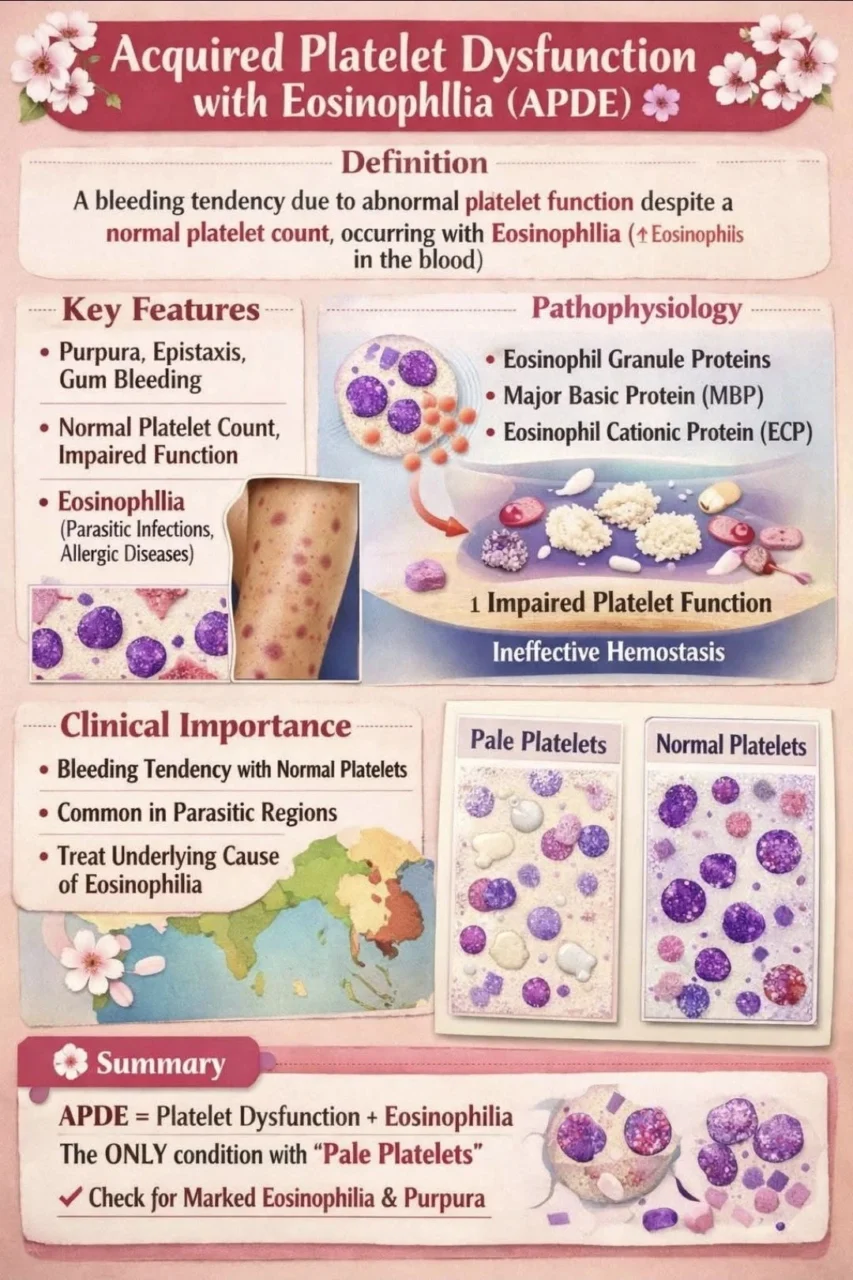
“Acquired Platelet Dysfunction with Eosinophilia (APDE)
Condition characterized by bleeding tendency due to abnormal Platelet function, despite having a normal or near-normal platelet count, occurring together with Eosinophilia (increased Eosinophils in the blood).
Key Features
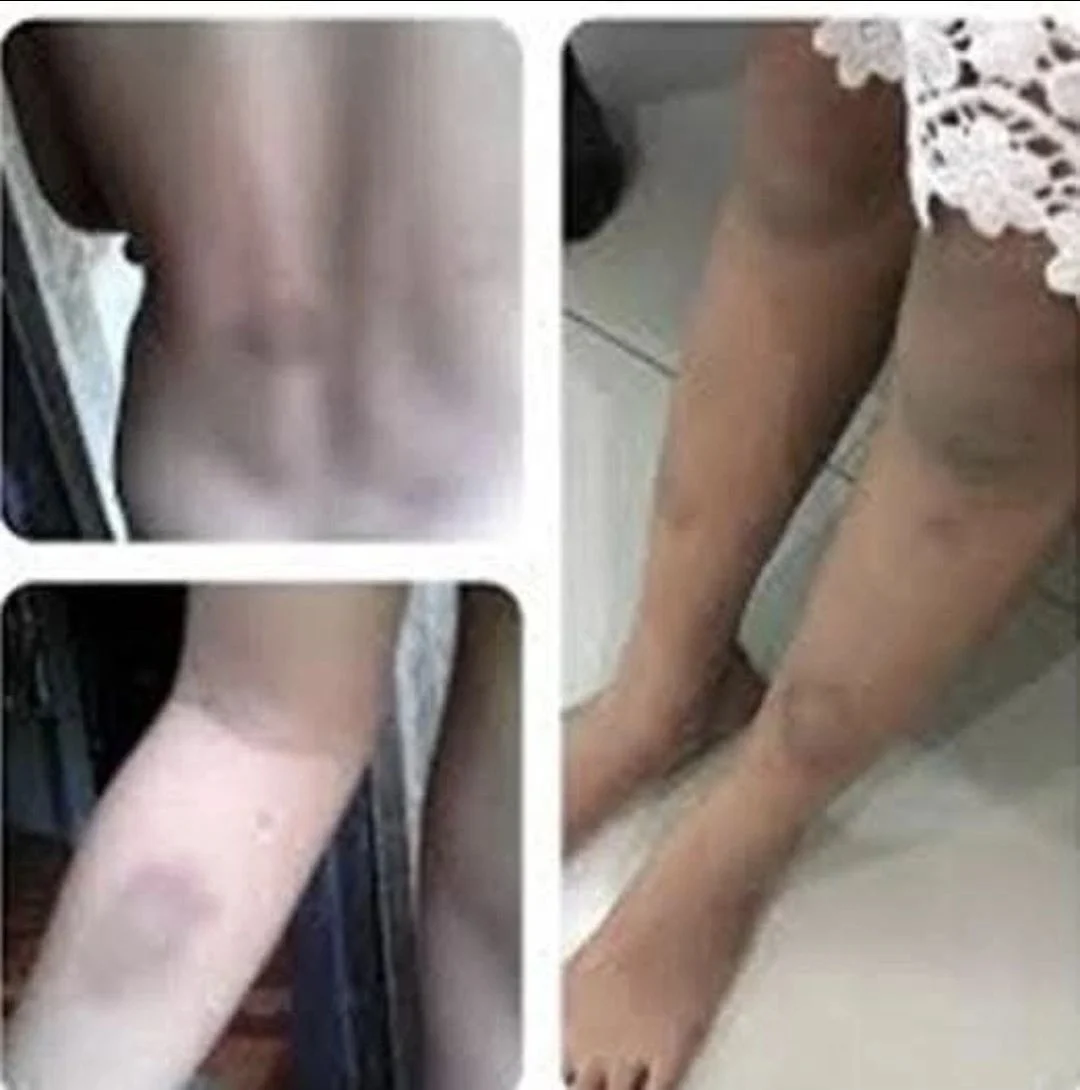
Patients present with abnormal bleeding: purpura, epistaxis, gum bleeding, etc.
Platelet count is usually normal, but platelet function is impaired.
Eosinophilia is present, commonly associated with:
- Parasitic infections
- Allergic diseases
- Certain immune-mediated conditions
Pathophysiology
Eosinophils release toxic granule proteins (e.g., Major Basic Protein, Eosinophil Cationic Protein).
These substances interfere with platelet function (aggregation and adhesion).
Result: ineffective hemostasis despite normal platelet count.
Clinical Importance
- Patients may have bleeding tendency even though platelet count is normal.
- Reported frequently in regions with high prevalence of parasitic infections (e.g., Southeast Asia).
- Treatment focuses on managing the underlying cause of Eosinophilia (e.g., treating parasitic infections).
- Once eosinophil count decreases, platelet function usually improves.
Summary:
APDE is an acquired condition where platelet dysfunction occurs in association with Eosinophilia, leading to bleeding tendency despite normal platelet count.
It is often linked to parasitic infections or allergies and improves when Eosinophilia is treated.
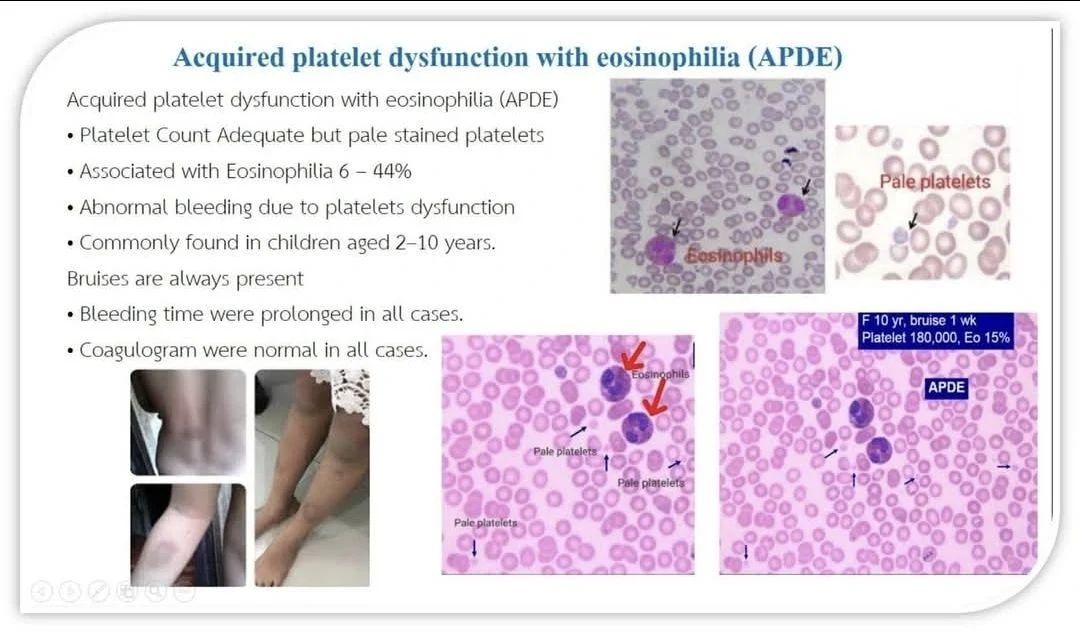
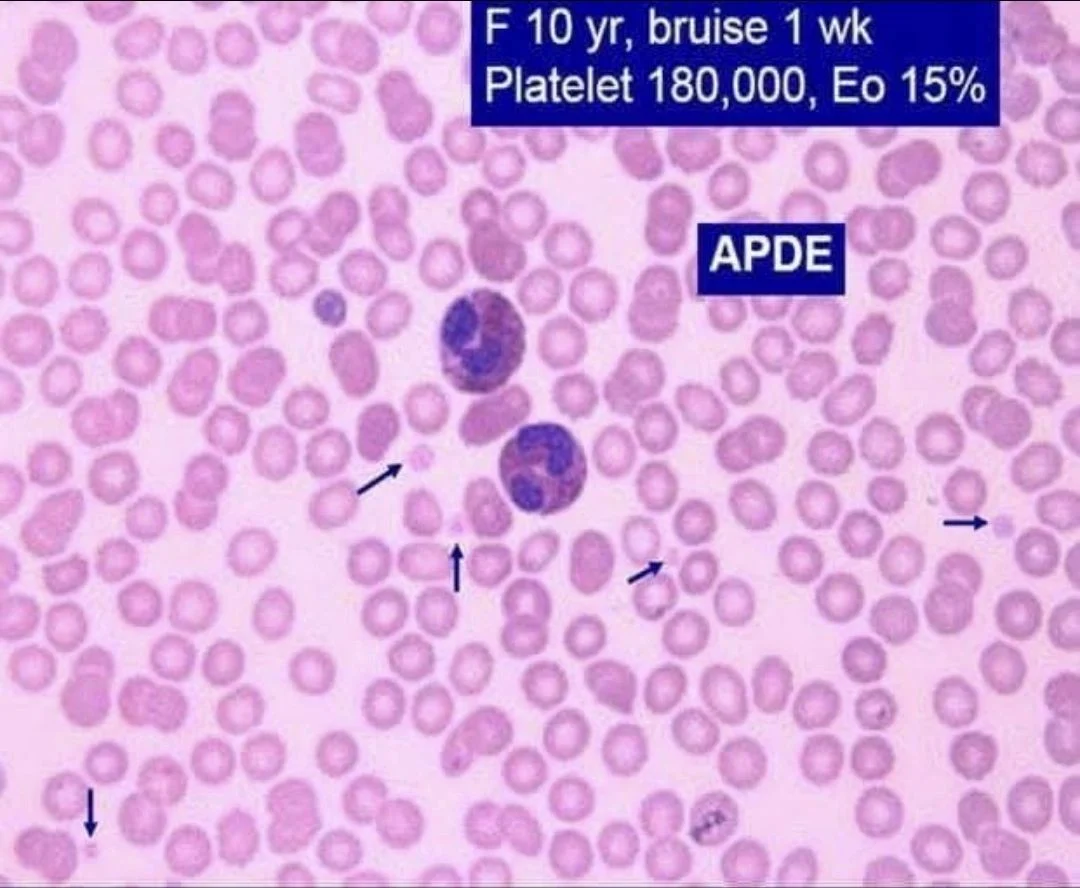
APDE is the only disease in which Pale Platelets are found.
Therefore, before reporting Pale Platelets, it is important to consider other consistent findings such as marked eosinophilia and the presence of purpura in the patient.”
See more in the gallery.
Stay updated with Hemostasis Today.
-
Sep 25, 2026, 10:49Shefina S: From Presenting to Hosting at TRANSCON 2026
-
Sep 25, 2026, 10:37Michelle Leona Cecil: Hemophilia Advocacy and the Power of Community
-
Sep 25, 2026, 10:13Michael Baria: Platelet Concentration and PRP Outcomes in Partial Rotator Cuff Tears
-
Sep 25, 2026, 09:49Haley Coleman: Volunteering to Support Hemophilia Awareness
-
Sep 25, 2026, 08:55Hitarth Mehta: BHMS Students Gain Practical Exposure to Haemophilia Diagnosis
-
Sep 25, 2026, 07:25Varun Capoor: How Therapeutic Apheresis and Transfusion Medicine Can Complement Clinical Management in SCD
-
Sep 25, 2026, 07:14Manshi Kesharwani: SAK-GQDs Modulate Thrombus Burden and Endothelial Function in Deep Vein Thrombosis
-
Sep 25, 2026, 06:20Farjah Hassan Algahtani: How Can We Better Identify Patients at Risk of Blood Clots after Metabolic and Bariatric Surgery?
-
Sep 25, 2026, 05:59Carla Lewis: Kids Conquering Sickle Disease Joins Nemours Children’s Hospital for 2nd Annual Awareness Event