

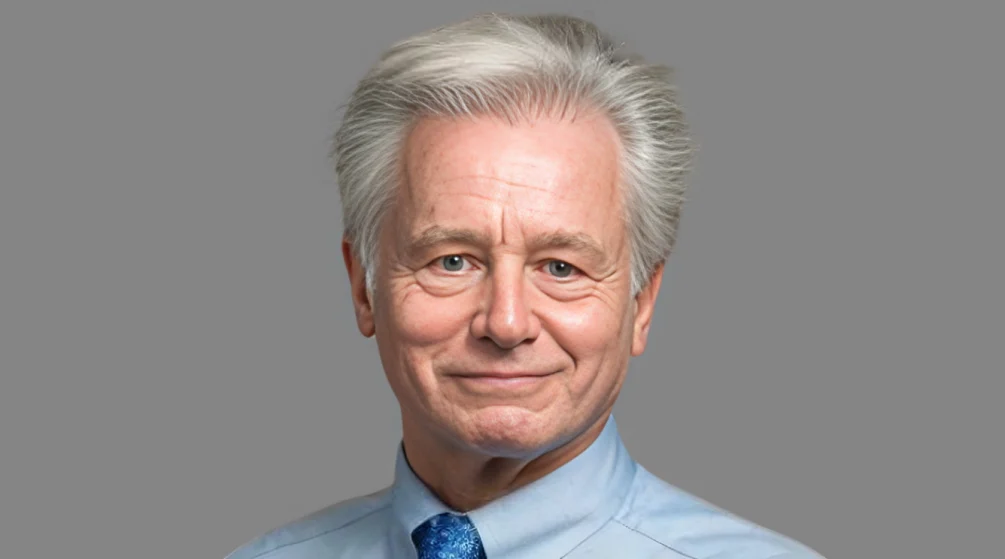
Volkmar Weissig: Cellular Uptake of Isolated Mitochondria and Its Implications for Mitochondrial Transfer
Volkmar Weissig, President of World Mitochondria Society, Professor of Pharmacology at Midwestern University, shared a post on LinkedIn about a recent article he and his colleagues co-authored, adding:
“In 2006 one of my Ph.D. students discovered by accident that mammalian cells seem to be able to internalize exogeneous mitochondria.
We tried to modify mitochondria with TAT peptides in order to make their cellular uptake possible, as we have done earlier with liposomes:
To our excitement, the results supported our hypothesis.
‘Unfortunately,’ the control (naked mitochondria without TAT) gave the same result.
I didn’t believe my student, told him he has messed up the labeling, and he had to repeat the experiment countless times, including additional controls.
Finally, we were convinced that cells can internalize isolated ‘naked’ mitochondria.
We had troubles to find a journal for it, because extraordinary claims require extraordinary evidence…
Thanks to Aubrey de Grey who accepted our manuscript.
And thanks again to our co-author Keshav K Singh who provided us with mtDNA depleted cells.
Our paper was one of the very first describing the cellular uptake of isolated mitochondria.
Since we didn’t realize back then the huge potential such an approach might have, I abandoned my work on this at that time curious phenomenon….
Today this approach is getting close to becoming mainstream medicine and unfortunately, our what I dare to call (in hindsight) pioneering paper is only very rarely cited if at all.”
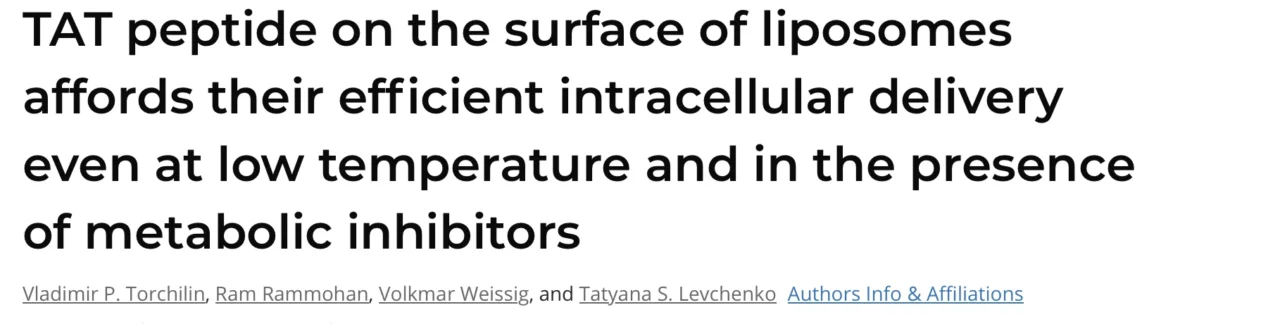
Title: TAT peptide on the surface of liposomes affords their efficient intracellular delivery even at low temperature and in the presence of metabolic inhibitors
Authors: Vladimir P. Torchilin, Ram Rammohan, Volkmar Weissig, Tatyana S. Levchenko
Read the Full Article on PNAS
Title: Xenogenic Transfer of Isolated Murine Mitochondria into Human ρ0 Cells Can Improve Respiratory Function
Authors: Eyad Katrangi, Gerard D’Souza, Sarathi V. Boddapati, Mariola Kulawiec, Keshav K. Singh, Brian Bigger, Volkmar Weissig
Read the Full Article on Rejuvenation Research

Stay updated on all scientific advances with Hemostasis Today.
-
Sep 30, 2026, 01:52Javed Anees: DADA2 – When a Young Stroke Is More Than a Stroke
-
Sep 30, 2026, 01:51How a Venous Thrombus Becomes Revascularized – ISTH
-
Sep 29, 2026, 22:45Victor Agunyego: Paracetamol – The Most Common Drug We Underestimate
-
Sep 29, 2026, 22:42Nova Sinclair: Advancing the Future of Hematology – Meet Our 2027 Organizing Committee
-
Sep 29, 2026, 22:41Lorenz Räber: Intracoronary Imaging in PCI – Why, When, How, and Which Modality?
-
Sep 29, 2026, 22:31Selma Turkovic: Pleased to Deliver the Opening Presentation at Kingston Hospital
-
Sep 29, 2026, 22:31Miguel Teran: Ultrasound and Simulation in Arterial Blood Sampling
-
Sep 29, 2026, 22:28Mohammad Refaei: Navigating Your Career in Hematology From Training to Practice
-
Sep 29, 2026, 22:27Matteo Foschi: 10 Clinical Pearls for Antithrombotic Therapy in Secondary Stroke Prevention