


Ney Carter Borges: Mechanisms, Phenotype, and Clinical Implications of Acute Coronary Syndrome with Plaque Erosion
Ney Carter Borges, Member Cardiologist of Global Physician Association at Cleveland Clinic Florida, shared a post on LinkedIn:
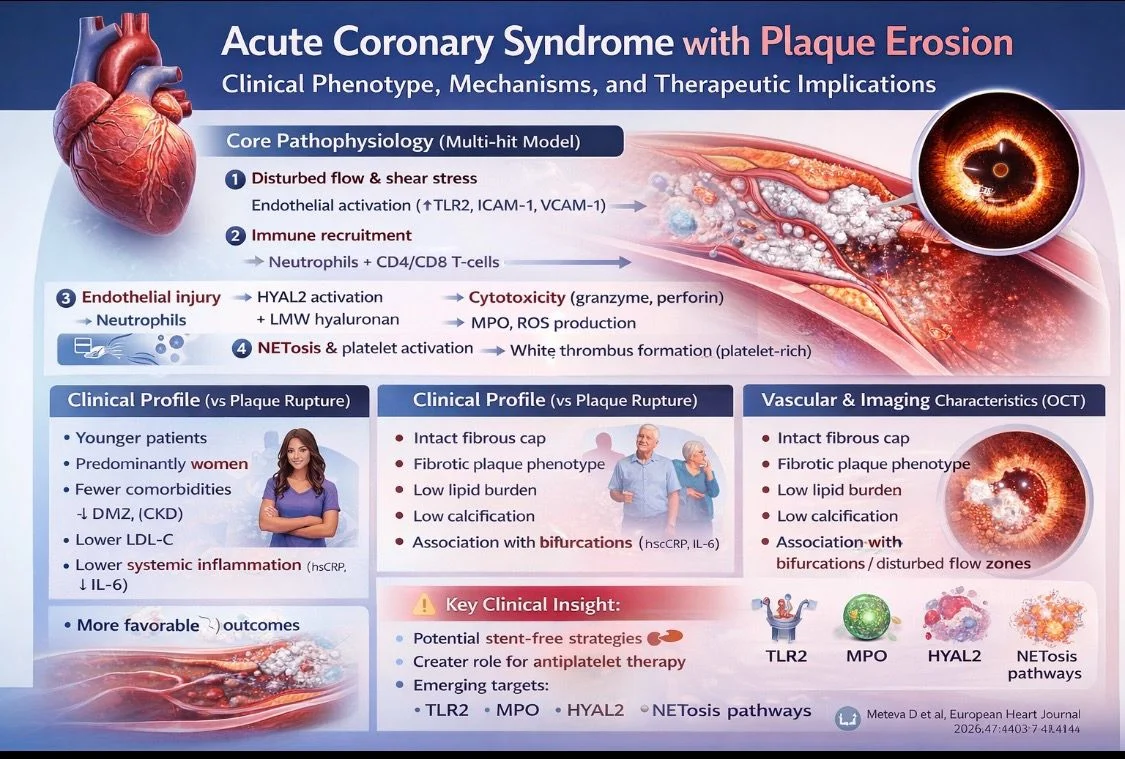
“Acute Coronary Syndrome with Plaque Erosion: Mechanisms, Phenotype, and Clinical Implications
Coronary plaque erosion has emerged as a major and distinct mechanism underlying acute coronary syndromes (ACS), accounting for approximately one-third of cases in contemporary optical coherence tomography (OCT) studies .
Unlike plaque rupture, which is characterized by a lipid-rich necrotic core and fibrous cap disruption, plaque erosion typically involves an intact fibrous cap with endothelial denudation and a predominantly platelet-rich (‘white’) thrombus.
Clinically, patients with plaque erosion present a unique phenotype.
They are generally younger, more often women, and exhibit fewer traditional cardiovascular risk factors:
- diabetes
- chronic kidney disease
- severe dyslipidemia
In addition, systemic inflammatory markers (e.g., hsCRP, IL-6) tend to be lower, suggesting that plaque erosion is driven less by systemic inflammation and more by localized vascular and immune processes.
Pathophysiologically, plaque erosion follows a multi-hit mechanism.
Disturbed coronary flow and elevated shear stress lead to endothelial activation, promoting expression of adhesion molecules and Toll-like receptor 2 (TLR2).
This environment facilitates recruitment of neutrophils and T lymphocytes, triggering endothelial injury via cytotoxic mediators, reactive oxygen species, and myeloperoxidase activity.
Subsequent NETosis and platelet activation culminate in thrombus formation.
From a diagnostic standpoint, OCT plays a pivotal role by identifying intact fibrous caps and distinguishing erosion from rupture.
Therapeutically, this distinction is clinically relevant, as selected patients may benefit from conservative strategies, including intensive antiplatelet therapy without stent implantation.
Emerging targets such as TLR2, MPO, HYAL2, and NETosis pathways may further enable precision-based interventions in the future.”
Other posts featuring Net Carter Borges on Hemostasis Today.
-
Oct 7, 2026, 16:44Amor Salah: 2026 NCS/SCCM Guidelines for Managing Antithrombotic-Associated ICH
-
Oct 7, 2026, 16:04NETs in Thrombosis: From Mechanism to Therapeutic Target
-
Oct 7, 2026, 15:28Amir Samimi: Prognostic Value of Platelet Count in Resected HNSCC
-
Oct 7, 2026, 15:21Eloïse Laouenan: Bridging Immunity and Thrombosis in MVTE
-
Oct 7, 2026, 15:10Uthra Sundaram: Honouring Donors During International Plasma Awareness Week
-
Oct 7, 2026, 15:04Daniel Victor Ortigoza: Should Frail Older Patients With AF Switch From VKA to DOACs?
-
Oct 7, 2026, 14:53Susan Noone: Donor Turned Recipient Shares Lifesaving Transfusion Story
-
Oct 7, 2026, 14:49Aimee Burtenshaw: The Impact of the Infected Blood Inquiry on Hospital Transfusion Laboratories
-
Oct 7, 2026, 14:41Vikash Jaiswal: Does Timing Matter for Calcium in Pre-Eclampsia Prevention?