


Arun V J: A Century of War That Transformed Blood Transfusion
Arun V J, The Leader of Transfusion Medicine at Malabar Medical College, shared a post on LinkedIn:
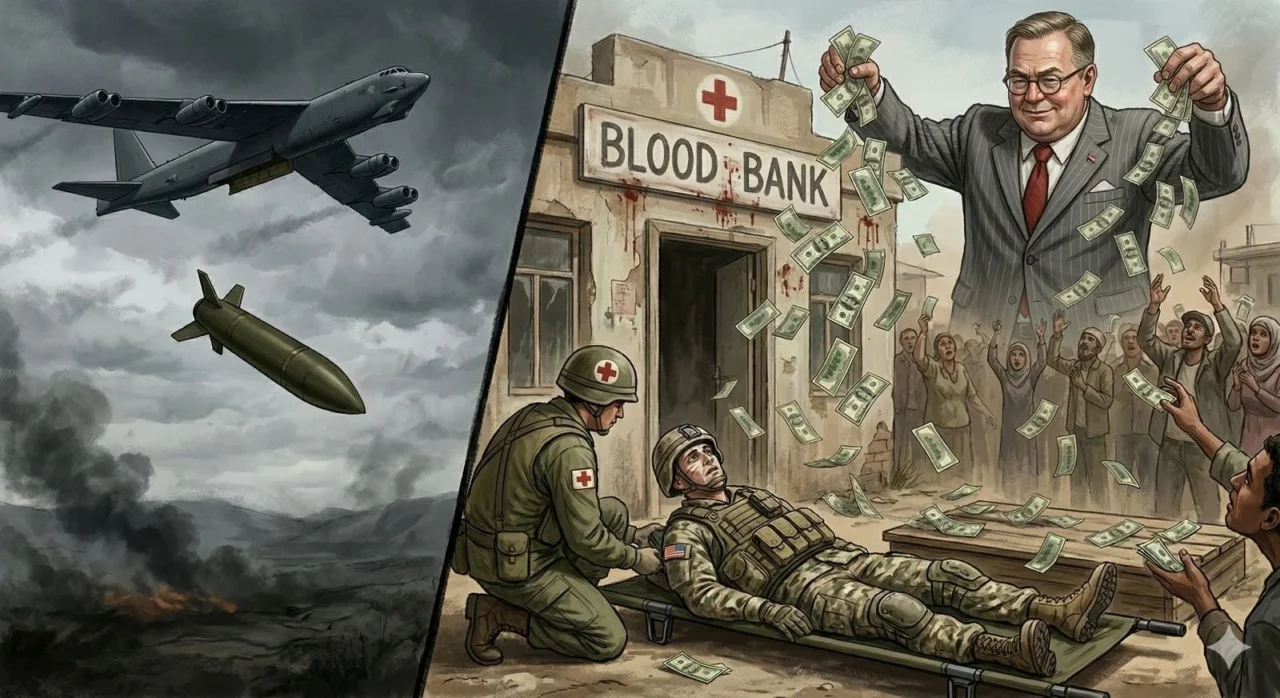
“Does the Blood Transfusion System Need War to Grow?
And almost every major innovation in Blood Transfusion was born on a battlefield.
WWI (1917) Soldiers were bleeding out faster than medicine could respond.
Captain Oswald Robertson packed O-negative blood into glass bottles, preserved with sodium citrate, stored in an ice chest inside ammunition boxes.
The world’s first blood bank. Blood was now waiting for the soldier.
Spanish Civil War (1936) A stationary blood bank wasn’t enough.
The battlefield moves.
Norman Bethune put blood in a van and drove it into the war zone.
The mobile blood bank was born.
World War II (1943) One van wasn’t enough.
D-Day alone needed 30,000 pints of blood.
Charles Drew shipped plasma across the Atlantic.
ACD solution allowed longer storage.
Freeze-dried plasma needed no refrigeration.
Blood transfusion became industrial-scale logistics.
This is also where Desmond Doss belongs.
The 75 soldiers he saved survived not just because of one man’s courage — but because by 1945, a functioning blood supply system was waiting for them.
His heroism and the system’s evolution arrived at exactly the same moment.
Neither alone would have been enough.
Korea and Vietnam Blood was still arriving too late.
Portable transfusion kits. Hemostatic agents on the battlefield. Medics trained to transfuse under fire.
The philosophy shifted permanently:
Don’t wait for the soldier to reach the blood. Bring the blood to the soldier.
October 7, 2023 — Israel Hours after the Hamas attack, a facility in Ramla activated ahead of schedule.
The Marcus National Blood Services Center. 15 meters underground.
Protected from rockets, missiles, chemical attacks, and earthquakes. $135 million. Blast doors. 4 backup generators.
That single day — 5,000 units of blood donated. Five times the normal daily volume.
Simultaneously, on the battlefield — Israeli medics were deploying whole blood on armored vehicles at brigade level.
A century after the first blood depot was packed into an ammunition box in France — blood was now secured underground and moving forward on armored vehicles toward the point of injury.
Here is the pattern across 100 years of war:
Peacetime produces complacency. War produces necessity. Necessity rewrites medicine.
The underground blood bank in Israel wasn’t built because of October 7.
It was built before October 7.
Because someone studied the previous wars and decided: Next time, we will be ready.
Blood doesn’t wait for the right moment.
The system has to be ready before the moment comes.
Read more at Third Thinker.”
Stay updated with Hemostasis Today.
-
Oct 4, 2026, 15:06Vasiliki Gkalea: Journal of Clinical Medicine Launches Special Issue on Hematologic Thrombosis and Bleeding
-
Oct 4, 2026, 14:55Quentin Brebant: What Defines a High-Quality Red Blood Cell Concentrate?
-
Oct 4, 2026, 14:47Rana Al-Hrout: Recognizing Non-Anemic Iron Deficiency – Why Iron Matters Beyond Hemoglobin
-
Oct 4, 2026, 14:41David McIntosh: International Plasma Awareness Week 2026 – Closing the Global Plasma Gap
-
Oct 4, 2026, 14:33Pete Stibbs: CleanerVac Real-World Study Presented at VIVA and The VEINS 2026
-
Oct 4, 2026, 13:56Maria Elisa Mancuso: EHC 2026 Highlights the Unmet Needs of Women with Bleeding Disorders
-
Oct 4, 2026, 13:53Nirmal Shaji George: Individualizing Anticoagulation in Complex APS and Thrombocytopenia
-
Oct 4, 2026, 13:5210 Posts Not to Miss This Week
-
Oct 4, 2026, 13:45Suswapna Singh Rawat: The Clinical Significance of Coronary Plaque Stability