


Mohammed M. Aboudeif: The Decision-Making Process for Anticoagulation in Stroke
Mohammed M. Aboudeif, Critical Care Registrar at King AbdulAziz University, shared on LinkedIn:
”Timing is often the most critical factor in neurocritical care, especially when balancing the risk of recurrent ischemia against the threat of hemorrhagic transformation.
Standardizing the transition from acute management to long-term prevention is essential for patient safety and clinical excellence.
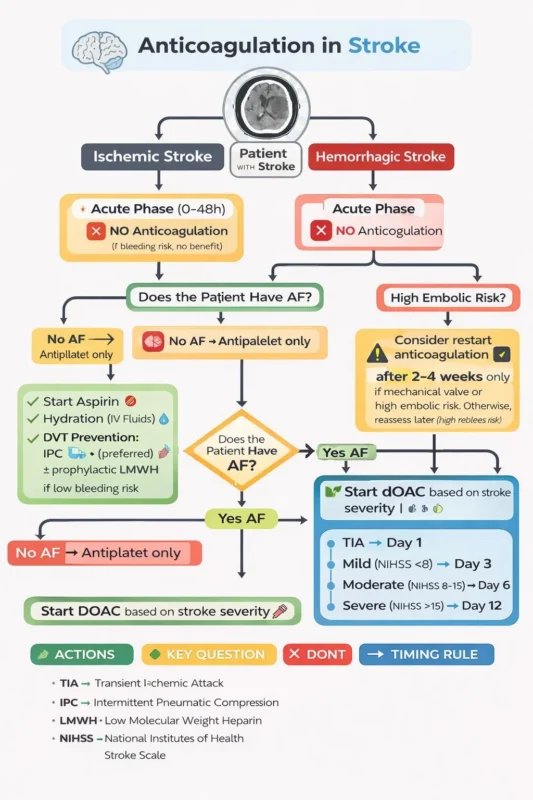
This visual guide breaks down the decision-making process for Anticoagulation in Stroke, specifically focusing on the initiation of DOACs in patients with Atrial Fibrillation (AF).
Key Takeaways for the Clinical Team:
- The Acute Phase (0-48h): A universal ‘No’ for anticoagulation.
- The focus remains on stabilization, hydration, and DVT prophylaxis (IPC preferred).
Ischemic Stroke and AF
The 1-3-6-12 Rule remains a vital framework for starting DOACs based on stroke severity:
- Day 1: TIA
- Day 3: Mild (NIHSS <8)
- Day 6: Moderate (NIHSS 8-15)
- Day 12: Severe (NIHSS >15)
Hemorrhagic Stroke: A much more conservative approach.
Restarting anticoagulation is generally deferred for 2–4 weeks and reserved for those with high embolic risk (e.g., mechanical valves), requiring careful reassessment of re-bleeding risk.
Standardized protocols like these reduce clinical variability and improve outcomes in the ICU and beyond.”
Stay updated with Hemostasis Today.
-
Oct 21, 2026, 00:58Anees Ur Rahman: Completing a Two-Week Clinical Rotation at Haemophilia Treatment Centre Rawalpindi
-
Oct 21, 2026, 00:56Caitlyn Mooney: Pulmonary Embolism in Athletes, Recognition and Return to Sport
-
Oct 21, 2026, 00:54Hani Karrar: Pleased to Share Our Review on Emicizumab in Hemophilia A Management
-
Oct 21, 2026, 00:53Akshay Sharma: HSCT Leads to Sustained Improvements in Sickle Cell Cardiomyopathy for Up to 3 Years
-
Oct 21, 2026, 00:51Prateek Meena: The F. A. T. R. N. Mnemonic for Recognizing TTP
-
Oct 20, 2026, 23:51Registration Is Open for WFH CCS 2027 – World Federation of Hemophilia
-
Oct 20, 2026, 23:44Edward Lee Carter: AF in Nursing Homes – When Stroke Risk Scores Tell Only Part of the Story
-
Oct 20, 2026, 22:59Building Effective Patient Advocacy Through Collaboration Between Patients and Clinicians – EHC
-
Oct 20, 2026, 21:22Intezar Mehdi: When Prolonged Bleeding May Indicate an Underlying Bleeding Disorder