

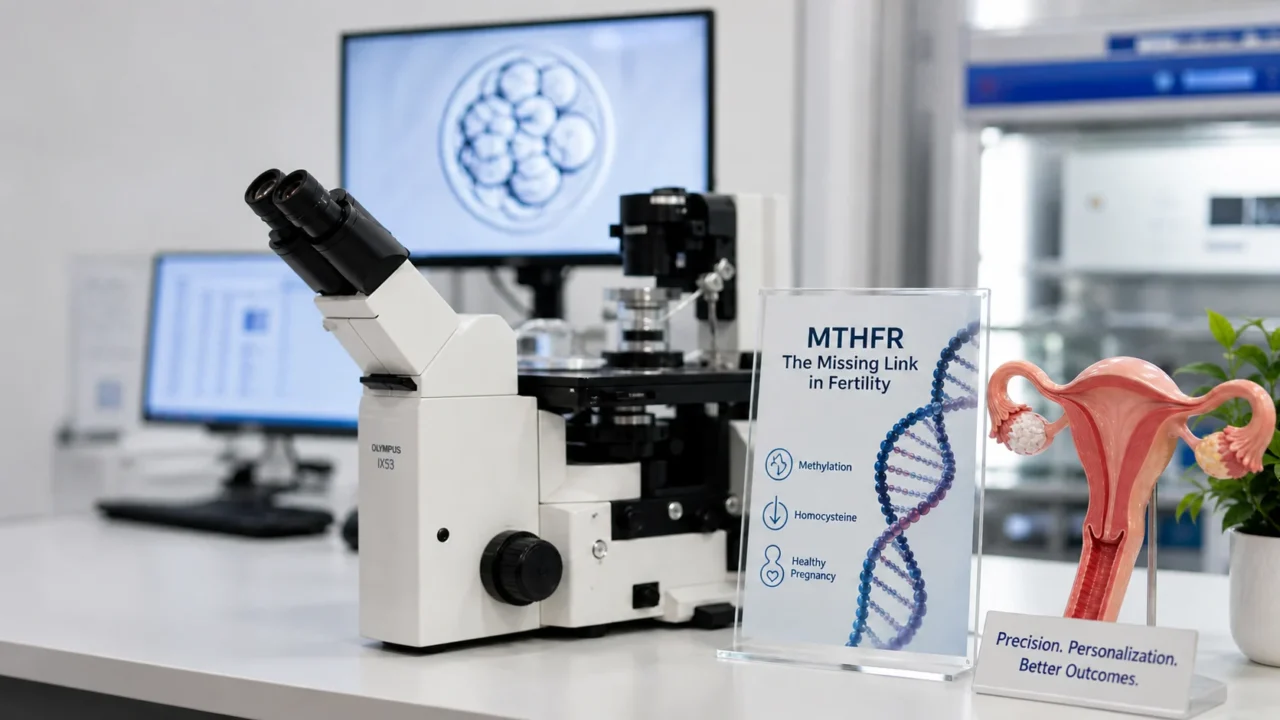
Fauziya Naikar: Why the MTHFR Gene is a Critical Piece of the Fertility Puzzle
Fauziya Naikar, Junior Embryologist at Star IVF and Fertility Center, shared a post on LinkedIn:
“Why the MTHFR Gene is a Critical Piece of the Fertility Puzzle?
In the embryology lab, we spend our days perfecting morphokinetics and grading.
But beyond the petri dish, a ‘silent architect’ is at work: the MTHFR (Methylenetetrahydrofolate Reductase) gene.
Why do high-quality embryos sometimes fail to result in a live birth?
The answer often lies in the biochemical environment provided by parental genetics—specifically the methylation pathway.
The Molecular Breakdown.
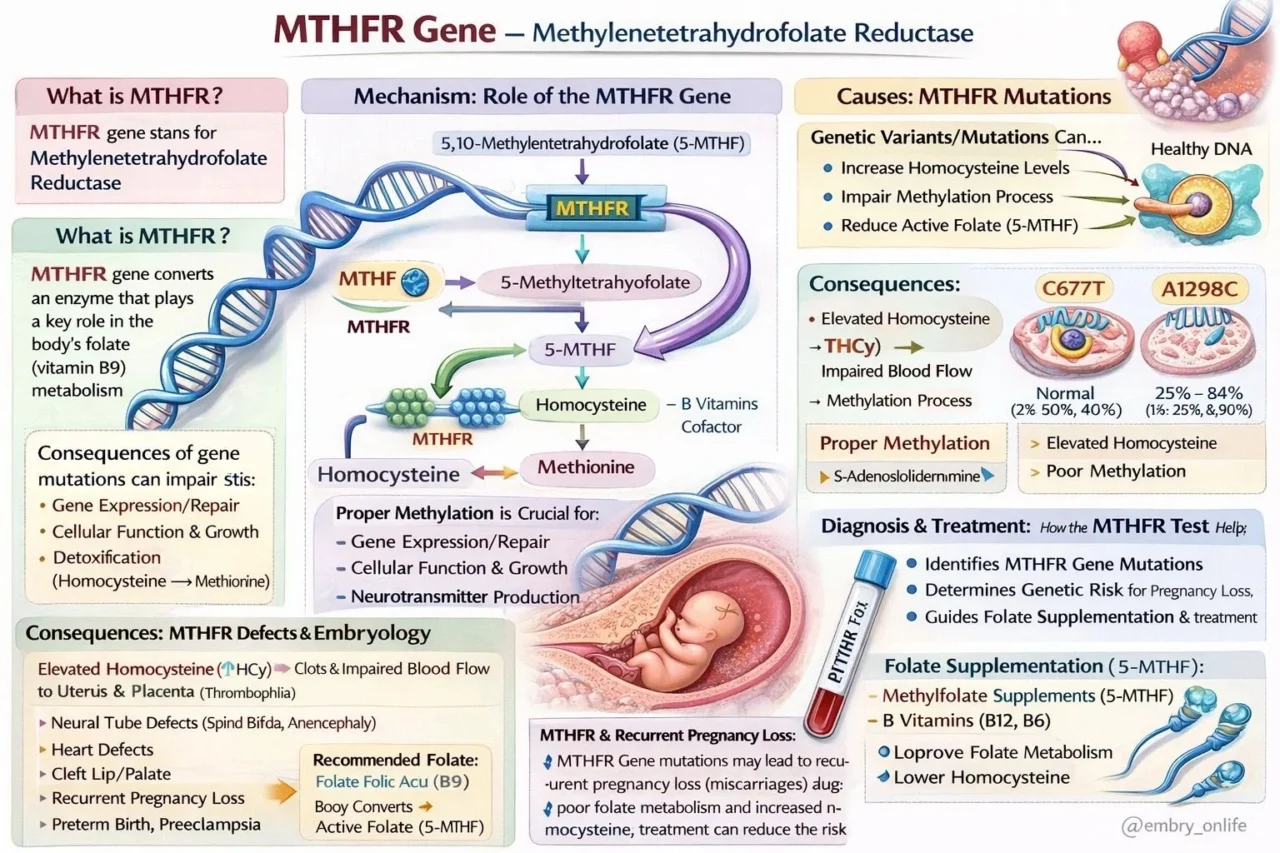
The MTHFR enzyme is the critical rate-limiting step in the folate cycle.
Its primary job is to catalyze the conversion of folate into 5-methyltetrahydrofolate (5-MTHF).
This active form is the ‘fuel’ for two vital processes:
- DNA Methylation: This is the cornerstone of epigenetic programming during early cleavage stages. Without it, cellular repair and gene expression are compromised.
- Homocysteine Regulation: MTHFR converts homocysteine into methionine. When mutations like C677T or A1298C occur, enzyme efficiency can drop by 30 percent to 70 percent, causing homocysteine levels to spike.
The Embryologist’s Perspective: Why It Matters?
We see the effort it takes to create a viable embryo, but that embryo needs a stable environment to thrive post-transfer.
Elevated homocysteine (Hyperhomocysteinemia) is a known risk factor for micro-clots in the placental vasculature (Thrombophilia).
This can lead to:
- Implantation failure or early pregnancy loss.
- Neural tube defects (Spina Bifida, Anencephaly).
- Impaired blood flow to the uterus and placenta.
Clinical Pivot: From ‘Unexplained’ to ‘Targeted’.
The traditional reliance on synthetic Folic Acid may not be enough for patients with these genetic variants, as their bodies cannot efficiently convert it.
The Solution?
Bypassing the genetic ‘roadblock’ by using bioavailable Methylfolate (5-MTHF) along with Vitamins B6 and B12.
This targeted approach lowers homocysteine and optimizes the metabolic environment for the embryos we work so hard to cultivate.
By understanding these genomic markers, we move away from the frustration of ‘unexplained infertility’ and toward a more precise, personalized fertility protocol.
Stay updated with Hemostasis Today.
-
Sep 25, 2026, 07:25Varun Capoor: How Therapeutic Apheresis and Transfusion Medicine Can Complement Clinical Management in SCD
-
Sep 25, 2026, 07:14Manshi Kesharwani: SAK-GQDs Modulate Thrombus Burden and Endothelial Function in Deep Vein Thrombosis
-
Sep 25, 2026, 06:20Farjah Hassan Algahtani: How Can We Better Identify Patients at Risk of Blood Clots after Metabolic and Bariatric Surgery?
-
Sep 25, 2026, 05:59Carla Lewis: Kids Conquering Sickle Disease Joins Nemours Children’s Hospital for 2nd Annual Awareness Event
-
Sep 25, 2026, 05:47Omid Seidizadeh: Evolutionary Constraint and Population Variation Across Coagulation Genes
-
Sep 25, 2026, 05:40Gerald Bertrand: Presenting UMi-NGS Non-Invasive Foetal HPA Genotyping at DGTI 2026
-
Sep 25, 2026, 05:33Urge Congress to support the Sickle Cell Disease Comprehensive Care Act – ASH
-
Sep 25, 2026, 05:24Isabelle Mahé: Reduced-Dose Apixaban in Extended CAT Treatment
-
Sep 25, 2026, 05:15Maria Cherska: High Cholesterol Isn’t Always Diet or Lifestyle – Sometimes It’s Genetic