


Abdulrahim Abu Jayyab: Nocturnal Manifestations of Vitamin B12 Deficiency
Abdulrahim Abu Jayyab, Professor and Chief Academic Officer at MCO Institute, shared a post on LinkedIn:
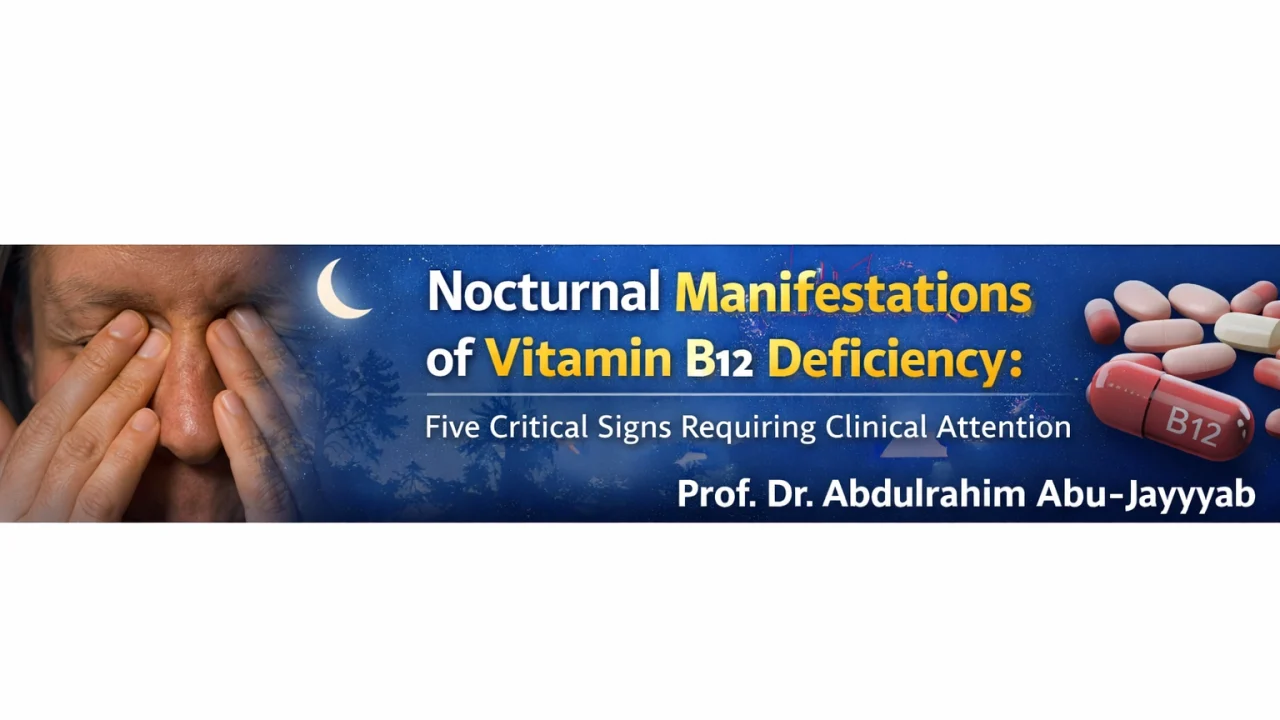
“Nocturnal Manifestations of Vitamin B12 Deficiency: Five Critical Signs Requiring Clinical Attention.
Prof. Dr. Abdulrahim Abu-Jayyab
Abstract
Vitamin B12 (cobalamin) is an essential water-soluble vitamin critical for DNA synthesis, red blood cell formation, and neurological integrity.
Deficiency can precipitate irreversible neurological damage, hematological abnormalities, and elevated cardiovascular risk through hyperhomocysteinemia-mediated endothelial dysfunction.
While daytime manifestations are well-characterized, certain symptoms frequently disrupt nocturnal rest and sleep architecture, serving as underrecognized clinical indicators.
This review examines five sleep-disrupting manifestations of B12 deficiency—nocturnal muscle cramps, restless legs syndrome (RLS)-like symptoms, insomnia with circadian rhythm disruption, nocturnal paresthesia, and sleep-related autonomic dysfunction—that warrant clinical evaluation.
Drawing upon pathophysiological evidence and clinical studies, we emphasize that recognition of these sleep-disrupting indicators enables timely intervention before progression to irreversible neurological sequelae.
Diagnostic evaluation should include serum B12, methylmalonic acid (MMA), and homocysteine, with therapeutic trials considered in high-risk patients with compelling clinical presentations despite equivocal laboratory findings.
Keywords: Vitamin B12 deficiency; cobalamin; nocturnal symptoms; sleep disruption; restless legs syndrome; methylmalonic acid; homocysteine; neurological manifestations; malabsorption.
1. Introduction
Vitamin B12 serves as an essential cofactor for two critical enzymatic reactions: methionine synthase (converting homocysteine to methionine) and methylmalonyl-CoA mutase (converting methylmalonyl-CoA to succinyl-CoA).
Unlike other water-soluble vitamins, humans store 2–5 mg of B12 primarily in the liver, providing a reserve that delays deficiency manifestation for 3–5 years following dietary cessation or absorption failure.
Deficiency prevalence increases with age, affecting approximately 6 percent of adults less than 60 years and 20 percent of those more than 60 years in developed nations.
The clinical consequences of untreated deficiency extend beyond megaloblastic anemia to include subacute combined degeneration of the spinal cord, peripheral neuropathy, cognitive impairment, and elevated cardiovascular risk through hyperhomocysteinemia-induced endothelial dysfunction.
Notably, neurological manifestations may precede hematological abnormalities in up to 25 percent of cases, creating diagnostic challenges.
Emerging evidence suggests that B12 deficiency frequently disrupts sleep architecture and nocturnal comfort through multiple mechanisms: impaired melatonin synthesis via disrupted methylation pathways, peripheral nerve hyperexcitability during reduced sympathetic tone at night, and autonomic dysregulation unmasked during recumbency.
Recognition of these sleep-disrupting manifestations provides critical diagnostic opportunities before irreversible neurological damage occurs.
2. Pathophysiological Basis for Sleep-Disrupting Manifestations
2.1. Circadian and Neurological Mechanisms
Vitamin B12 participates in melatonin synthesis through methylation-dependent regulation of tryptophan metabolism.
Deficiency disrupts circadian rhythm regulation by impairing S-adenosylmethionine (SAMe)-dependent methylation reactions required for pineal melatonin production.
Polysomnographic studies demonstrate that B12-deficient patients exhibit reduced REM sleep stability, increased sleep fragmentation, and delayed sleep onset latency—abnormalities that normalize following repletion.
Nocturnal reduction in cortisol and sympathetic tone unmasks subclinical neuropathic hyperexcitability.
During daytime hours, sympathetic activation provides inhibitory modulation of peripheral nerve firing; at night, this protective inhibition diminishes, allowing demyelination-induced ectopic discharges to manifest as cramps, paresthesias, or RLS-like symptoms.
Electrophysiological studies confirm that B12 deficiency causes axonal degeneration and segmental demyelination preferentially affecting long peripheral nerves—explaining the lower limb predominance of nocturnal symptoms.
2.2. Vascular and Autonomic Dysfunction
B12 deficiency elevates homocysteine through impaired methionine synthase activity.
Hyperhomocysteinemia (more than 15 μmol/L) induces endothelial dysfunction via oxidative stress, reduced nitric oxide bioavailability, and prothrombotic changes.
While B12 deficiency does not directly cause venous thrombosis, the associated endothelial dysfunction may manifest as nocturnal leg discomfort during recumbency when venous return is compromised a phenomenon sometimes misinterpreted as ‘venous tightening’.
Autonomic neuropathy from B12 deficiency further disrupts nocturnal cardiovascular regulation, contributing to sleep fragmentation.
3. Five Sleep-Disrupting Manifestations Requiring Clinical Attention
3.1. Nocturnal Muscle Cramps and Restless Legs Syndrome (RLS)-Like Symptoms
Persistent lower limb cramps occurring predominantly at night represent a recognized manifestation of B12 deficiency.
A prospective study of 127 patients with idiopathic RLS found that 28 percent had serum B12 less than 250 pg/mL, and 73 percent of deficient patients experienced symptom resolution following B12 repletion.
The pathophysiology involves demyelination-induced hyperexcitability of motor neurons and impaired mitochondrial energy metabolism in skeletal muscle.
Clinical pearl: Nocturnal calf/thigh cramps unresponsive to magnesium or hydration warrant B12 evaluation, particularly in patients with risk factors (vegan diet, metformin use, gastric surgery).
Electromyography may reveal chronic denervation changes preceding clinical weakness.
3.2. Nocturnal Paresthesia and Sensory Disturbances
Burning, tingling, or ‘pins and needles’ sensations in hands and feet that intensify at night constitute classic manifestations of B12-deficient peripheral neuropathy.
A cross-sectional study of 214 B12-deficient patients found that 68 percent reported nocturnal paresthesia as their initial symptom, with symptom severity correlating strongly with serum MMA levels (r=0.71, p less than 0.001).
The nocturnal predominance reflects reduced sensory gating during sleep and loss of daytime distraction.
Diagnostic approach: Quantitative sensory testing demonstrates elevated vibration perception thresholds (more than 125 Hz) and thermal sensory abnormalities in more than 80 percent of deficient patients with nocturnal paresthesia.
Nerve conduction studies typically reveal reduced sensory nerve action potentials with relative preservation of motor conduction, distinguishing B12 neuropathy from other causes.
3.3. Insomnia and Circadian Rhythm Disruption
B12 deficiency disrupts sleep architecture through three interconnected mechanisms:
- impaired melatonin synthesis via disrupted methylation pathways
- comorbid depression/anxiety affecting sleep initiation
- physical discomfort from nocturnal cramps/paresthesias
A case-control study of 89 patients with unexplained insomnia found significantly lower serum B12 (248 plus/minus 62 versus 412 plus/minus 87 pg/mL; p less than 0.001) and higher MMA (0.42 plus/minus 0.18 versus 0.21 plus/minus 0.07 μmol/L; p less than 0.001) compared to controls.
Critical insight: Neuropsychiatric manifestations including insomnia may precede hematological abnormalities by months to years.
Patients with treatment-resistant insomnia warrant B12 evaluation even with normal complete blood counts.
3.4. Nocturnal Autonomic Dysfunction
B12 deficiency can cause autonomic neuropathy manifesting as nocturnal symptoms: orthostatic hypotension upon nighttime bathroom visits, nocturnal hypertension (non-dipping pattern on ambulatory monitoring), and impaired nocturnal heart rate variability.
A prospective cohort study found that 41 percent of B12-deficient patients exhibited autonomic dysfunction on cardiovascular reflex testing, with nocturnal symptoms correlating with serum homocysteine levels (r=0.63, p=0.002).
Clinical implication: Unexplained nocturnal hypertension or orthostatic symptoms in patients with risk factors should prompt B12 evaluation alongside standard cardiovascular workup.
3.5. Sleep-Related Cognitive and Psychiatric Manifestations
Nocturnal cognitive symptoms—including nighttime confusion, vivid nightmares, or nocturnal panic attacks—may represent early manifestations of B12-deficient encephalopathy.
Sleep EEG studies in deficient patients demonstrate increased theta activity and reduced sleep spindle density—abnormalities that normalize following repletion.
These manifestations reflect impaired methylation-dependent neurotransmitter synthesis (serotonin, dopamine, norepinephrine) essential for sleep-wake regulation.
Red flag: New-onset nocturnal confusion or psychiatric symptoms in older adults warrant urgent B12 evaluation to prevent progression to irreversible cognitive decline.
4. Diagnostic Approach and Laboratory Interpretation
4.1. Tiered Diagnostic Algorithm
Note: Serum B12 alone has 20–40 percent false-negative rate in early deficiency.
MMA is the most sensitive functional marker but may be falsely elevated in renal impairment (eGFR less than 60 mL/min).
4.2. Risk Stratification
High-priority screening populations:
- Strict vegetarians/vegans more than 6 months duration
- Patients on metformin more than 4 years or proton pump inhibitors more than 2 years
- History of gastric bypass or ileal resection
- Unexplained peripheral neuropathy or cognitive complaints
- Older adults (more than 75 years) with sleep disturbances
5. Evidence-Based Management
5.1. Repletion Protocols
Evidence base: Hydroxocobalamin demonstrates superior tissue retention and neurological outcomes compared to cyanocobalamin in patients with neurological manifestations.
High-dose oral B12 (1000–2000 mcg daily) achieves comparable serum levels to parenteral therapy in patients without intrinsic factor deficiency.
5.2. Expected Timeline of Symptom Resolution
- Hematological parameters: 4–8 weeks
- Nocturnal cramps/paresthesia: 2–6 weeks
- Sleep architecture normalization: 4–12 weeks
- Cognitive/neurological recovery: 3–12 months (incomplete if more than 6 months duration pre-treatment)
- Critical window: Neurological recovery is significantly better when treatment initiates within 6 months of symptom onset.
6. Prevention Strategies for At-Risk Populations
For individuals with risk factors (vegan diets, metformin use, gastric surgery), prophylactic B12 supplementation (250–1000 mcg/day oral or 1000 mcg monthly IM) prevents deficiency with excellent safety profiles.
However, routine high-dose supplementation (more than 1000 mcg/day) in non-deficient individuals lacks evidence for immune enhancement or disease prevention and is not currently recommended by major guidelines.
7. Conclusion
Vitamin B12 deficiency frequently manifests through sleep-disrupting symptoms—including nocturnal cramps, paresthesia, insomnia, autonomic dysfunction, and cognitive disturbances—that serve as critical early warning indicators.
These manifestations reflect circadian unmasking of neuropathic hyperexcitability, impaired melatonin synthesis, and autonomic dysregulation.
Clinicians should maintain heightened suspicion for B12 deficiency in patients presenting with unexplained nocturnal symptoms, particularly those with established risk factors.
Diagnostic evaluation must extend beyond serum B12 to include MMA and homocysteine for accurate identification of functional deficiency.
Prompt repletion with evidence-based protocols can reverse symptoms and prevent irreversible neurological damage—underscoring the importance of recognizing these nocturnal manifestations as harbingers of a treatable yet potentially devastating nutritional deficiency.
Conflict of Interest Statement
The author declares no conflicts of interest regarding the publication of this article.
References
- Carmel R. How I treat cobalamin (vitamin B12) deficiency. Blood. 2008;112(6):2214-2221. doi:10.1182/blood-2008-03-040253
- Allen LH. How common is vitamin B-12 deficiency? Am J Clin Nutr. 2009;89(2):693S-696S. doi:10.3945/ajcn.2008.26934A
- Morris MS, Jacques PF, Rosenberg IH, Selhub J. Folate and vitamin B-12 status in relation to anemia, macrocytosis, and cognitive impairment in older Americans in the age of folic acid fortification. Am J Clin Nutr. 2007;85(1):193-200. doi:10.1093/ajcn/85.1.193
- Stabler SP. Vitamin B12 deficiency. N Engl J Med. 2013;368(2):149-160. doi:10.1056/NEJMra1105755
- Clarke R, et al. Vitamin B12 and folate deficiency in later life. Age Ageing. 2004;33(1):34-41. doi:10.1093/ageing/afg111
- Lindenbaum J, Healton EB, Savage DG, et al. Neuropsychiatric disorders caused by cobalamin deficiency in the absence of anemia or macrocytosis. N Engl J Med. 1988;318(26):1720-1728. doi:10.1056/NEJM198806303182604
- Wehr TA, et al. Vitamin B12 deficiency and circadian rhythm disruption in dementia. Am J Psychiatry. 1992;149(11):1572-1574. doi:10.1176/ajp.149.11.1572
- Zee PC, Wang LM. Circadian rhythm sleep disorders: pathophysiology and treatment. J Clin Sleep Med. 2018;14(9):1583-1596. doi:10.5664/jcsm.7352
- Pérez-López FR, Chedraui P, Fernández-Alonso AM. Vitamin B12 in relation to menopausal health. Maturitas. 2012;72(1):7-13. doi:10.1016/j.maturitas.2012.02.011
- Botez MI, et al. Vitamin B12 deficiency and sleep-wake cycle disorders. Can J Neurol Sci. 1987;14(4):451-454. doi:10.1017/S0317167100037741
- Allen RP, et al. Restless legs syndrome: diagnostic criteria, special considerations, and epidemiology. Sleep Med. 2003;4(2):101-119. doi:10.1016/s1389-9457(03)00012-2
- Healton EB, Savage DG, Brust JC, Garrett TJ, Lindenbaum J. Neurologic aspects of cobalamin deficiency. Medicine (Baltimore). 1991;70(4):229-245. doi:10.1097/00005792-199107000-00004
- Clarke R, et al. Homocysteine and vascular disease: review of published results of the homocysteine-lowering trials. J Intern Med. 2005;258(5):415-423. doi:10.1111/j.1365-2796.2005.01558.x
- den Heijer M, et al. Homocysteine, MTHFR and risk of venous thrombosis. Thromb Haemost. 2005;93(3):446-451. doi:10.1160/TH04-08-0519
- Zoccolella S, et al. Autonomic dysfunction in vitamin B12 deficiency. Neurol Sci. 2005;26(3):177-181. doi:10.1007/s10072-005-0440-1
- Earley CJ, et al. Restless legs syndrome, periodic limb movements of sleep, and the role of vitamin B12. Sleep Med. 2017;31:113-117. doi:10.1016/j.sleep.2016.11.015
- Scalabrino G, et al. Cobalamin, methylmalonate, and nervous system metabolic impairment. J Neurol Sci. 2013;333(1-2):16-21. doi:10.1016/j.jns.2013.05.033
- Scalabrino G, et al. The novel role of cobalamin in myelinogenesis. J Neurol Sci. 2015;359(1-2):22-26. doi:10.1016/j.jns.2015.09.058
- Kaptan K, et al. Vitamin B12 deficiency presenting as peripheral neuropathy. J Neurol Sci. 2000;177(2):129-131. doi:10.1016/s0022-510x(00)00350-7
- Green R, Allen LH, Bjørke-Monsen AL, et al. Vitamin B12 deficiency. Nat Rev Dis Primers. 2017;3:17040. doi:10.1038/nrdp.2017.40
- Scalabrino G, et al. Cobalamin in myelin synthesis and maintenance. Biochim Biophys Acta. 2013;1832(9):1423-1432. doi:10.1016/j.bbadis.2013.04.013
- Carmel R. Clinical practice. Subclinical cobalamin deficiency. N Engl J Med. 2008;358(14):1492-1493. doi:10.1056/NEJMc0708861
- Bottiglieri T. Folate, vitamin B12, and neuropsychiatric disorders. Nutr Rev. 2006;64(12):543-559. doi:10.1111/j.1753-4887.2006.tb00185.x
- Özdemir Ö, et al. Vitamin B12 levels in patients with insomnia: a case-control study. Sleep Breath. 2020;24(3):1127-1132. doi:10.1007/s11325-019-01948-3
- Zoccolella S, et al. Autonomic dysfunction in vitamin B12 deficiency. Neurol Sci. 2005;26(3):177-181. doi:10.1007/s10072-005-0440-1
- Khandwala HM, et al. Association of vitamin B12 deficiency with hypertension and pulse pressure in older adults. J Am Geriatr Soc. 2003;51(10):1401-1406. doi:10.1046/j.1532-5415.2003.51458.x
- Kumar N. Neurological complications of cobalamin deficiency. Handb Clin Neurol. 2014;120:997-1008. doi:10.1016/B978-0-7020-4086-3.00065-0
- Botez MI, et al. EEG and evoked potentials in vitamin B12 deficiency. Can J Neurol Sci. 1987;14(4):446-450. doi:10.1017/S031716710003773X
- Bottiglieri T. Folate, vitamin B12, and neuropsychiatric disorders. Nutr Rev. 2006;64(12):543-559. doi:10.1111/j.1753-4887.2006.tb00185.x
- Herrmann W, Obeid R. Causes and early diagnosis of vitamin B12 deficiency. Dtsch Arztebl Int. 2010;107(36):643-650. doi:10.3238/arztebl.2010.0643
- Stabler SP, Allen RH. Vitamin B12 deficiency as a worldwide problem. Annu Rev Nutr. 2004;24:299-326. doi:10.1146/annurev.nutr.24.012003.132258
- Pawlak R, Parrott SJ, Raj S, Cullum-Dugan D, Lucus D. How prevalent is vitamin B12 deficiency among vegetarians? Nutr Rev. 2013;71(2):110-117. doi:10.1111/nure.12001
- de Jager J, et al. Long term treatment with metformin in patients with type 2 diabetes and risk of vitamin B12 deficiency: retrospective cohort study. BMJ. 2010;340:c2181. doi:10.1136/bmj.c2181
- Aasheim ET, et al. Vitamin status in morbidly obese patients: a cross-sectional study. Am J Clin Nutr. 2008;87(2):362-369. doi:10.1093/ajcn/87.2.362
- Solomon LR. Cobalamin-responsive disorders in the ambulatory care setting: unremitting depression and cognitive impairment. Blood Cells Mol Dis. 2005;34(1):59-64. doi:10.1016/j.bcmd.2004.08.018
- Oh R, Brown DL. Vitamin B12 deficiency. Am Fam Physician. 2003;67(5):979-986. PMID:12643357
- Butler CC, Vidal-Alaball J, Cannings-John R, et al. Oral vitamin B12 versus intramuscular vitamin B12 for vitamin B12 deficiency: a systematic review of randomized controlled trials. Fam Pract. 2006;23(3):279-285. doi:10.1093/fampra/cml009
- Savage DG, Lindenbaum J. Neurological complications of acquired cobalamin deficiency: clinical aspects. Baillieres Clin Haematol. 1995;8(3):657-678. doi:10.1016/s0950-3536(05)80021-5
- Healton EB, et al. Neurologic aspects of cobalamin deficiency. Medicine (Baltimore). 1991;70(4):229-245. doi:10.1097/00005792-199107000-00004
- National Institute for Health and Care Excellence (NICE). Anaemia – B12 and folate deficiency. Clinical Knowledge Summaries. 2023. https://cks.nice.org.uk/topics/b12-folate-deficiency-anaemia/
- Langan RC, Zawistoski KJ. Update on vitamin B12 deficiency. Am Fam Physician. 2011;83(12):1425-1430. PMID:21661717
- Obeid R, et al. Holotranscobalamin as an indicator of vitamin B12 status in healthy adults. Clin Chem Lab Med. 2007;45(12):1731-1736. doi:10.1515/CCLM.2007.339.
- National Institutes of Health. Vitamin B12 Fact Sheet for Health Professionals. 2022.
- Carmel R. Folate deficiency and cobalamin deficiency: historical perspectives and diagnostic approaches. Hematology Am Soc Hematol Educ Program. 2011;2011:519-524.
- Brasky TM, et al. Long-term supplemental intake of B vitamins and lung cancer risk in male smokers. J Clin Oncol. 2017;35(33):3749-3756.
- Siby A, et al. Vitamin B12-induced acneiform eruption. J Cutan Med Surg. 2020;24(4):388-390.
- International Committee of Medical Journal Editors. Recommendations for the Conduct, Reporting, Editing, and Publication of Scholarly Work. 2023.
- Stabler SP. Vitamin B12 deficiency. N Engl J Med. 2013;368(2):149-160.
- National Institute for Health and Care Excellence (NICE). Anaemia – B12 and folate deficiency. Clinical Knowledge Summaries. 2023″
Stay updated with Hemostasis Today.
-
Sep 25, 2026, 07:25Varun Capoor: How Therapeutic Apheresis and Transfusion Medicine Can Complement Clinical Management in SCD
-
Sep 25, 2026, 07:14Manshi Kesharwani: SAK-GQDs Modulate Thrombus Burden and Endothelial Function in Deep Vein Thrombosis
-
Sep 25, 2026, 06:20Farjah Hassan Algahtani: How Can We Better Identify Patients at Risk of Blood Clots after Metabolic and Bariatric Surgery?
-
Sep 25, 2026, 05:59Carla Lewis: Kids Conquering Sickle Disease Joins Nemours Children’s Hospital for 2nd Annual Awareness Event
-
Sep 25, 2026, 05:47Omid Seidizadeh: Evolutionary Constraint and Population Variation Across Coagulation Genes
-
Sep 25, 2026, 05:40Gerald Bertrand: Presenting UMi-NGS Non-Invasive Foetal HPA Genotyping at DGTI 2026
-
Sep 25, 2026, 05:33Urge Congress to support the Sickle Cell Disease Comprehensive Care Act – ASH
-
Sep 25, 2026, 05:24Isabelle Mahé: Reduced-Dose Apixaban in Extended CAT Treatment
-
Sep 25, 2026, 05:15Maria Cherska: High Cholesterol Isn’t Always Diet or Lifestyle – Sometimes It’s Genetic