


Mark Thornton: When a Metabolic Intermediate Becomes a Clinical Warning Sign
Mark Thornton, Company Owner at Family Doctor Publications Limited, shared a post on LinkedIn:
“Understanding Homocysteine
I have heard ‘elevated homocysteine’ as a marker of poor health many times but never understood why or what homocysteine is.
Homocysteine is an amino acid but not one of the 20 standard amino acids your body uses to build proteins.
Cells are very strict about which amino acids are used in protein synthesis.
Homocysteine is potentially damaging, so it’s not used as a structural component.
Interestingly, if homocysteine tries to join in the fun and accidentally binds to proteins, it can damage them — which is one proposed mechanism for its possible harmful effects.
Homocysteine is a molecule that exists temporarily inside a biochemical pathway — it’s made from one step and quickly converted in the next.
Think of it as a relay runner in the middle of a race.
It carries the baton briefly, then passes it on.
What is homocysteine?
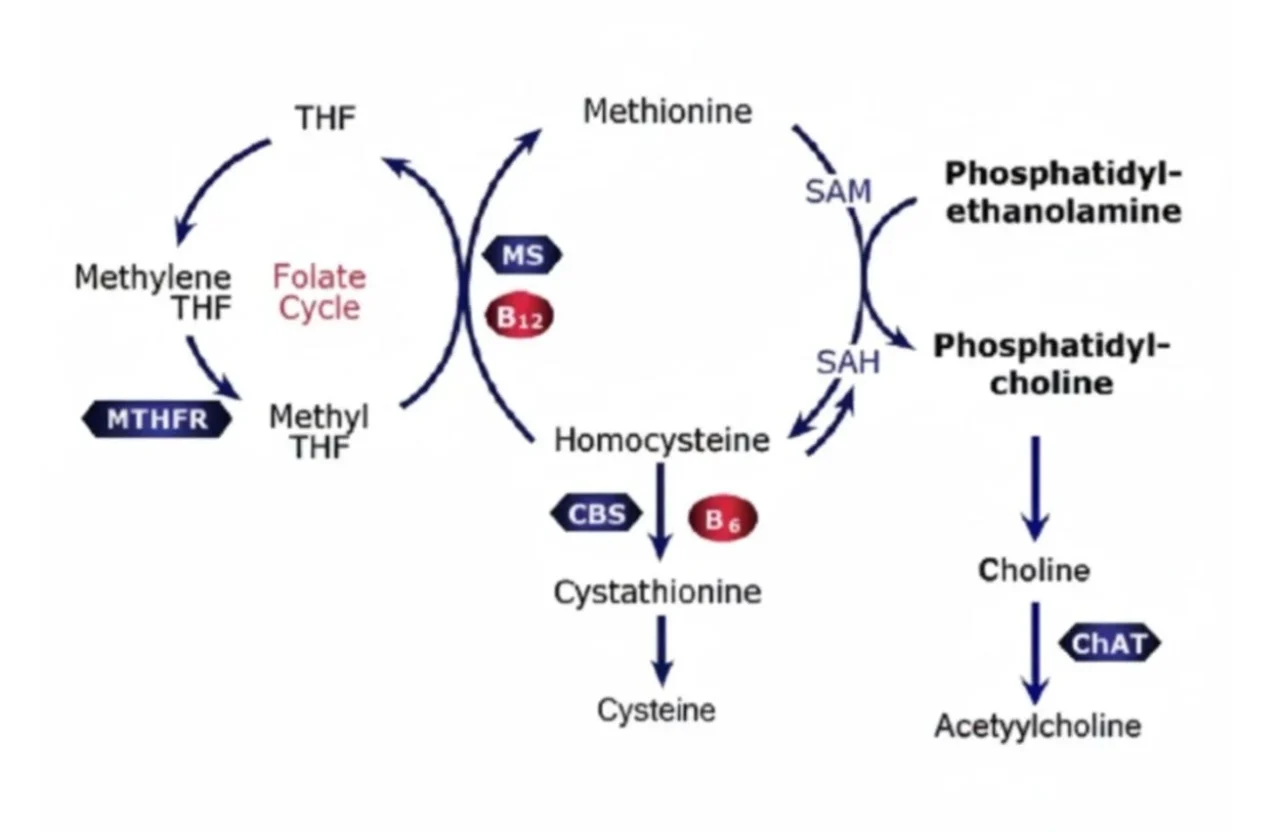
Homocysteine is produced when the body uses methionine – an amino acid from protein-rich foods – to carry out methylation, a biochemical process essential for gene regulation, neurotransmitter production, and many other functions.
Your body doesn’t want homocysteine to build up so it quickly recycles it through two main pathways:
- Converts it back into methionine
- Converts it into cysteine (another useful amino acid)
These processes require key B vitamins:
- Vitamin B12
- Folate (Vitamin B9)
- Vitamin B6
If those vitamins are low, homocysteine rises.
Why is elevated homocysteine considered ‘bad’?
High homocysteine (called hyperhomocysteinemia) is associated with cardiovascular disease specifically:
- Increased risk of heart attack
- Increased risk of stroke
- Higher risk of blood clots
Homocysteine may do this by:
- Damaging the inner lining of blood vessels (endothelium)
- Increasing oxidative stress
- Promoting inflammation
- Make blood more prone to clotting
Cognitive decline
Higher levels of homocysteine are associated with:
- Dementia
- Alzheimer’s disease
- Brain atrophy
Homocysteine may contribute to vascular damage in the brain.
Bone problems
Elevated levels are linked with:
- Increased fracture risk – Possibly due to effects on collagen structure.
But the $60,000 question is homocysteine the cause — or just a marker?
For years, scientists thought lowering homocysteine would reduce heart disease risk.
But large trials showed:
- Giving B vitamins lowers homocysteine levels
- BUT it doesn’t dramatically reduce heart attacks in most people
So today, many experts consider it more of a marker of metabolic stress or poor methylation capacity rather than a direct cause of disease in most cases.
It is still a useful signal that something may be off.”
Stay updated with Hemostasis Today.
-
Sep 25, 2026, 07:25Varun Capoor: How Therapeutic Apheresis and Transfusion Medicine Can Complement Clinical Management in SCD
-
Sep 25, 2026, 07:14Manshi Kesharwani: SAK-GQDs Modulate Thrombus Burden and Endothelial Function in Deep Vein Thrombosis
-
Sep 25, 2026, 06:20Farjah Hassan Algahtani: How Can We Better Identify Patients at Risk of Blood Clots after Metabolic and Bariatric Surgery?
-
Sep 25, 2026, 05:59Carla Lewis: Kids Conquering Sickle Disease Joins Nemours Children’s Hospital for 2nd Annual Awareness Event
-
Sep 25, 2026, 05:47Omid Seidizadeh: Evolutionary Constraint and Population Variation Across Coagulation Genes
-
Sep 25, 2026, 05:40Gerald Bertrand: Presenting UMi-NGS Non-Invasive Foetal HPA Genotyping at DGTI 2026
-
Sep 25, 2026, 05:33Urge Congress to support the Sickle Cell Disease Comprehensive Care Act – ASH
-
Sep 25, 2026, 05:24Isabelle Mahé: Reduced-Dose Apixaban in Extended CAT Treatment
-
Sep 25, 2026, 05:15Maria Cherska: High Cholesterol Isn’t Always Diet or Lifestyle – Sometimes It’s Genetic